 by Madison Dental Art Review Board
A front tooth infection that goes untreated does not simply stay in the mouth. The bacteria involved can spread to adjacent bone, neighboring teeth, and in severe cases reach other areas of the body, which is one reason dentists and endodontists treat a front tooth abscess with the same urgency as any other infected tooth. For many patients, a root canal on a front tooth is the procedure that stops that progression while keeping the visible tooth in place.
This article explains what actually happens during the procedure, how the tooth looks and feels afterward, and what recovery typically involves, with guidance from the team at Madison Dental Art in Forest Hills, Queens, NY.
Table of Contents
Key Takeaways
- A root canal on a front tooth removes infected or inflamed pulp tissue while preserving the natural tooth structure.
- Front teeth typically have one root and one canal, making the procedure more straightforward than a molar root canal.
- With modern anesthesia, most patients report the procedure is no more uncomfortable than a routine filling.
- Restoration after treatment, usually a composite filling or ceramic crown, directly affects both appearance and long-term success.
- Prompt care and proper follow-up protect not only the tooth but overall oral and systemic health.
Why Front Teeth Need Root Canals
Front teeth, the incisors and canines, are not immune to the conditions that damage back teeth. Trauma from a fall or sports injury, deep decay that was not caught early, a cracked tooth, or a dying tooth nerve can all allow bacteria to reach the pulp, the soft tissue inside the tooth containing nerves and blood vessels.
Once the pulp becomes infected or irreversibly inflamed, the body cannot heal it on its own. Left alone, the infection forms an abscess at the tip of the root, destroys surrounding bone, and may cause the tooth to eventually fail. Knowing the signs of a tooth infection early gives patients the best chance of saving the tooth.
Common reasons a front tooth may need endodontic treatment:
| Cause | How it reaches the pulp |
|---|---|
| Trauma / impact | Fracture or concussion severs or inflames pulp vessels |
| Deep cavity | Decay progresses through enamel and dentin into pulp chamber |
| Cracked tooth | Crack creates a direct bacterial pathway |
| Repeated dental work | Multiple restorations on the same tooth can irritate the pulp over time |
| Gum disease | Advanced periodontal infection can enter through the root apex |
A “silent” front-tooth infection, one with no dramatic pain, is worth noting. Because front tooth canals tend to drain more easily than molar canals, some patients feel only mild discomfort or pressure, yet significant damage is occurring beneath the gum line. This is one reason a dentist may recommend treatment even when symptoms seem minor.
The Root Canal on a Front Tooth: Step by Step
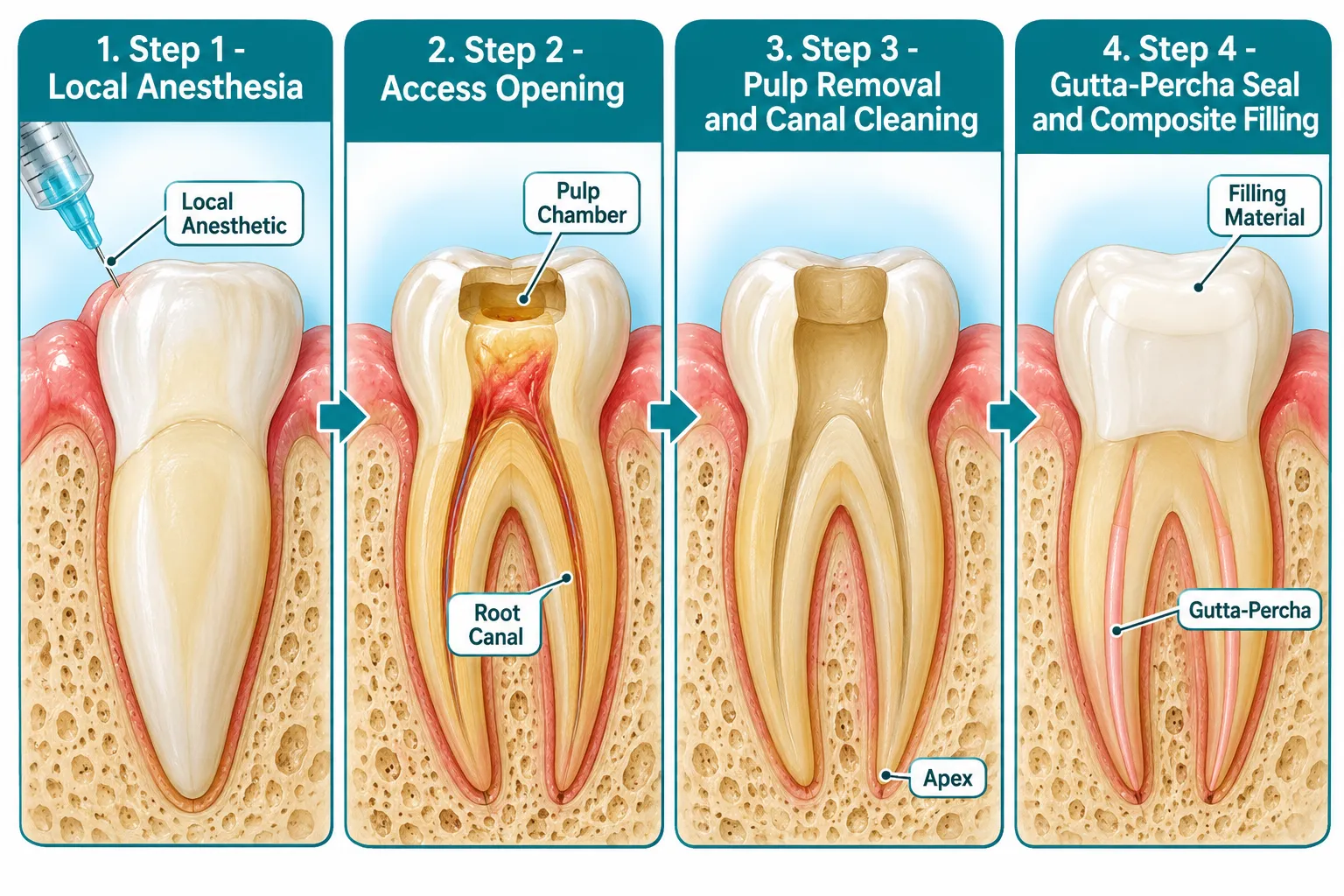
Front teeth are anatomically simpler than molars. An upper incisor typically has a single straight root and one canal, which allows the procedure to move efficiently. Here is how a standard root canal on a front tooth unfolds:
1. Examination and X-rays
The dentist or endodontist takes digital X-rays, and in some practices a cone beam CT scan, to map the root length, detect any curve in the canal, and confirm the extent of infection. This imaging step is critical for planning accurate treatment.
2. Local Anesthesia
A local anesthetic is injected into the gum tissue near the affected tooth. Modern anesthetic techniques mean most patients feel only brief pressure, not sharp pain. If you are anxious, ask the team at Madison Dental Art about sedation options before the appointment.
3. Dental Dam Placement
A small rubber sheet (dental dam) is placed around the tooth to isolate it, keep it dry, and prevent debris from entering the throat during treatment.
4. Access Opening
A small opening is made through the back (lingual) surface of the tooth, not the front, to reach the pulp chamber. For front teeth, this typically means the access hole is hidden from view.
5. Pulp Removal and Canal Cleaning
Thin instruments called files are used to remove the infected or inflamed pulp tissue. The canal walls are then shaped and irrigated. Advanced practices now use ultrasonic irrigation or laser-assisted cleaning to reach areas that files alone may miss, improving disinfection without additional discomfort.
6. Filling the Canal
Once the canal is clean and dry, it is filled with a rubber-like material called gutta-percha and sealed with a biocompatible sealer. This step prevents bacteria from re-entering the space.
7. Temporary or Permanent Restoration
The access opening is closed with a composite resin filling. Depending on the amount of remaining tooth structure, a porcelain crown or veneer may be recommended at a follow-up visit.
For a detailed breakdown of what this process involves, see the root canal procedure and process overview at Madison Dental Art.
Appearance After a Root Canal on a Front Tooth
Because a front tooth is prominently visible, patients understandably want to know what it will look like after treatment.
During Treatment
A temporary filling closes the access hole between visits. It may be slightly different in shade or texture from surrounding enamel, but it is functional and usually not noticeable to others.
After Final Restoration
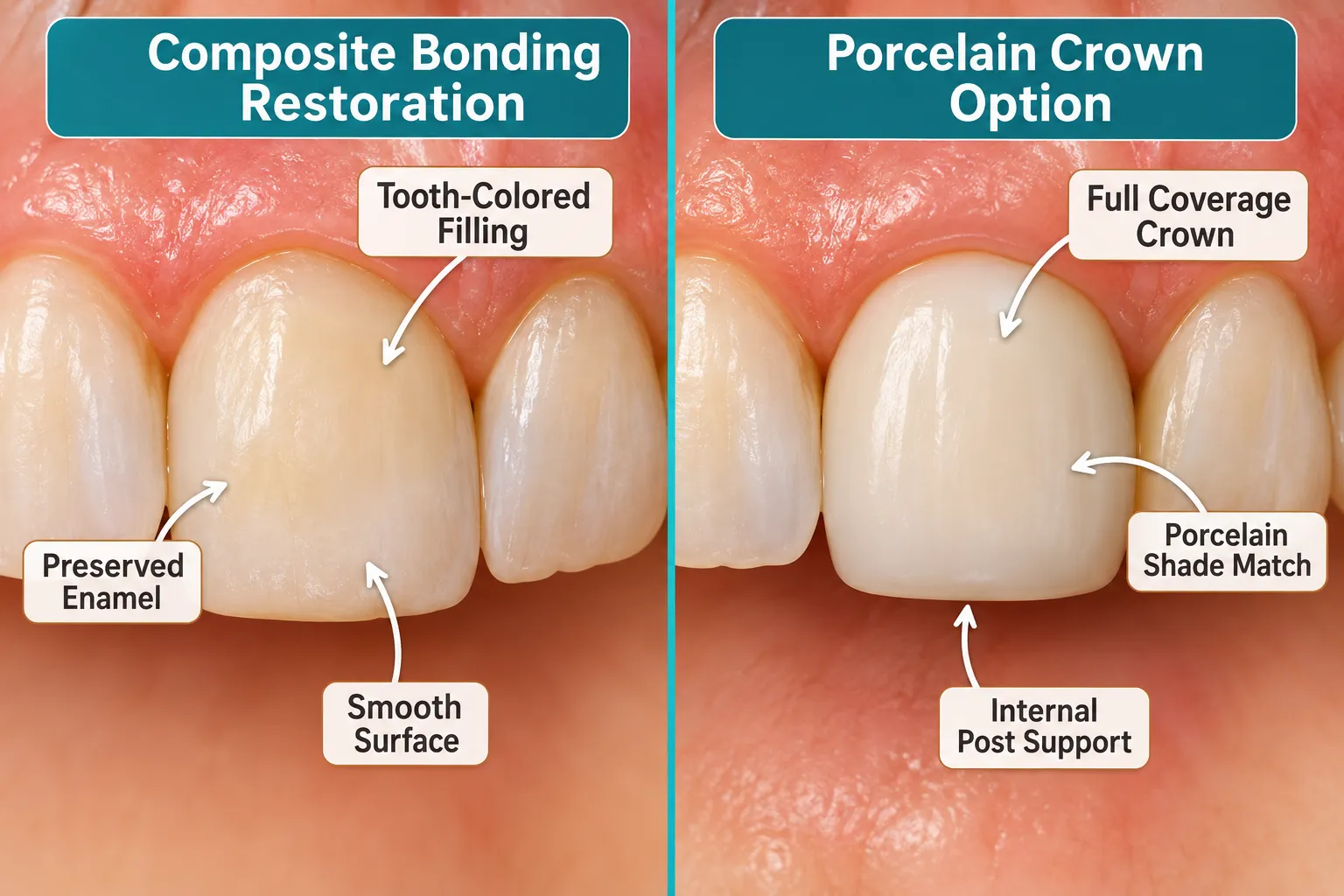
Composite bonding is the most common final restoration for front teeth with adequate remaining structure. When matched carefully to the surrounding enamel, the bonded tooth is nearly indistinguishable from its neighbors.
A porcelain crown is recommended when the tooth has lost significant structure, has a large existing filling, or when the patient wants maximum durability. Modern all-ceramic crowns are designed specifically for front teeth and closely mimic the translucency of natural enamel. For more on what this restoration involves, the article on dental crowns for front teeth covers the procedure and aesthetic details.
Tooth Discoloration
One concern unique to front teeth is internal darkening. After pulp removal, the tooth no longer receives nutrients, and breakdown products from the original pulp tissue can stain the dentin from the inside. This tends to develop gradually, months or years after treatment. It is not a sign of failure, but it is a cosmetic issue. Options to address it include:
- Internal bleaching, bleaching agent placed inside the tooth chamber
- Porcelain veneer, covers the front surface
- Full ceramic crown, covers the entire tooth
Discussing these options with your dentist before final restoration allows for proactive planning.
Pain and Recovery: What to Expect
One of the most common concerns patients raise is whether a root canal hurts. For front teeth specifically, most patients report that the procedure itself is comfortable because of effective local anesthesia. The sensation is typically described as pressure or mild vibration, not pain.
Post-Procedure Soreness
Mild tenderness in the gum and jaw is normal for two to three days after treatment. This is an inflammatory response as the tissues around the treated tooth begin to settle. Over-the-counter pain relievers (ibuprofen or acetaminophen) are generally sufficient for managing this discomfort. For a detailed look at what recovery involves day by day, the normal root canal recovery time guide provides helpful context.
What to Avoid During Recovery
- Hard or crunchy foods on the treated side until the final restoration is placed
- Biting directly into foods with the front teeth while a temporary filling is in place
- Skipping follow-up appointments, the temporary seal is not permanent
Signs That Something May Be Wrong
Severe or worsening pain, significant swelling, or a pimple-like bump on the gum near the treated tooth are not normal. These may indicate an incomplete seal, a missed canal, or early signs of a failing root canal. Catching these issues early improves outcomes considerably.
Long-Term Care and Follow-Up
A successfully treated front tooth can last many years with proper care. However, root-canal-treated teeth are more brittle than living teeth because they no longer have an active blood supply. This makes them somewhat more susceptible to fracture, which is why restoration choice matters.
Long-term care tips:
- Brush twice daily and floss once daily, paying attention to the gumline around the restored tooth
- Wear a night guard if you grind your teeth, front teeth bear the brunt of grinding forces
- Schedule regular checkups and X-rays so the dentist can monitor the bone and root tip
- Report any new sensitivity, looseness, or color change promptly
Inflammation at the root tip does not always cause obvious symptoms, which is why periodic X-ray monitoring is recommended even when the tooth feels fine. If the original infection returns, a procedure called a retreatment or re-treatment of a reinfected root canal is often possible without extracting the tooth.
Root Canal vs. Extraction: Weighing the Options
Some patients ask whether extracting the front tooth and replacing it with an implant is a better choice. There is no single correct answer, it depends on how much healthy tooth structure remains, the degree of bone loss, the patient’s overall health, and personal preferences.
What is worth noting is that keeping a natural tooth, even one that has had a root canal, generally preserves surrounding bone better than extraction does. When extraction is unavoidable, understanding the root canal versus extraction decision helps patients make a fully informed choice alongside their dentist.
Frequently Asked Questions
How many visits does a root canal on a front tooth require? Most front tooth root canals are completed in one to two visits. A single-visit treatment is common when the infection is straightforward. A second visit is scheduled for cases where additional observation or a final crown placement is needed.
Will the front tooth look different from the others after treatment? With a well-matched composite or ceramic restoration, the treated tooth should blend naturally with neighboring teeth. Internal bleaching can address any gradual darkening that may develop over time.
Is a crown always required after a root canal on a front tooth? Not always. If the tooth has adequate remaining structure and the access opening is small, a composite filling may be sufficient. A crown is recommended when structural support is a concern.
Can a child or teenager have a root canal on a front tooth? Yes, though treatment planning differs for immature teeth with open root apices. A procedure called apexification or apexogenesis may be used to allow the root to continue developing or to create an artificial barrier before final sealing.
How long does recovery take? Most patients feel back to normal within two to four days. Tenderness in the surrounding gum tissue usually resolves fully within a week.
What happens if I delay treatment? Delaying a recommended root canal allows the infection to spread, potentially destroying more bone, increasing the risk of a dental abscess, and reducing the likelihood that the tooth can be saved at all.
Conclusion
A root canal on a front tooth is a focused, well-established procedure that removes infection, relieves discomfort, and preserves a tooth that sits at the center of your smile and bite. Modern techniques, from precise digital imaging to advanced irrigation systems, have made the process more predictable and comfortable than many patients expect. Recovery is typically brief, and with the right restoration, the treated tooth can be nearly indistinguishable from its natural neighbors.
Actionable next steps:
- If you are experiencing tooth pain, sensitivity to temperature, gum swelling, or any discoloration of a front tooth, schedule an evaluation promptly, do not wait for symptoms to worsen.
- Ask your provider at the consultation which restoration is recommended for your specific tooth and why.
- Confirm a follow-up X-ray schedule so the treated tooth can be monitored over time.
The team at Madison Dental Art in Forest Hills, Queens, NY provides endodontic evaluation and treatment for front tooth infections and can guide you through each stage of the process. Early care is always more straightforward than emergency care, reach out before the situation escalates.
Madison Dental Art
Content written and reviewed by
Madison Dental Art Review Board
Madison Dental Art : Experienced dentists and specialists dedicated to providing accurate, trusted, and patient-focused oral health information.
Important information
The content of this article is for strictly educational and informational purposes. It does not replace in-person professional medical diagnosis, advice, or treatment.


