 by Madison Dental Art Review Board
More than 15 million root canals are performed in the United States every year, yet fear of a long, painful recovery keeps many patients from seeking timely treatment. The truth is that understanding what is the normal recovery time for a root canal can transform your entire experience, replacing anxiety with a clear, manageable plan. For most patients, the discomfort is mild, the timeline is shorter than expected, and returning to daily life happens faster than you might think.
If you are experiencing severe throbbing pain or facial swelling, you should not delay treatment. Consulting an experienced root canal specialist in Queens can save your natural tooth and relieve a serious infection before complications arise.
Root canal specialist in Queens.
Table of Contents
Key Takeaways
- Most patients recover from a root canal within 3 to 7 days for initial comfort, with full tissue healing taking up to a few weeks.
- Mild soreness and sensitivity in the days following treatment are completely normal and expected.
- The type of tooth treated, the complexity of the infection, and whether a crown is placed all influence recovery length.
- Certain warning signs, including worsening pain, fever, or visible swelling, mean you should contact your dentist promptly.
- Following your dentist’s aftercare instructions is the single most important factor in a smooth, complication-free recovery.
Understanding What Happens During a Root Canal
Before exploring recovery, it helps to understand what the procedure actually involves. A root canal removes infected or damaged pulp tissue from inside the tooth, cleans and shapes the root canals, and seals the space to prevent reinfection. The tooth is then typically restored with a dental crown to protect it long-term.
Because the procedure involves working inside living tissue and bone, some post-treatment tenderness is inevitable. The body’s natural inflammatory response kicks in as healing begins, and that is precisely what causes the soreness most patients feel in the first few days.
To learn more about how the procedure works from start to finish, see our detailed overview of the root canal procedure and process.
What Is the Normal Recovery Time for a Root Canal, Day by Day?
Recovery does not follow a single fixed schedule, but there is a well-established pattern that most patients experience. Here is what you can generally expect:
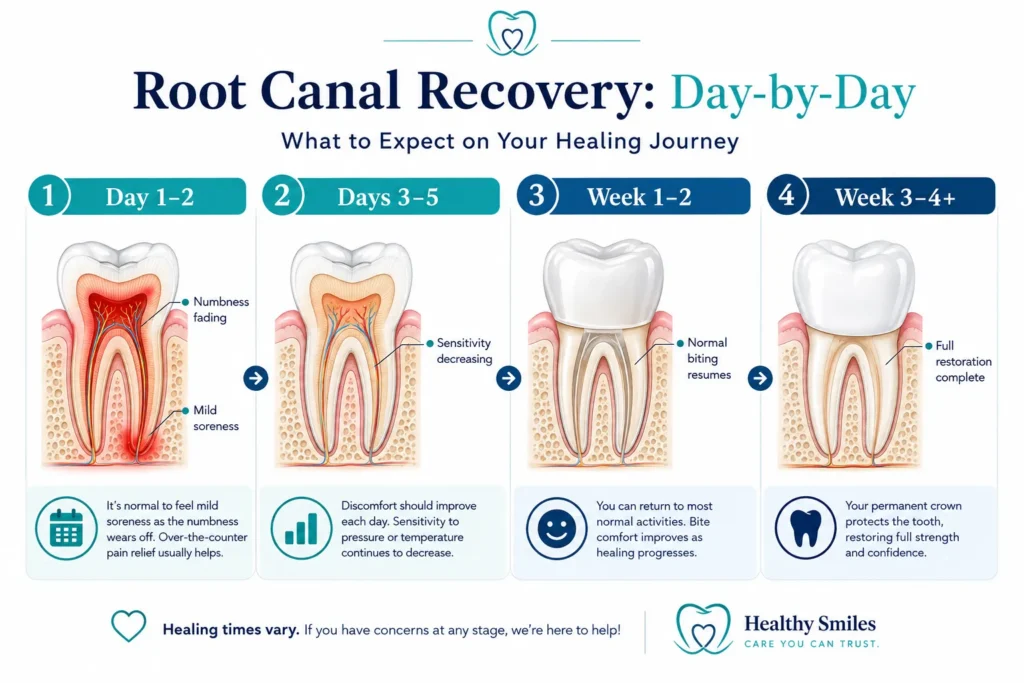
Days 1-2: Initial Soreness and Numbness
The local anesthetic used during treatment will wear off within a few hours after the procedure. As feeling returns, you may notice:
- Mild to moderate soreness around the treated tooth and surrounding gum tissue
- Sensitivity to pressure when biting or chewing
- Slight swelling of the gum or jaw in some cases
- A sense of tenderness that feels different from the original toothache
Over-the-counter pain relievers such as ibuprofen or acetaminophen, taken as directed, are typically sufficient to manage discomfort at this stage. Most patients are able to return to work or school the following day.
Days 3-5: Noticeable Improvement
For the majority of patients, discomfort begins to decrease noticeably by the third day. The acute inflammation settles, and sensitivity to biting diminishes. You may still feel mild tenderness when pressing on the tooth, but sharp or throbbing pain should be fading.
Soft foods remain the best choice during this window. Avoid hard, crunchy, or chewy foods on the treated side until your dentist confirms the area is fully healed.
Week 1-2: Return to Normal Function
By the end of the first week, most patients report feeling close to normal. The gum tissue around the tooth continues to heal, and any residual sensitivity typically resolves during this period. If a temporary filling was placed, your dentist will schedule a follow-up appointment to place a permanent restoration.
Week 3-4 and Beyond: Full Restoration
The final phase of recovery involves placing a permanent dental crown or other restoration over the treated tooth. This step is critical, it protects the tooth from fracture and reinfection. Full tissue healing beneath the crown can continue for several weeks, though most patients do not feel this process at all.
For a thorough breakdown of what to do during each phase, our complete guide to what to do after a root canal covers every step in detail.
Factors That Affect How Long Root Canal Recovery Takes
Not every patient heals on the same timeline. Several factors can shorten or extend what is the normal recovery time for a root canal for a specific individual.
| Factor | Effect on Recovery |
|---|---|
| Tooth type | Molars have more canals and more complex anatomy, often requiring slightly longer healing |
| Severity of infection | Significant pre-existing infection or abscess can extend soreness by several days |
| Number of appointments | Multi-visit cases may reset mild soreness after each session |
| Patient health | Conditions like diabetes or immune disorders can slow tissue healing |
| Aftercare compliance | Following post-treatment instructions directly shortens recovery and reduces complication risk |
If you have been wondering about the difference in care between different dental specialists, our article on what does an endodontist do with an infected root canal explains the diagnosis, treatment, and recovery process in full.
Normal Recovery vs. Warning Signs: When to Call Your Dentist
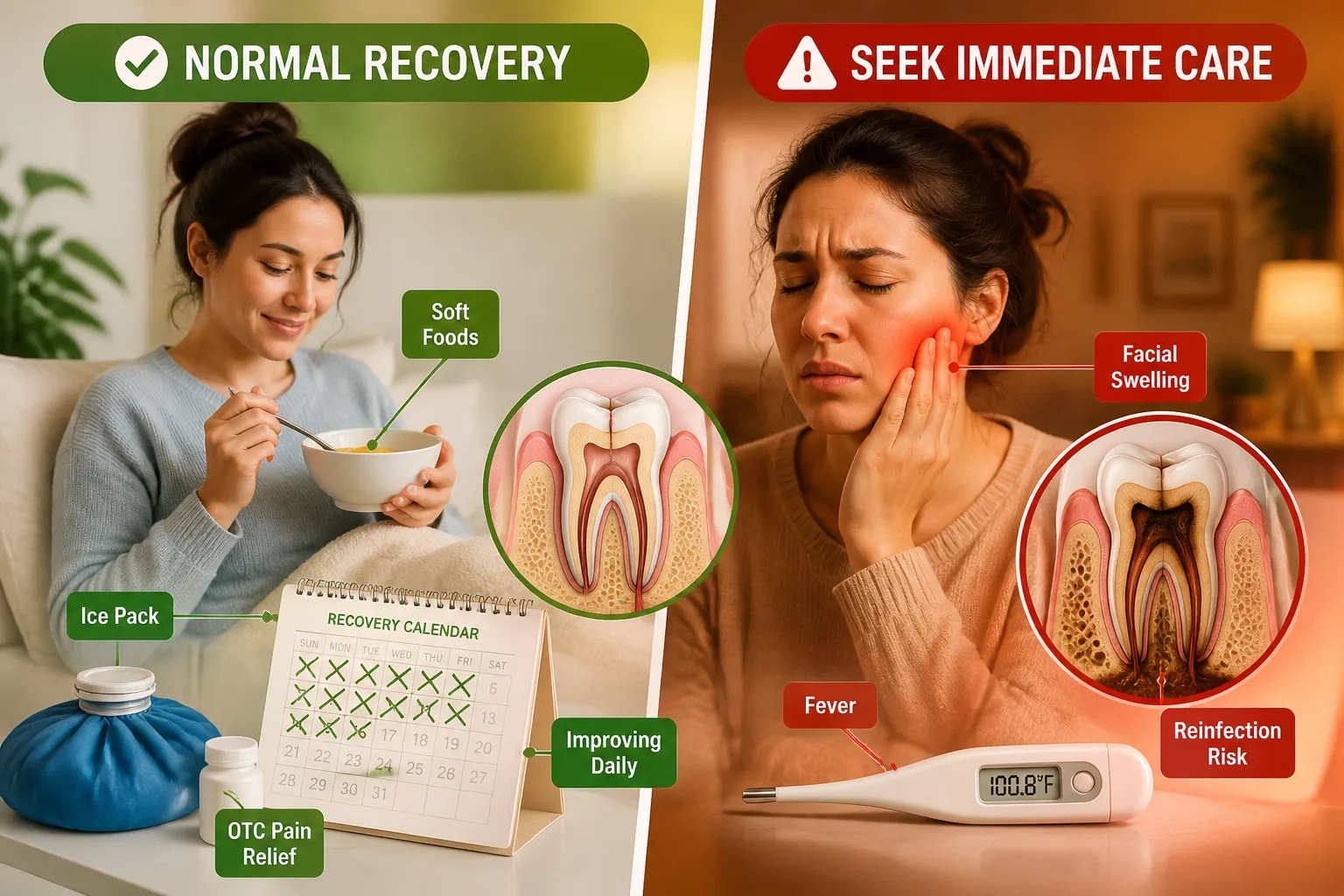
Knowing what is the normal recovery time for a root canal also means knowing when something is not normal. Mild soreness is expected. The following symptoms, nevertheless, are not part of a typical recovery and warrant a prompt call to your dental provider:
Contact your dentist if you experience:
- Pain that worsens after the third day rather than improving
- Visible swelling of the face, jaw, or neck
- Fever above 100.4°F (38°C)
- A bad taste or discharge near the treated tooth
- The temporary or permanent crown falling off
- Numbness that does not resolve after the anesthetic should have worn off
These signs may indicate a reinfection, an incomplete seal, or another complication. Our article on how do you know if a root canal is failing outlines the main red flags to watch for after treatment.
A note on reinfection: Root canals have a high success rate, but they are not immune to failure. If symptoms return weeks or months after treatment, the tooth may need retreatment. Learn more about whether a root canal can get reinfected and what steps to take.
Practical Tips for a Smooth Recovery
The good news is that most patients can actively support their own healing. The following habits make a measurable difference:
Diet and eating:
- Stick to soft foods, yogurt, mashed potatoes, smoothies, scrambled eggs, for the first 48 to 72 hours
- Avoid chewing on the treated side until your permanent crown is in place
- Skip hot beverages and alcohol while the area is still sensitive
Pain management:
- Take over-the-counter anti-inflammatory medication as directed by your dentist
- Apply a cold compress to the outside of the jaw for 10 to 15 minutes at a time in the first 24 hours
- Avoid aspirin if your dentist advises against it, as it may increase bleeding
Oral hygiene:
- Continue brushing and flossing gently, being careful around the treated tooth
- Rinse with warm salt water to reduce inflammation and keep the area clean
- Do not skip your follow-up appointment, the permanent crown placement is essential to long-term success
For more guidance on what to expect during and after the procedure, our article on root canal pain, what to expect during and after is a helpful companion resource.
Root Canal Recovery vs. Endodontic Surgery Recovery
Standard root canal therapy and endodontic surgery (such as an apicoectomy) are different procedures with different recovery profiles. A conventional root canal typically resolves discomfort within a week. Surgical endodontic procedures, which involve incising the gum tissue and removing the root tip, carry a longer healing period, often 1 to 2 weeks for soft tissue recovery, with bone remodeling continuing for several months.
If your dentist has discussed surgical options with you, understanding what endodontists specialize in and treat can help you ask the right questions and set realistic expectations.
FAQs
How long will I be sore after a root canal?
Most patients experience mild to moderate soreness for 2 to 5 days after a root canal. The discomfort typically peaks within the first 24 to 48 hours and then gradually decreases. Over-the-counter pain relievers are usually sufficient to manage it. If soreness persists beyond a week or worsens after the third day, contact your dentist for an evaluation.
Can I go to work the day after a root canal?
Yes, for most patients. Because the procedure is performed under local anesthesia, the main limitation is waiting for the numbness to wear off, usually 2 to 4 hours. Most people return to desk work, school, or light daily activities the next day. If your job involves heavy physical labor, you may want to take an extra day to allow initial inflammation to settle.
What is the normal recovery time for a root canal on a molar versus a front tooth?
Molars tend to have more complex root canal systems with multiple canals, which can make the procedure more involved and recovery slightly longer. Front teeth (incisors and canines) typically have a single canal and simpler anatomy, often resulting in a smoother, faster recovery. That said, the difference for most patients is measured in days, not weeks.
Does getting a crown after a root canal affect recovery time?
The crown placement itself is a separate procedure and does not significantly extend the overall recovery from the root canal. Nonetheless, placing the crown promptly is essential, an unprotected tooth after a root canal is vulnerable to fracture and reinfection. Some patients experience brief sensitivity after crown placement, which typically resolves within a few days.
References
- American Association of Endodontists. (2022). Endodontic treatment statistics and patient information. https://www.aae.org/patients/
- National Institute of Dental and Craniofacial Research. (2023). Tooth decay and pulp disease: Overview and treatment. U.S. Department of Health and Human Services. https://www.nidcr.nih.gov/
- Cleveland Clinic. (2023). Root canal: What to expect, recovery, and aftercare. https://my.clevelandclinic.org/health/treatments/10899-root-canal-treatment
- American Dental Association. (2022). Endodontic procedures: Clinical guidelines for practitioners. https://www.ada.org/en/resources/research/science-and-research-institute/oral-health-topics/root-canal
- MedlinePlus / U.S. National Library of Medicine. (2023). Root canal. National Institutes of Health. https://medlineplus.gov/ency/article/007622.htm
Madison Dental Art
Content written and reviewed by
Madison Dental Art Review Board
Madison Dental Art : Experienced dentists and specialists dedicated to providing accurate, trusted, and patient-focused oral health information.
Important information
The content of this article is for strictly educational and informational purposes. It does not replace in-person professional medical diagnosis, advice, or treatment.


