 by Madison Dental Art Review Board
Most implant failures are not random events, they are the predictable result of skipped maintenance. Dental implant maintenance is not a suggestion made at the end of an appointment; it is a structured, lifelong program that determines whether a titanium post and its crown continue to function well or slowly deteriorate. Understanding what that program involves, and why each component matters, is the most practical thing any implant patient can do.
Table of Contents
Key Takeaways
- Consistent home care, brushing, interproximal cleaning, and water flossing, is the foundation of long-term implant health.
- Professional supportive peri-implant care (SPIC) visits every three to six months are the clinical standard.
- Peri-implant mucositis is reversible with early intervention; peri-implantitis is significantly harder to treat.
- Titanium or carbon-fiber instruments are used by clinicians to avoid scratching implant surfaces.
- Routine monitoring includes periodontal probing, radiographs, and occlusion checks.
- Lifestyle factors, smoking, uncontrolled diabetes, bruxism, increase the risk of peri-implant disease.
- Prosthetic design affects how easy or difficult daily cleaning will be.
1. Establish a Non-Negotiable Daily Brushing Routine
The first line of defense for any implant is a consistent twice-daily brushing habit. Unlike natural teeth, implants lack a periodontal ligament, so the soft tissue seal around the implant collar is the only biological barrier protecting the underlying bone. That seal is thinner and more vulnerable than the tissue around a natural tooth.
A soft-bristle or extra-soft toothbrush, manual or electric, angled toward the gumline at roughly 45 degrees will clean the implant crown and the tissue margin effectively without traumatizing the surrounding gum. Silicone-tipped brushes are another well-tolerated option for sensitive tissue. The key is gentle, consistent pressure, not vigorous scrubbing.
Toothpaste selection matters more than many patients realize. Highly abrasive pastes can microscopically scratch the crown surface, creating rough spots where biofilm accumulates. A low-abrasion, non-whitening fluoride paste is the standard recommendation for implant patients.
2. Add Interproximal Brushes to Your Daily Routine
Standard floss slips right past the unique contour of an implant crown without fully cleaning the contact area. Interproximal (interdental) brushes, small cylindrical or tapered brushes on a wire handle, navigate the space between the implant crown and adjacent teeth far more effectively.
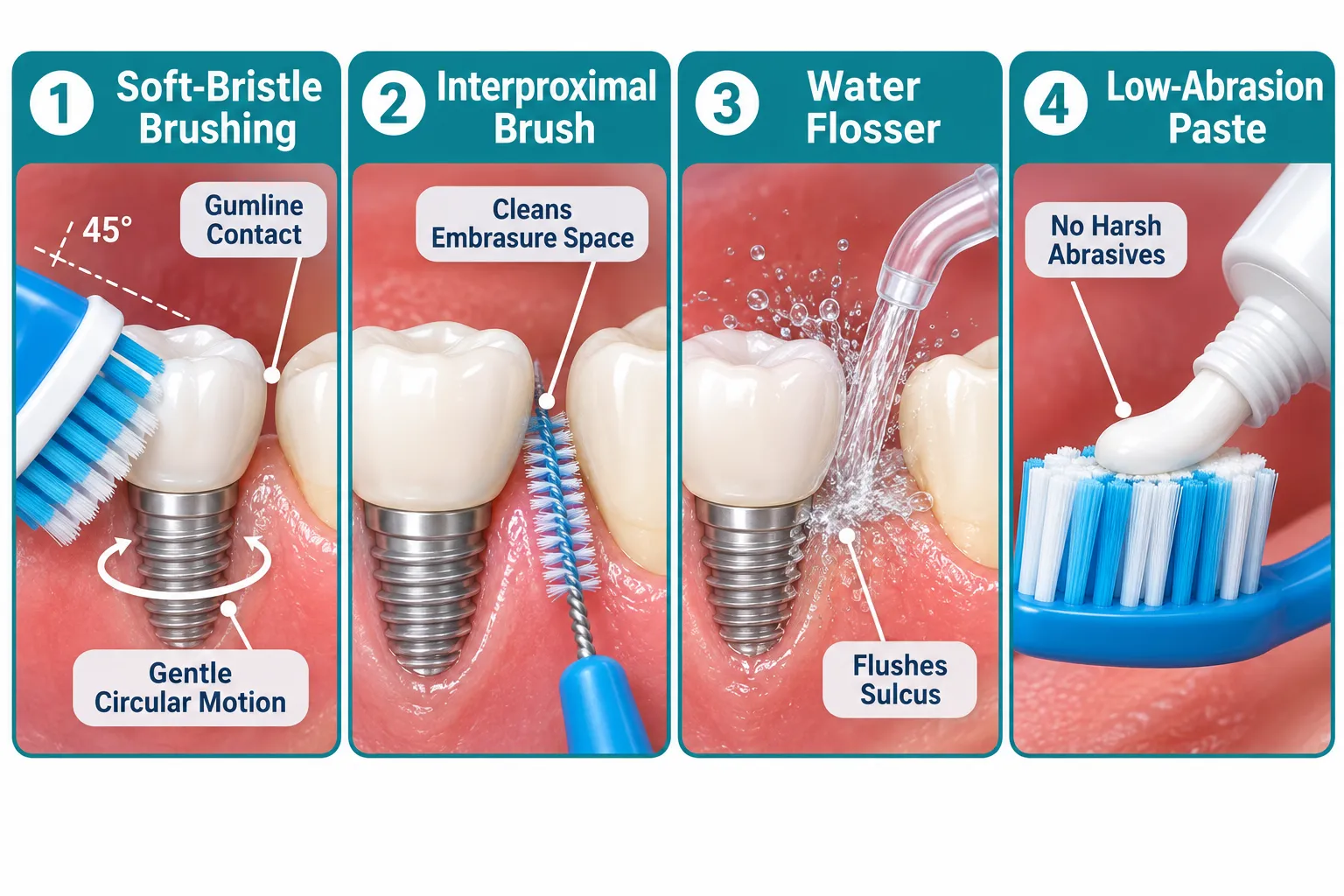
These brushes come in multiple widths; the right size makes contact with both sides of the embrasure space without forcing or bending. Using the wrong size can irritate the gum margin, so matching the brush diameter to the gap is worth the extra step. If the spaces between teeth are particularly tight, a floss threader with implant-specific floss remains a reasonable secondary tool, though research increasingly supports interproximal brushes as the more effective primary option.
For patients managing multiple implants or a full-arch restoration, water flossers (oral irrigators) provide a practical and highly efficient complement. A pulsating water stream at a medium setting flushes the peri-implant sulcus, the shallow crevice where the gum meets the implant, clearing debris that brushes cannot reach.
3. Understand What Supportive Peri-Implant Care (SPIC) Means
The clinical community now frames professional implant upkeep as supportive peri-implant care, or SPIC, a structured, risk-adjusted recall program rather than a one-size-fits-all cleaning schedule. The concept mirrors supportive periodontal therapy for natural teeth, with the important difference that implant tissues respond differently to disease and to treatment.
The broadly accepted recall interval is every three to six months, adjusted based on individual risk factors such as a history of periodontitis, current smoking status, systemic conditions, and the complexity of the prosthetic restoration. Lower-risk patients may be maintained at six-month intervals; higher-risk patients benefit from more frequent visits. For more context on the broader dental implants healing time, strength, and long-term benefits, understanding the continuum from initial healing to lifetime maintenance helps set realistic expectations.
4. Know the Difference Between Mucositis and Peri-Implantitis
Peri-implant mucositis is inflammation confined to the soft tissue around an implant, essentially the implant equivalent of gingivitis. It is characterized by redness, swelling, and bleeding on probing, but there is no measurable bone loss. Critically, it is reversible. Consistent professional cleaning combined with improved home care typically resolves mucositis.
Peri-implantitis is a more serious condition involving both soft tissue inflammation and progressive bone loss around the implant. Once bone is lost, it does not regenerate without surgical intervention, and outcomes are far less predictable than treating mucositis early. This distinction underscores the entire rationale for proactive maintenance: catching the reversible stage before it becomes the irreversible one.
If discomfort develops around an implant months or even years after placement, that is a signal to seek evaluation promptly. The page on why a tooth implant might hurt years later explains common causes and when to act.
5. Expect These Procedures at Every SPIC Appointment
A professional maintenance visit for an implant patient is more involved than a standard cleaning. Clinicians following current protocols will typically perform periodontal probing around each implant to measure pocket depths and assess bleeding, a radiographic check at scheduled intervals to monitor bone levels, an occlusion assessment to verify that bite forces are distributed properly, and removal of calculus and biofilm using instruments that will not scratch the implant surface.
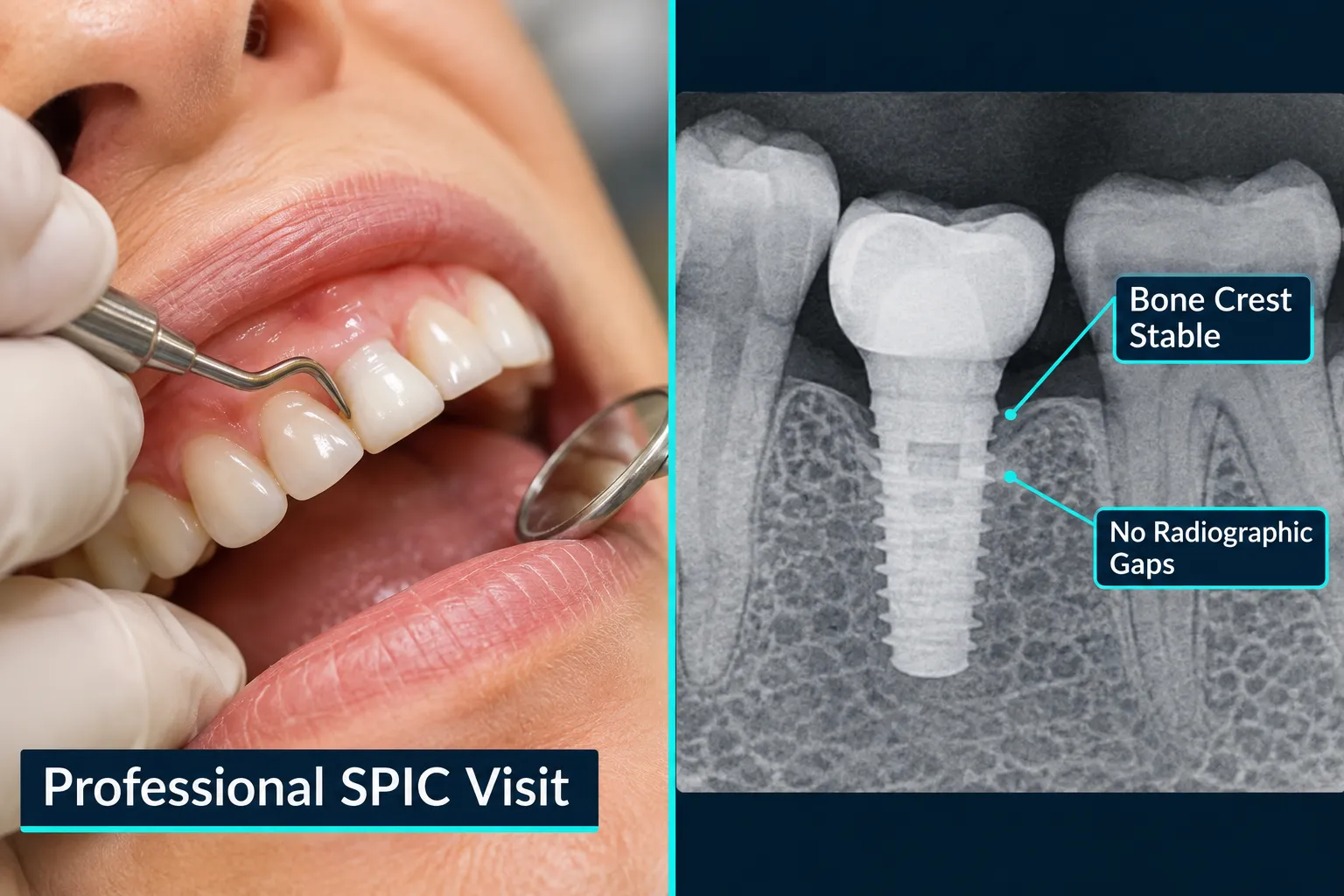
That last point, instrument selection, reflects an important shift in clinical practice. Steel scalers can damage titanium implant surfaces, creating microtextures that accelerate plaque retention. Titanium-tipped, plastic, or carbon-fiber curettes, along with nonabrasive polishing methods such as air-powder polishing with glycine or erythritol powder, have become the standard of care. Patients are welcome to ask their clinician which instruments will be used; it is a reasonable and informed question.
Regular checkups also offer the opportunity to identify occlusal problems early. Excessive bite load on a single implant crown accelerates wear on the prosthetic components and can stress the implant-bone interface over time. See how general dental checkup schedules fit into an overall oral health plan.
6. Manage the Lifestyle Factors That Work Against Implants
No maintenance protocol fully compensates for uncontrolled systemic risk factors. Tobacco use in any form significantly reduces blood supply to peri-implant tissue, impairs healing, and raises the risk of peri-implantitis. Patients who smoke are advised at every level of clinical guidance to consider cessation as one of the most impactful steps they can take for their implants.
Uncontrolled diabetes affects tissue healing and immune response, both of which influence peri-implant tissue stability. Patients managing diabetes should work with their physician and dentist together to monitor both glycemic control and oral health status.
Bruxism, habitual teeth grinding or clenching, places heavy lateral forces on implant crowns and components. A custom nightguard fabricated by a dentist distributes those forces more evenly and reduces the risk of crown fractures, abutment loosening, or bone stress. If grinding has been identified, wearing the nightguard consistently is part of the maintenance plan, not optional.
7. Pay Attention to Prosthetic Design from the Start
Patients planning implant treatment may not realize that the design of the prosthetic crown or bridge placed on the implant directly affects how maintainable it will be for years to come. Prosthetic contours that are too bulky at the gumline make it nearly impossible to clean effectively with standard tools. Clinicians who design implant restorations with cleansability in mind, allowing interproximal brushes or water flossers to reach the collar area, set their patients up for better long-term outcomes.
This is worth discussing during the planning phase. Screw-retained crowns, for example, can be removed for professional cleaning more readily than cement-retained ones, and excess cement remaining below the gumline is a known risk factor for peri-implant disease. For a full picture of your options before treatment begins, comparing dental implant types and their benefits is a useful starting point. After surgery, nutrition also plays a role in tissue health, and the guide to soft foods to eat after dental implant surgery supports healthy early healing.
8. Recognize the Warning Signs That Need Prompt Attention
Good maintenance habits reduce the likelihood of problems, but they do not eliminate the need to monitor for warning signs. Patients should contact their dentist if they notice any of the following: bleeding around the implant that does not resolve with improved brushing, swelling or pus at the gumline, a change in how the implant crown feels when biting, any looseness or movement of the crown, or persistent pain.
None of these symptoms is normal during the stable post-healing period. Early intervention for peri-implant mucositis consistently produces better outcomes than waiting until more advanced disease has developed. Knowing what pain is and is not expected after surgery is covered in the guide on normal pain levels after dental implant surgery, which helps patients distinguish healing discomfort from a signal requiring follow-up.
9. Keep Radiographic Monitoring on Schedule
Bone levels around implants cannot be assessed visually. Scheduled radiographs, typically at implant placement, at crown delivery, then at intervals determined by the clinician based on risk, provide the only reliable method for detecting early bone loss before it becomes clinically significant. Patients sometimes question the need for X-rays when nothing feels wrong; this is precisely the point. By the time bone loss around an implant becomes symptomatic, the disease process is already advanced.
Baseline radiographs taken at the time of crown placement create the reference point against which all future images are compared. Keeping a consistent record with the same dental practice, or requesting copies when changing providers, ensures that any changes in bone levels are caught early.
10. Plan for Component-Level Maintenance Too
The implant fixture itself, the titanium post integrated into the jawbone, requires the least active intervention once fully healed. The components above it, however, do not last indefinitely under normal use. Abutment screws can loosen over time, especially in patients with bruxism. Crown materials, porcelain, zirconia, or acrylic in the case of full-arch restorations, are subject to wear, chipping, and eventual replacement.
Annual professional assessment of these components is standard practice. Identifying a loose abutment screw early and re-torquing it prevents the micro-movement that can damage surrounding bone. Understanding whether a crown needs replacement before it fractures entirely keeps the more complex repair scenario off the table. For patients considering whether the full commitment is worthwhile, reviewing the pros and cons of dental implants in advance of treatment provides helpful context.
11. Build a Long-Term Relationship with a Qualified Implant Provider
Continuity of care is not a soft benefit, it has measurable clinical value. A provider who placed the implant, knows the original prosthetic design, has baseline radiographs on file, and has followed the patient through every recall visit is far better positioned to detect subtle changes than a clinician seeing the case for the first time.
Patients in Forest Hills, Queens can access this level of continuity at Madison Dental Art, where the dental implants program in Forest Hills, Queens is built around both placement and long-term management. When consistent professional oversight is combined with disciplined home care, the goal of maintaining healthy implants over many years moves well within reach.
Frequently Asked Questions
How often should implants be professionally cleaned? The current clinical standard is every three to six months, depending on individual risk factors such as smoking history, diabetes, and a prior history of periodontitis. Higher-risk patients benefit from more frequent intervals.
Can I use regular toothpaste on my implant? Avoid highly abrasive whitening pastes. A low-abrasion fluoride toothpaste is the preferred option, as abrasive formulas can microscopically scratch the crown surface and encourage plaque buildup.
Is flossing enough to clean around an implant? Standard floss is less effective around the contoured profile of an implant crown than interproximal brushes or water flossers. Most clinicians recommend these tools as the primary interdental cleaning method for implant patients.
What is the difference between peri-implant mucositis and peri-implantitis? Mucositis is soft-tissue inflammation without bone loss, it is reversible with professional care and improved hygiene. Peri-implantitis involves bone loss and is significantly more difficult to treat, reinforcing the importance of catching the earlier stage promptly.
Do implant components ever need to be replaced? Yes. While the titanium fixture is designed for long-term stability, abutment screws can loosen, and crown materials are subject to wear over time. Regular professional assessments allow these components to be monitored and serviced before failure occurs.
Does a nightguard really protect implants? For patients who grind or clench, a custom-fitted nightguard distributes bite forces more evenly and reduces the mechanical stress on implant crowns, abutments, and the bone interface. It is a meaningful protective measure, not an optional accessory.
Conclusion
Dental implant maintenance is a continuous commitment, not a one-time task completed at the last post-op appointment. The combination of disciplined daily home care, scheduled professional supportive care visits, timely radiographic monitoring, and proactive management of systemic and behavioral risk factors gives implants the best possible environment to remain stable and functional. The single most useful next step for any implant patient is to schedule a maintenance appointment, and to bring the same consistency to that habit year after year.
Madison Dental Art
Content written and reviewed by
Madison Dental Art Review Board
Madison Dental Art : Experienced dentists and specialists dedicated to providing accurate, trusted, and patient-focused oral health information.
Important information
The content of this article is for strictly educational and informational purposes. It does not replace in-person professional medical diagnosis, advice, or treatment.


