 by Madison Dental Art Review Board
A root canal is one of the most common dental procedures performed in the United States, yet many patients leave the chair with a lingering question: how long does a root canal last, really? The honest answer depends far less on the procedure itself and far more on what happens after. With proper restoration and routine care, treated teeth routinely survive for decades. Without them, the same tooth can fail within a few years.
Table of Contents
Key Takeaways
- A root canal-treated tooth can last many years, often a lifetime, when properly restored and maintained.
- The crown or permanent restoration placed after the procedure is one of the strongest predictors of long-term success.
- Tooth location, patient oral hygiene, and the quality of follow-up care all significantly influence how long a root canal lasts.
- Most treated teeth stay functional for many years after treatment, and plenty of them last several decades.
- Early warning signs of a failing root canal should never be ignored, prompt treatment can often save the tooth.
What Does “How Long Does a Root Canal Last” Actually Mean?
Before diving into numbers, it helps to separate two distinct questions patients often conflate:
- How long does the treated tooth last? This is a question of tooth survival, whether the tooth remains in the mouth, functional, and free of active infection.
- How long does the filling material inside the root last? The gutta-percha and sealer used to fill the canals are durable, but the surrounding tooth structure and the crown above it determine overall longevity.
Clinicians focus almost entirely on the first question. If the tooth is present, functional, and not causing problems, the root canal is considered a success, regardless of when it was performed.
Understanding the root canal procedure and process helps set realistic expectations from the outset.
How Long Can a Root Canal-Treated Tooth Last?
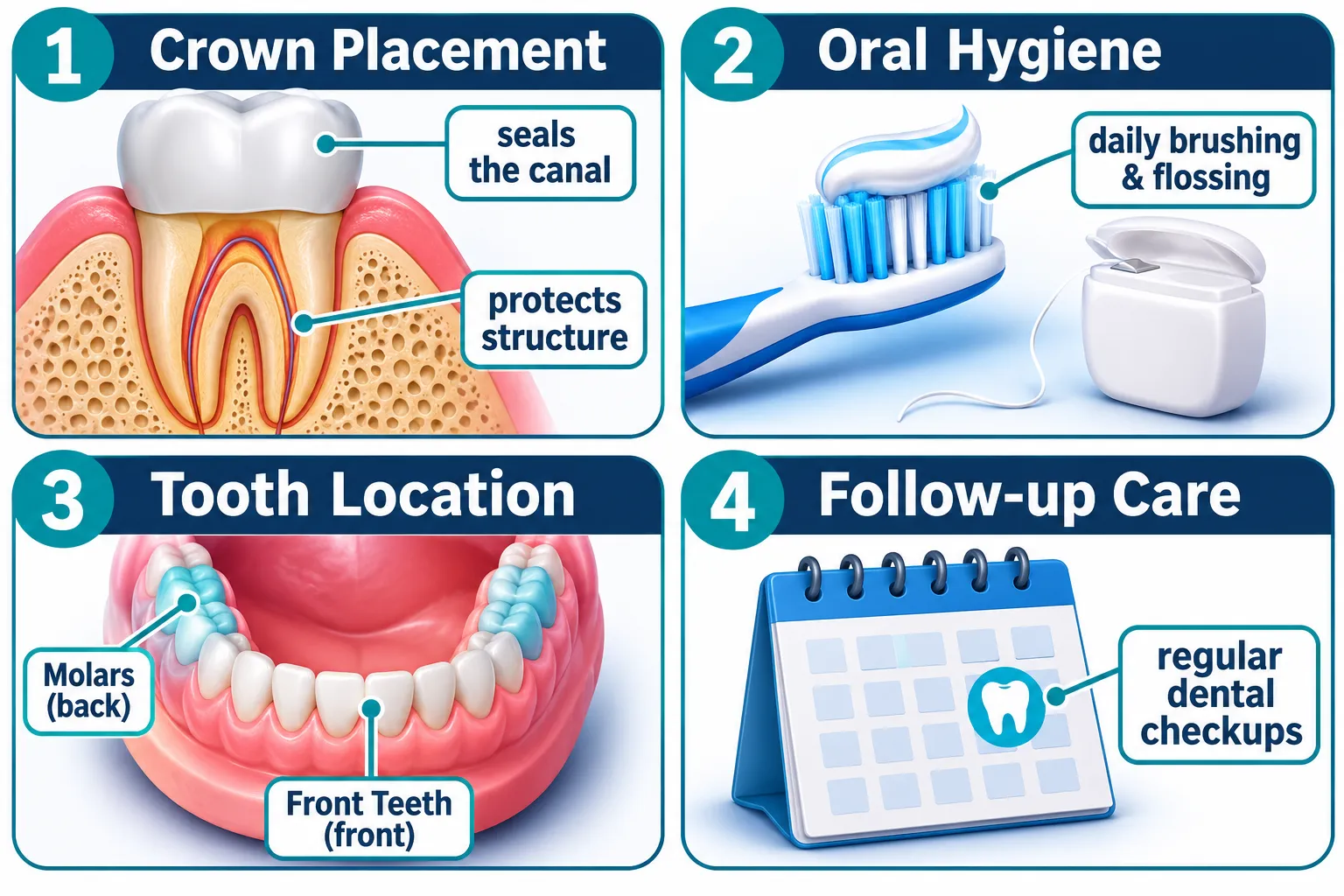
The short answer: a long time. Clinical experience consistently supports that a well-treated, well-restored tooth can remain functional for 20, 30 or more years. A few patterns hold up across the board:
- The large majority of treated teeth are still in place and working years after treatment
- Teeth that never receive the final crown pull the overall average down sharply
- With optimal restoration, survival commonly extends well past 20 years
- Teeth that receive a permanent crown promptly after treatment consistently outperform those restored only with a temporary or simple filling
It is important to note that “survival” in research typically means the tooth is still present and functional, not that nothing has ever changed. Some teeth need minor retreatment along the way and still go on to serve patients for decades. Learning what to do after a root canal is a critical step toward reaching those longer survival times.
Does Tooth Location Matter?
Yes, significantly. Front teeth (anterior) handle less biting force and are easier to restore predictably. Back teeth (molars and premolars) absorb the heaviest chewing loads and are more susceptible to fracture if not protected with a crown. Research consistently shows that:
- Molars have slightly lower long-term survival rates compared to anterior teeth when restoration quality is equal
- The difference narrows considerably when a full-coverage crown is placed promptly after treatment
Factors That Most Strongly Affect How Long a Root Canal Lasts
The procedure itself is only part of the equation. The following variables are among the strongest predictors of whether a treated tooth will still be functioning 10, 20, or 30 years from now.
1. The Quality of the Final Restoration
This is the single most important factor after the root canal is complete. A tooth that receives a well-fitting permanent crown within a few weeks of treatment is significantly more likely to survive long-term than one left with a temporary filling. The crown:
- Seals the canal system against bacterial recontamination
- Distributes biting forces evenly across the tooth structure
- Protects the brittle, dentin-rich tooth from vertical fracture
If you are wondering whether a crown is always necessary, the relationship between endodontic treatment and crown placement is worth understanding before making that decision.
2. Oral Hygiene and Home Care
A root canal removes the nerve and pulp tissue inside the tooth, but it does not make the tooth immune to decay or gum disease. The tooth can still:
- Develop new cavities at the crown margin
- Experience bone loss from periodontal disease
- Fracture under heavy or uneven biting forces
Brushing twice daily, flossing, and using fluoride toothpaste all directly support the long-term health of the tooth and the surrounding bone. For patients managing gum disease alongside a treated tooth, understanding how long you can keep your teeth with periodontal disease is equally relevant.
3. Regular Professional Checkups
Routine dental visits allow clinicians to monitor the treated tooth with X-rays, check for crown integrity, and catch early signs of trouble before they escalate. Skipping these appointments is one of the most common reasons an otherwise successful root canal eventually fails.
4. The Original Extent of Infection or Damage
Teeth that were treated early, before the infection spread to surrounding bone, tend to do better long-term. A large periapical lesion at the time of treatment is associated with a longer healing time and, in some cases, a modestly lower success rate. This underscores why knowing the early warning signs that you need a root canal and acting promptly can directly influence outcomes.
5. Clinician Skill and Treatment Quality
The technical quality of the original procedure, complete cleaning and shaping of all canals, an adequate seal, and proper identification of all canal anatomy, has a measurable impact on how long the result holds. This is one reason patients with complex anatomy are often referred to an endodontist.
Key point:The root canal procedure removes the source of infection. What protects the tooth for decades afterward is the quality of the crown, the patient's hygiene habits, and consistent professional monitoring.
Signs That a Root Canal May Be Failing
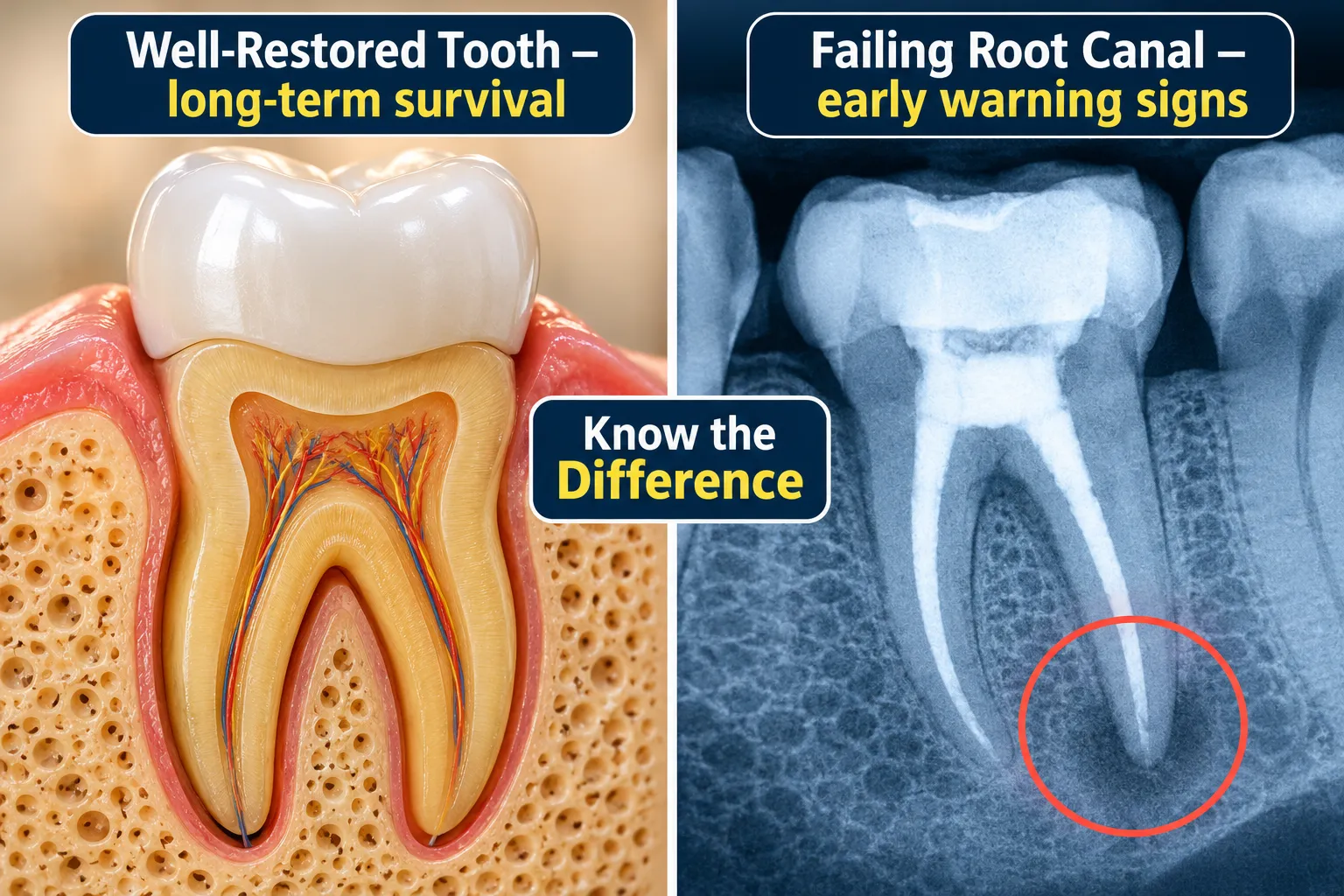
Even a successful root canal can occasionally fail years later, particularly if the crown develops a leak, the tooth cracks, or new bacteria enter the canal system. Common warning signs include:
- Persistent or returning pain around the treated tooth
- Swelling or a pimple-like bump on the gum near the tooth
- Darkening of the tooth beyond expected color change
- Sensitivity to biting pressure that does not resolve
- A loose or poorly fitting crown
Catching these signs early is important. A failing root canal may be treatable through retreatment or a minor surgical procedure called an apicoectomy. Learning how to know if a root canal is failing can help patients act before tooth loss becomes inevitable.
For patients who do experience recurring infection, understanding what happens with a reinfected root canal is an important next step.
Root Canal vs. Extraction: Which Lasts Longer?
When a tooth is severely compromised, patients sometimes face a choice between root canal treatment and extraction. From a longevity standpoint:
- A successfully treated and restored tooth can function for the rest of a patient’s life
- An extracted tooth leaves a gap that, if not restored, leads to shifting teeth, bone loss, and bite problems
- Dental implants are a strong replacement option, but they involve additional procedures, healing time, and considerations of their own
Reviewing the comparison between root canal treatment and extraction can help patients and clinicians make an informed, tooth-specific decision.
Frequently Asked Questions
Can a root canal last a lifetime? Yes. Many treated teeth do last a lifetime, particularly when restored with a crown promptly and maintained with good oral hygiene and regular checkups. The procedure itself removes the diseased tissue; long-term survival depends on what comes next.
How long does a root canal last without a crown? Significantly less time, on average. Without a crown, the treated tooth is vulnerable to fracture and bacterial recontamination. Some anterior teeth with minimal structure loss may be restored with a composite filling, but most dentists recommend a crown for back teeth.
Does a root canal hurt long-term? Some mild soreness in the days following treatment is normal. For a full picture of what to expect, see the guide on normal root canal recovery time. Persistent or worsening pain beyond a week or two warrants follow-up.
How successful are root canals over the long term? Root canal treatment is one of the more predictable procedures in dentistry, and most treated teeth remain in service for many years. With a prompt permanent crown and regular checkups, long-term outcomes are better still.
Can a root canal be redone if it fails? In many cases, yes. Root canal retreatment cleans and reseals the canal system. Success rates for retreatment are somewhat lower than for initial treatment but are still favorable, especially when the problem is detected early.
How often should a root canal-treated tooth be checked? At minimum, the tooth should be evaluated at every routine dental visit, typically every six months. X-rays at regular intervals allow clinicians to monitor the periapical bone and confirm the seal remains intact.
Conclusion
How long does a root canal last? For the vast majority of patients who complete their treatment, including the final crown, the answer is many years, and often a lifetime. The procedure itself is highly predictable. It is the follow-through that makes the difference: a well-fitted crown placed within weeks of treatment, a consistent oral hygiene routine, and regular dental checkups are the three variables most firmly within a patient’s control.
If a treated tooth begins to show warning signs, early action almost always produces a better outcome than waiting. At Madison Dental Art in Forest Hills, Queens, NY, the team provides comprehensive endodontic care and long-term monitoring to give every treated tooth the best possible chance at lasting success.
Next steps:
- Schedule a follow-up if your crown feels loose, the tooth aches, or it has been more than a year since your last dental visit.
- Ask your dentist whether your restored tooth is due for an X-ray check at your next appointment.
- If you are experiencing symptoms and have not yet had a root canal, review the symptoms that indicate a root canal may be needed before the problem progresses.
Madison Dental Art
Content written and reviewed by
Madison Dental Art Review Board
Madison Dental Art : Experienced dentists and specialists dedicated to providing accurate, trusted, and patient-focused oral health information.
Important information
The content of this article is for strictly educational and informational purposes. It does not replace in-person professional medical diagnosis, advice, or treatment.


