
Should you wear a night guard on upper or lower teeth, and does it really make a difference? Many people assume it doesn’t matter, but the choice can affect comfort, protection, and even how your bite feels in the morning. Before you decide, there’s more to consider than you might think. Let’s break it down.
Expert support from orthodontics in Forest Hills.
TL;DR:
Upper and lower night guards both protect teeth from grinding by preventing direct contact and reducing muscle strain, and neither arch is proven superior. The best choice depends on comfort, enamel wear, existing dental work, bite alignment, and bruxism severity. A stable, well-fitted guard, customized and properly adjusted, is more important than which arch it covers.
What Is the Difference Between Upper and Lower Guards?
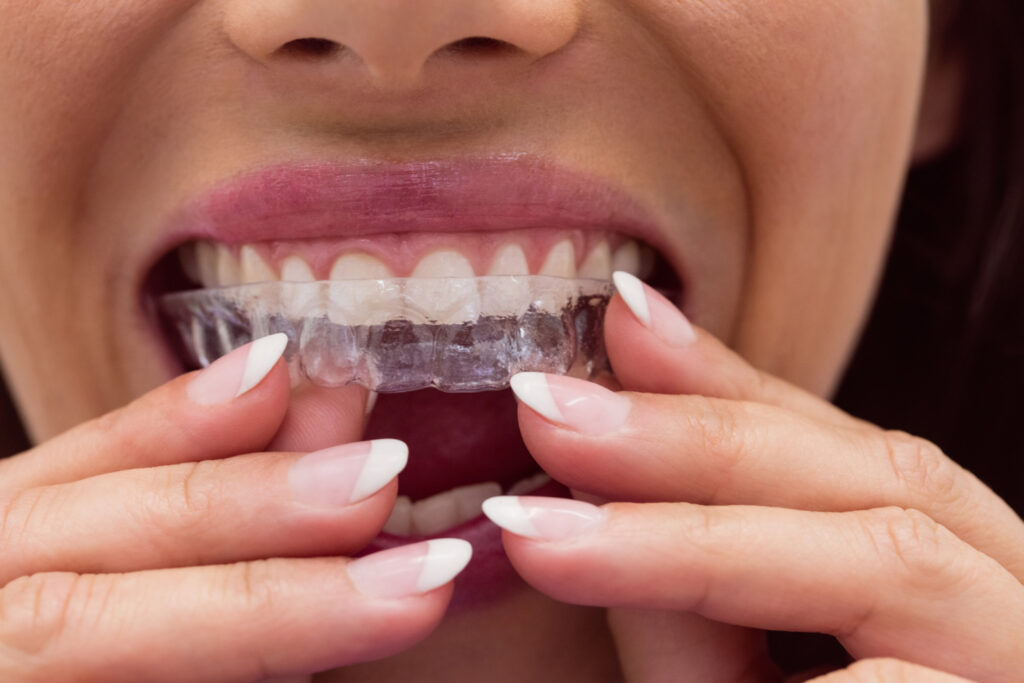
Night guards for bruxism—also known as occlusal splints—are removable devices placed between the upper and lower teeth to protect against grinding and clenching. They can be made for either the upper dental arch (top teeth) or the lower arch (bottom teeth), and both serve the same essential purpose: preventing direct tooth contact to reduce enamel wear, fractures, and jaw muscle strain.
While research shows both types are widely used to protect teeth and manage symptoms of bruxism and temporomandibular disorders (TMD), there is no clear evidence that one arch prevents bruxism more effectively than the other. The most important factor is achieving a stable, comfortable fit.
Comparing Coverage and Protection Between Upper and Lower Night Guards
Both types of guards are designed to cushion biting surfaces and distribute grinding forces evenly. The main differences relate to coverage and how forces are absorbed.
- Upper night guards: Cover the biting surfaces of all upper teeth.
- Lower night guards: Cover the lower dental arch.
- Force distribution varies by individual: Some people grind more heavily on upper teeth, others on lower teeth.
- Damage-based selection: Dentists may assess enamel wear or existing dental work (such as crowns or veneers) to determine which arch requires more protection.
- No definitive superiority: Research supports protection and muscle tension reduction overall, but not that one arch consistently protects better than the other.
Evaluating Comfort and Speech Adaptation with Each Option
Comfort and adaptation depend largely on individual anatomy, including tongue space, jaw size, and gag reflex sensitivity.
- Upper guards: Often feel more familiar to first-time wearers and may reduce gag reflex triggers since they sit away from the tongue.
- Lower guards: Typically smaller and less bulky, which some find less intrusive during sleep.
- Adjustment differences: Because lower guards sit closer to the tongue and floor of the mouth, some individuals may need more time to adapt.
- Customization matters most: A properly fitted, customized guard—regardless of arch—tends to provide better comfort and easier speech adaptation than a poorly fitted appliance.
Assessing Bite Alignment and Jaw Position Before Choosing
Before recommending an upper or lower night guard, dentists often evaluate your bite alignment, meaning how your upper and lower teeth come together. Occlusal (bite) relationships directly influence both comfort and function.
If a guard does not harmonize with your natural bite, it may create an unnatural jaw posture or lead to occlusal derangement, which refers to changes in how teeth meet at rest. Dental literature has documented cases where ill-fitting splints contributed to such bite changes over time.
To prevent this, dentists typically assess how your teeth contact when you bite down, observe whether your jaw shifts slightly to one side, and consider whether existing jaw pain or stiffness could be aggravated by altering the bite relationship. This evaluation helps determine which arch may provide the most stable and appropriate fit.
Careful assessment of jaw position also ensures the guard distributes grinding pressure evenly instead of shifting stress to another area of the dentition. By evaluating these factors beforehand, the clinician can design or select a guard that supports the jaw in a stable, relaxed position while maximizing protection and minimizing the risk of new discomfort.
Reviewing Dentist Recommendations Based on Bruxism Severity
When determining whether a night guard should be worn on the upper or lower teeth, dentists consider the severity of bruxism and the patient’s overall dental condition. Recommendations are tailored to symptoms, the extent of tooth wear, and the presence of restorations, with the goal of protecting teeth and reducing muscle strain.
Dentist recommendations may vary based on severity:
- Mild to moderate bruxism:
- A custom-fitted guard on either arch can effectively protect teeth.
- Many dentists begin with an upper guard because it is common and often easier to adapt to.
- Severe bruxism:
- The arch showing the most strain or vulnerability is prioritized.
- If extensive restorations (such as crowns or veneers) are present on one arch, the opposite arch may be selected to protect them.
- Treatment expectations:
- Occlusal splint therapy helps protect teeth and reduce discomfort.
- Night guards manage symptoms but are not considered a cure for bruxism itself.
Testing Fit and Daily Wear to Determine the Best Placement
Once a night guard is fabricated from impressions of your mouth, daily wear becomes an important part of determining whether it is properly placed and functioning as intended. Even a professionally made guard may require adjustments, since the mouth naturally moves and adapts over time, and comfort often improves with gradual use.
To evaluate fit, dentists may have you bite down with the guard in place to confirm that your teeth contact the surface evenly, without sliding or shifting. They also check for sore spots, sharp edges, or pressure areas affecting the gums or teeth. In addition, the way the guard feels over several nights is considered, as mild initial discomfort may decrease as you adapt.
If, after consistent wear over several days or weeks, the guard remains uncomfortable or your bite feels “off” in the morning, further modification may be necessary. In some cases, trying a guard on the opposite arch may be considered. A properly fitted night guard should feel stable, allow your jaw muscles to relax, and not cause persistent new discomfort. Ongoing wear also helps reveal whether the correct teeth are being protected, since wear patterns on the guard can show where the greatest grinding forces occur.
Key Takeaways.
- Upper vs. Lower Guards Serve the Same Core Purpose
Night guards (occlusal splints) protect teeth from grinding and clenching by preventing direct contact between arches. Both upper and lower guards reduce enamel wear, fractures, and muscle strain. - Coverage, Force Distribution, and Individual Wear Patterns Matter
Upper guards cover the top teeth, while lower guards cover the bottom arch. The choice often depends on where grinding forces and enamel wear are greatest. Dentists may also consider existing restorations to determine which arch needs more protection. - Comfort and Adaptation Vary by Anatomy
Comfort depends on tongue space, jaw size, and gag reflex sensitivity. Upper guards may feel more familiar and less intrusive to some, while lower guards are typically smaller but sit closer to the tongue. Proper customization plays a greater role in comfort than the arch selected. - Bite Alignment and Jaw Position Influence the Decision
Dentists evaluate how teeth meet and whether the jaw shifts before recommending placement. An ill-fitting guard can alter bite alignment over time. Careful assessment ensures even pressure distribution and supports a stable, relaxed jaw position. - Severity of Bruxism and Daily Wear Guide Final Placement
Mild cases may be managed effectively with either arch, while severe bruxism may require protecting the more vulnerable teeth or restorations. Ongoing wear and follow-up help determine if adjustments or switching arches are needed.
FAQs:
Does a night guard go on the top or bottom teeth?
A night guard can be made for either the upper or lower teeth. Both options protect against grinding and clenching. The best placement depends on your bite, comfort, and where protection is most needed.
Is it better to wear a night guard on upper or lower teeth?
Neither is universally better. Research does not show one arch prevents bruxism more effectively. The most important factor is a stable, comfortable, custom fit that protects the teeth under the most strain.
Can I use a night guard on my bottom teeth?
Yes. Lower night guards are commonly used and can be just as effective as upper guards when properly fitted and adjusted to your bite.
Why do you only wear a mouthguard on top teeth?
Upper guards are often chosen because many patients find them easier to adapt to and less intrusive. Nevertheless, lower guards are also appropriate depending on comfort, wear patterns, and dental needs.
Sources.
Ainoosah, S., Farghal, A. E., Alzemei, M. S., Saini, R. S., Gurumurthy, V., Quadri, S. A., Okshah, A., Mosaddad, S. A., & Heboyan, A. (2024). Comparative analysis of different types of occlusal splints for the management of sleep bruxism: a systematic review. BMC oral health, 24(1), 29. https://doi.org/10.1186/s12903-023-03782-6
Lal SJ, Sankari A, Weber, DDS KK. Bruxism Management. [Updated 2024 May 1]. In: StatPearls [Internet]. Treasure Island (FL): StatPearls Publishing; 2025 Jan-. Available from: https://www.ncbi.nlm.nih.gov/books/NBK482466/
You May Also Like.
Dental Crown Procedure Steps: A Complete Guide
How Much Is a Dental Implant for One Tooth? Pricing Explained
Symptoms and Need for a Root Canal: How to Know if You Need One