 by Madison Dental Art Review Board
Nearly 25% of orthodontic patients experience noticeable tooth shifting within two years of completing treatment, not because Invisalign failed, but because retention habits were inconsistent. If you have recently finished your aligner journey, knowing how to keep teeth straight after Invisalign is just as important as the treatment itself. The good news is that maintaining your results is entirely achievable with the right plan, the right habits, and the right dental team supporting you.
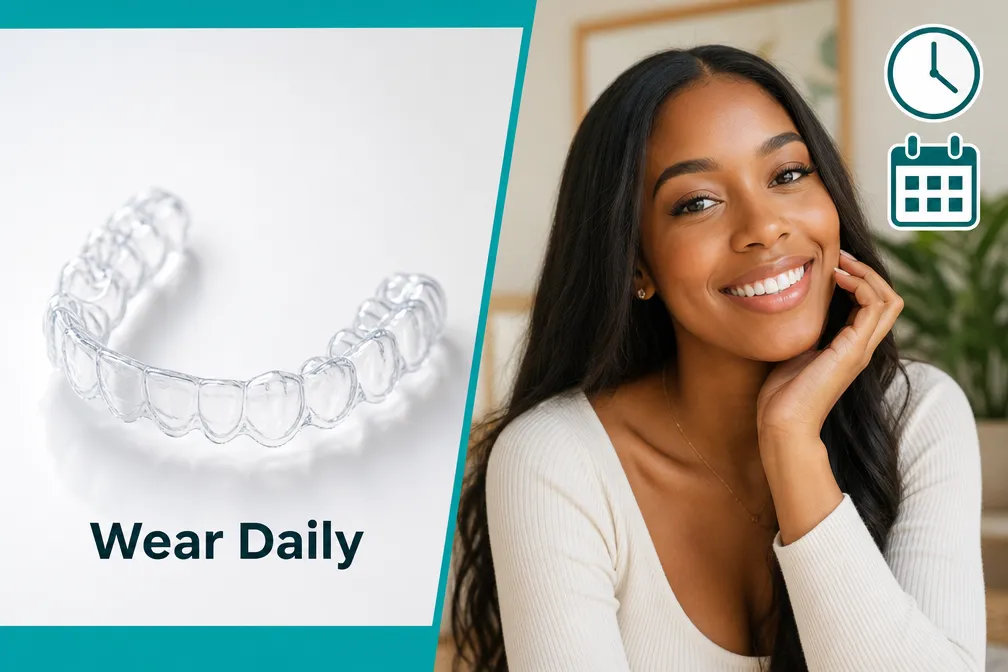
Schedule your post-Invisalign check-up at Madison Dental Art.
Table of Contents
Key Takeaways
- Wearing your retainer consistently is the single most critical step to preserving your Invisalign results long-term.
- Teeth naturally tend to drift back toward their original positions, a process called relapse, without proper retention.
- The first 6 to 12 months after treatment are the highest-risk period for shifting.
- Certain habits, foods, and health conditions can accelerate tooth movement if left unaddressed.
- Regular follow-up appointments with your orthodontist protect your investment and catch problems early.
Why Teeth Shift After Invisalign
Teeth are not anchored rigidly in bone. They sit in a flexible periodontal ligament, a soft tissue that holds each tooth in its socket and allows micro-movement throughout your lifetime. When Invisalign moves your teeth into their new positions, the surrounding bone and ligament need time to fully remodel and stabilize around those positions. Until that remodeling is complete, your teeth are under constant biological pressure to drift back.
This is called orthodontic relapse, and it is completely normal, not a flaw in your treatment. Several factors increase the risk:
- Age: Younger patients tend to experience faster relapse because their bone is still developing.
- Gum disease: Inflammation weakens the periodontal ligament’s ability to hold teeth firmly. If you have concerns about gum health, learn more about how long you can keep your teeth with periodontal disease.
- Tongue pressure and oral habits: Persistent tongue thrusting, nail biting, or pen chewing applies force that shifts teeth over time.
- Wisdom teeth: Emerging third molars can push adjacent teeth forward. Comprehending why you may need wisdom teeth removed is relevant context for anyone in retention.
- Genetics: Some individuals have a stronger natural tendency toward crowding or spacing regardless of treatment.
Understanding these factors helps you take targeted action rather than hoping for the best.
How to Keep Teeth Straight After Invisalign: The Retainer Is Non-Negotiable
If there is one rule that overrides every other piece of advice in this guide, it is this: wear your retainer. No supplement, no diet change, and no dental product replaces the mechanical function of a retainer in holding teeth in place.
The Recommended Retainer Wear Schedule
Current clinical guidance follows a two-phase approach:
Phase 1, Full-time wear (first 3 to 6 months post-treatment): During this critical window, the bone around your teeth is still hardening into its new configuration. Wearing your retainer 20 to 22 hours per day, removing it only to eat and brush, gives the tissues the stability they need. Many orthodontists now extend full-time wear recommendations up to 6 months based on individual case complexity.
Phase 2, Night-only wear (after 6 to 12 months): Once your orthodontist confirms that adequate stabilization has occurred, most patients transition to wearing their retainer 8 to 10 hours per night during sleep. For the majority of patients, this nightly habit then continues indefinitely.
Types of Retainers Available
| Retainer Type | Description | Best For |
|---|---|---|
| Clear (Essix) retainer | Removable tray, similar to Invisalign aligners | Most post-Invisalign patients |
| Hawley retainer | Removable wire-and-acrylic appliance | Patients needing minor adjustability |
| Fixed (bonded) retainer | Thin wire bonded to back of teeth | High-relapse-risk cases |
Many patients use a combination, a fixed retainer on the lower front teeth paired with a clear retainer for the upper arch. Your orthodontist will recommend what suits your specific bite and history.
If you are curious about what to expect at follow-up visits during this phase, our guide to what happens at an Invisalign adjustment appointment walks through the process clearly.
Habits and Foods That Cause Teeth to Shift
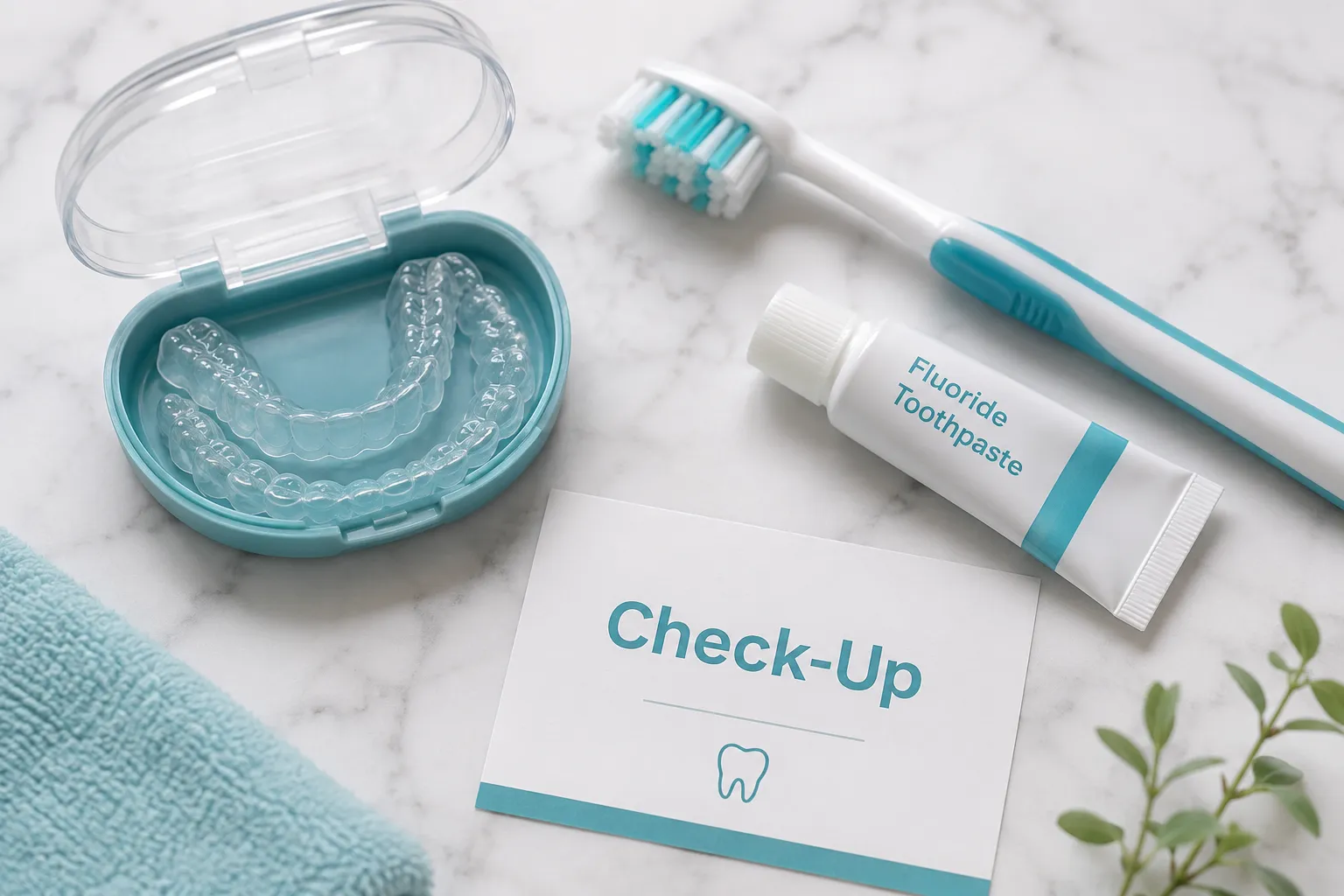
Knowing how to keep teeth straight after Invisalign also means identifying the everyday behaviors that undermine your results without you realizing it.
Habits to Avoid
Skipping retainer nights. Even one or two nights per week without your retainer, especially in the first year, creates cumulative drift. Consistency matters more than perfection on any single night.
Teeth grinding (bruxism). Grinding places enormous lateral force on teeth and can undo alignment over months. If you wake up with jaw soreness or your partner notices grinding sounds, speak with your dentist. A night guard may be appropriate alongside your retainer. You can explore whether you should wear a night guard on the upper or lower teeth for more context.
Nail biting and chewing on objects. These habits apply uneven pressure to specific teeth and gradually shift them out of alignment.
Poor gum health. Gum disease is one of the most underappreciated causes of tooth movement in adults. Inflamed, receding gums reduce the structural support around teeth, making them far more susceptible to shifting. Regular professional dental scaling removes the buildup that drives gum disease.
Foods That Can Stress Your Retainer or Teeth
If you wear a removable retainer, you should always remove it before eating. However, certain foods also affect the teeth themselves:
- Hard, crunchy foods eaten aggressively can stress teeth that are still stabilizing.
- Sticky or chewy foods can dislodge bonded retainer wires if you have a fixed appliance.
- Acidic foods and beverages weaken enamel, making teeth more susceptible to pressure-driven movement over time. For enamel protection strategies, see our guide on how to prevent tooth enamel loss.
Caring for Your Retainer
A retainer you cannot wear because it is cracked, warped, or lost is no retainer at all. Follow these care basics:
- Rinse your retainer with cool water every time you remove it.
- Clean it gently with a soft toothbrush and mild soap, never hot water, which warps the plastic.
- Store it in its case when not in use.
- Replace it on schedule, most clear retainers last 1 to 3 years with proper care.
Scheduling Follow-Up Visits: Why Retention Appointments Matter
Completing Invisalign is a milestone, not a finish line. Scheduled retention check-ins allow your orthodontist to:
- Confirm that teeth are holding their corrected positions
- Inspect the fit of your retainer and replace it if it has warped or worn
- Identify early signs of relapse before significant movement occurs
- Address any new concerns, such as shifting caused by a newly erupted wisdom tooth
At Madison Dental Art, our orthodontist specializes in alignment and functional smile care for patients of all ages. She works alongside the broader team to ensure that your post-Invisalign care is coordinated with your overall oral health, including gum health, bite alignment, and any restorative needs.
Most patients benefit from a retention check at 3 months post-treatment, again at 6 months, and then annually thereafter. If you notice any shifting between visits, even minor crowding or a gap appearing, contact your provider promptly. Early intervention is always simpler and less costly than retreatment.
If you are still weighing your alignment options or want to understand the full scope of what Invisalign can address, our detailed resource on Invisalign treatment in Forest Hills, Queens is a helpful starting point.
Additional Strategies to Protect Your Smile Long-Term
Beyond retainer wear and regular checkups, these supporting habits reinforce your results:
Maintain excellent oral hygiene. Brushing twice daily and flossing once daily keeps gum tissue healthy and firm, which directly supports tooth stability. Bleeding gums are an early warning sign, if you notice this, understanding why your gums bleed when brushing can help you act before the problem progresses.
Stay hydrated. Dry mouth reduces saliva, which is your mouth’s natural defense against bacteria and acid. Chronic dry mouth accelerates gum disease and enamel wear.
Address teeth grinding with your dentist. If bruxism is confirmed, a custom night guard protects both your retainer and your teeth from wear.
Keep up with general dental checkups. Cavities, cracked teeth, and infections alter tooth structure and can shift neighboring teeth. Routine checkups at Madison Dental Art catch these issues early, protecting both your health and your alignment results.
FAQs
How long do I need to wear a retainer after Invisalign?
Most orthodontists recommend full-time retainer wear for the first 3 to 6 months after completing Invisalign. After that stabilization period, patients typically transition to wearing their retainer every night during sleep, a habit that ideally continues indefinitely. The longer you maintain consistent retainer wear, the more durable your results will be over time.
What happens if I stop wearing my retainer?
If retainer wear is discontinued, teeth will gradually drift back toward their pre-treatment positions. The speed of this relapse varies by individual, but most patients notice measurable shifting within weeks to months of stopping. In some cases, additional orthodontic treatment may be needed to correct the movement. If you have already noticed shifting, schedule an evaluation promptly, early correction is far simpler than full retreatment.
Can gum disease cause my teeth to shift after Invisalign?
Yes. Gum disease weakens the periodontal ligament and the bone that anchor your teeth, making them significantly more susceptible to movement. Patients with a history of gum disease should be especially diligent about professional cleanings and retainer wear. At Madison Dental Art, Dr. Robert Weber, a Diplomate of the American Board of Periodontology, provides specialist-level gum care to protect the foundation of your smile.
Does dental insurance cover retainers after Invisalign?
Coverage varies widely by plan. Some dental insurance policies include retainers as part of orthodontic benefits, while others treat them as a separate expense. It is worth reviewing your specific plan details before assuming coverage.
References
- American Association of Orthodontists. (2022). Retainers: What you need to know. https://www.aaoinfo.org
- National Institute of Dental and Craniofacial Research. (2023). Periodontal (gum) disease. U.S. Department of Health and Human Services. https://www.nidcr.nih.gov/health-info/gum-disease
- Littlewood, S. J., Millett, D. T., Doubleday, B., Bearn, D. R., & Worthington, H. V. (2021). Retention procedures for stabilising tooth position after treatment with orthodontic braces. Cochrane Database of Systematic Reviews, 2021(1). https://doi.org/10.1002/14651858.CD002283.pub4
- Valiathan, M., & Hughes, E. (2021). Results of a survey-based study to identify common retention practices in the United States. American Journal of Orthodontics and Dentofacial Orthopedics, 137(2), 170-177. https://doi.org/10.1016/j.ajodo.2009.06.016
- Centers for Disease Control and Prevention. (2023). Oral health: Preventing cavities, gum disease, tooth loss, and oral cancers. https://www.cdc.gov/oralhealth
Madison Dental Art
Content written and reviewed by
Madison Dental Art Review Board
Madison Dental Art : Experienced dentists and specialists dedicated to providing accurate, trusted, and patient-focused oral health information.
Important information
The content of this article is for strictly educational and informational purposes. It does not replace in-person professional medical diagnosis, advice, or treatment.


