 by Madison Dental Art Review Board
Porcelain veneers can last 10 to 20 years, but only when patients know exactly how to care for porcelain veneers from day one. That lifespan is not guaranteed by the material alone; it is earned through daily habits, smart food choices, and consistent professional oversight. Whether you recently received veneers at Madison Dental Art in Forest Hills, Queens, or you are considering them, this guide gives you the practical, evidence-based roadmap to protect your investment for years to come.
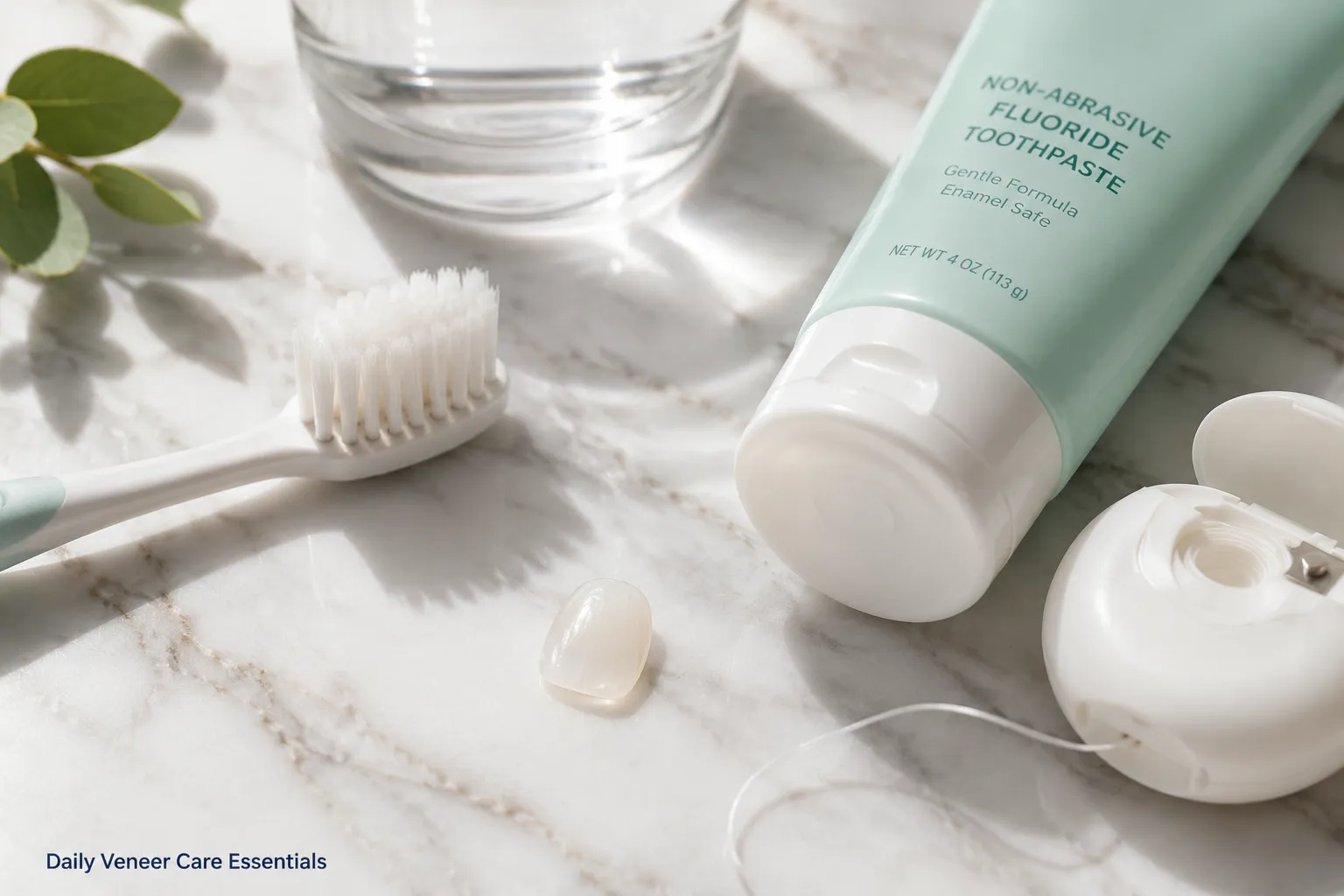
Porcelain veneers Forest Hills Queens.
Table of Contents
Key Takeaways
- Brush at least twice daily with a soft-bristled toothbrush and a non-abrasive fluoride toothpaste, never use whitening or charcoal formulas on veneers.
- Avoid hard, crunchy, or stain-heavy foods and drinks that can chip porcelain or dull its glaze over time.
- Wearing a night guard is one of the most overlooked yet critical steps for patients who grind their teeth.
- Porcelain veneers cannot be whitened after placement, so maintaining consistent stain-prevention habits is essential.
- Schedule professional checkups at least twice a year to catch veneer margin issues before they become costly problems.
What Porcelain Veneers Are and Why Care Matters
Porcelain veneers are ultra-thin ceramic shells, typically 0.5 to 0.7 millimeters thick, bonded to the front surface of your natural teeth. They correct chips, discoloration, gaps, and minor misalignment with a result that closely mimics natural enamel in both color and light reflection.
Nevertheless, the tooth structure underneath a veneer is still alive and vulnerable. The bonding resin at the margin where the veneer meets the tooth can degrade if exposed to harsh chemicals, physical stress, or persistent bacterial buildup. Comprehending this anatomy is the first step in knowing why proper veneer maintenance is not optional, it is essential.
If you are still weighing your options, our detailed comparison of composite veneers vs. porcelain veneers can help you understand the differences in durability, cost, and care requirements before you commit.
How to Care for Porcelain Veneers: Daily Cleaning Habits
The foundation of veneer longevity is a consistent, gentle daily hygiene routine. The good news is that caring for veneers is not dramatically different from caring for natural teeth, but the details matter.
Brushing Technique and Tools
Use a soft-bristled toothbrush. Medium or hard bristles create micro-abrasions on the porcelain glaze over time, dulling the surface and making it more susceptible to staining.
Brush at least twice a day, using gentle circular motions near the gumline. This protects both the veneer margin and the underlying gum tissue from bacterial accumulation.
Choose a non-abrasive fluoride toothpaste. This is one of the most important product decisions you will make. Avoid the following:
- Whitening toothpastes (contain abrasive silica particles)
- Charcoal toothpastes (high abrasivity, no proven benefit for veneers)
- Baking soda-based formulas (high Relative Dentin Abrasivity, or RDA)
- Any paste labeled “extra whitening” or “deep clean”
These products create tiny scratches in the porcelain glaze. Those scratches collect pigment from food and beverages, leading to dullness and staining that cannot be reversed by whitening treatments. In fact, teeth whitening products do not work on porcelain veneers, the ceramic material does not respond to peroxide-based bleaching agents.
Flossing and Rinsing
Floss once daily, sliding gently between each tooth rather than snapping the floss down hard against the gumline. Water flossers are an excellent supplement, especially for patients who find traditional flossing awkward around veneers.
Avoid alcohol-based mouthwashes. Alcohol can weaken the bonding resin at the veneer margin over time. Choose an alcohol-free antibacterial rinse instead.
A quick rule of thumb: if a product promises to “scrub away” stains or “deep clean” your enamel, it is likely too abrasive for porcelain veneers.
Foods, Drinks, and Habits That Affect Veneer Lifespan

Knowing how to care for porcelain veneers also means knowing what to keep away from them. Porcelain is strong, but it is not indestructible, and certain everyday habits accelerate wear faster than most patients realize.
Foods and Drinks to Limit or Avoid
| Category | Examples | Why It’s Risky |
|---|---|---|
| Hard foods | Ice, hard candy, raw carrots, crusty bread | Can chip or crack the porcelain shell |
| Staining beverages | Coffee, red wine, dark tea, cola | Pigments settle into micro-abrasions over time |
| Acidic foods and drinks | Citrus fruits, vinegar-based dressings, sports drinks | Erode bonding resin at veneer margins |
| Sticky foods | Caramel, taffy, chewing gum | Can pull at veneer edges and loosen the bond |
| Alcohol (consumed directly) | Spirits, beer, wine | Weakens composite bonding resin over time |
If you do consume staining beverages, drink through a straw when possible and rinse your mouth with water immediately afterward. Do not brush right away, wait at least 30 minutes to avoid scrubbing acid onto the porcelain surface.
Habits That Damage Veneers
Beyond food and drink, several behavioral habits pose a real threat to veneer integrity:
- Biting nails or chewing on pens, These habits apply uneven lateral pressure that can crack thin porcelain.
- Using teeth as tools, Opening packaging, tearing tags, or biting thread puts extreme stress on veneers.
- Teeth grinding (bruxism), This is one of the leading causes of veneer failure. If you grind at night, ask your dentist about a custom night guard before your veneers are placed.
- Smoking, Tobacco causes surface discoloration that cannot be whitened away on porcelain.
Stain Prevention and Long-Term Maintenance
Porcelain veneers are more stain-resistant than natural enamel, but they are not stain-proof. The glaze on the porcelain surface is what provides that resistance. Once that glaze is scratched by abrasive products or physical wear, staining becomes progressively easier.
Stain prevention habits that work:
- Rinse with water after every meal or staining beverage.
- Use an alcohol-free whitening rinse labeled safe for veneers (check with your dentist first).
- Schedule a professional polish at every checkup, your hygienist uses non-abrasive instruments specifically safe for porcelain.
- Replace your toothbrush every three months, or sooner if bristles are fraying.
It is also worth noting that the natural teeth adjacent to your veneers can still stain and shift in color over time. This is one reason maintaining consistent preventive dental care matters, keeping your whole smile uniform protects the aesthetic result you paid for.
When to See Your Dentist: Checkup Schedule and Warning Signs
Learning how to care for porcelain veneers at home is only half of the equation. Professional monitoring is what catches problems before they escalate.
Recommended Checkup Frequency
Most patients with porcelain veneers should visit their dentist at least twice a year for a professional dental checkup and cleaning. During these visits, your dentist will:
- Inspect veneer margins for micro-gaps where bacteria can enter
- Check the bonding resin for signs of degradation
- Polish the veneer surface with non-abrasive paste
- Assess the underlying gum health around each veneer
Patients who grind their teeth, have a history of gum disease, or have multiple veneers may benefit from more frequent visits. If you are unsure how often you should come in, our guide on how often to get a dental checkup provides clear, personalized guidance.
Warning Signs That Require Prompt Attention
Do not wait for your next scheduled visit if you notice any of the following:
- A veneer that feels loose or slightly shifted
- Sensitivity to hot or cold near a veneered tooth
- A visible chip, crack, or rough edge on the porcelain
- Darkening at the gumline near a veneer
- Persistent bad breath that does not resolve with brushing
Sensitivity near a veneer can sometimes indicate an issue with the underlying tooth structure. Our team at Madison Dental Art can evaluate tooth sensitivity concerns and determine whether the veneer, the bonding, or the natural tooth requires attention.
Protecting Your Veneers During Physical Activity
If you play contact sports or engage in any activity with a risk of facial impact, a custom-fitted athletic mouthguard is non-negotiable. Over-the-counter boil-and-bite guards offer minimal protection and can actually put uneven pressure on veneers. A professionally made guard, fitted to your exact bite, distributes impact forces evenly and significantly reduces the risk of veneer fracture.
Similarly, if you have been advised to wear a night guard for bruxism, wear it consistently. Skipping even a few nights per week can lead to cumulative wear that shortens veneer lifespan by years.
FAQs:
Can I whiten my teeth after getting porcelain veneers?
Porcelain veneers do not respond to traditional peroxide-based whitening treatments. The ceramic material is color-stable, meaning it was matched to a specific shade at the time of placement and will not lighten with bleaching agents. If you whiten the surrounding natural teeth, they may become lighter than your veneers, creating a visible mismatch. The best approach is to whiten your natural teeth to your desired shade before veneer placement, then match the veneers to that shade.
How long do porcelain veneers last with proper care?
With consistent daily hygiene, smart dietary habits, and regular professional checkups, porcelain veneers typically last between 10 and 20 years. Some patients maintain their veneers well beyond that range. The most common reasons for early replacement include veneer fracture from grinding or trauma, bonding failure from acid erosion, and gum recession that exposes the veneer margin.
Is it safe to use an electric toothbrush on porcelain veneers?
Yes, an electric toothbrush is generally safe and can even be more effective than a manual brush for maintaining gum health around veneers. The correct way is to use a soft brush head and avoid pressing firmly against the veneer surface. Oscillating or sonic electric brushes used with gentle pressure and a non-abrasive toothpaste are a sound choice for most veneer patients.
Do I need to change my diet permanently after getting porcelain veneers?
Not entirely. The goal is not to eliminate all staining or hard foods forever, but to be mindful and take protective steps. Occasional coffee or red wine is unlikely to cause significant harm if you rinse with water afterward and maintain a consistent cleaning routine. Hard foods like raw carrots or crusty bread are fine in moderation if you chew with your back teeth and avoid biting directly with veneered front teeth.
References
- American Dental Association. (2022). Oral health topics: Veneers. https://www.ada.org/resources/research/science-and-research-institute/oral-health-topics/veneers
- National Institute of Dental and Craniofacial Research. (2023). Dental treatments and materials: Ceramics and porcelain. U.S. Department of Health and Human Services. https://www.nidcr.nih.gov
- American College of Prosthodontists. (2023). Patient education: Porcelain veneers care and maintenance. https://www.prosthodontics.org
- Journal of Prosthetic Dentistry. (2022). Longevity of ceramic veneers: A systematic review of clinical studies. Elsevier. https://www.jpd.org
- MedlinePlus / U.S. National Library of Medicine. (2023). Dental veneers. https://medlineplus.gov/ency/article/007581.htm
Madison Dental Art
Content written and reviewed by
Madison Dental Art Review Board
Madison Dental Art : Experienced dentists and specialists dedicated to providing accurate, trusted, and patient-focused oral health information.
Important information
The content of this article is for strictly educational and informational purposes. It does not replace in-person professional medical diagnosis, advice, or treatment.


