 by Madison Dental Art Review Board
Nearly 15 million root canals are performed in the United States every year, and a significant portion of them could have been prevented with earlier action. Comprehending how to avoid a root canal: early warning signs you can act on is not just helpful information; it can mean the difference between a simple filling and a multi-visit procedure. The good news is that your teeth almost always send distress signals long before the pulp reaches the point of no return. Recognizing those signals, and responding quickly, is the core of prevention.
Table of Contents
1. Brief Cold or Sweet Sensitivity That Goes Away Fast
When you sip an iced coffee and feel a short, sharp twinge that fades within a few seconds after the cold is gone, your tooth is telling you something important. Dental researchers and clinicians classify this type of response as reversible pulpitis, a state where the inner pulp tissue is mildly inflamed but still capable of healing completely on its own if the cause is removed and the tooth is properly restored.
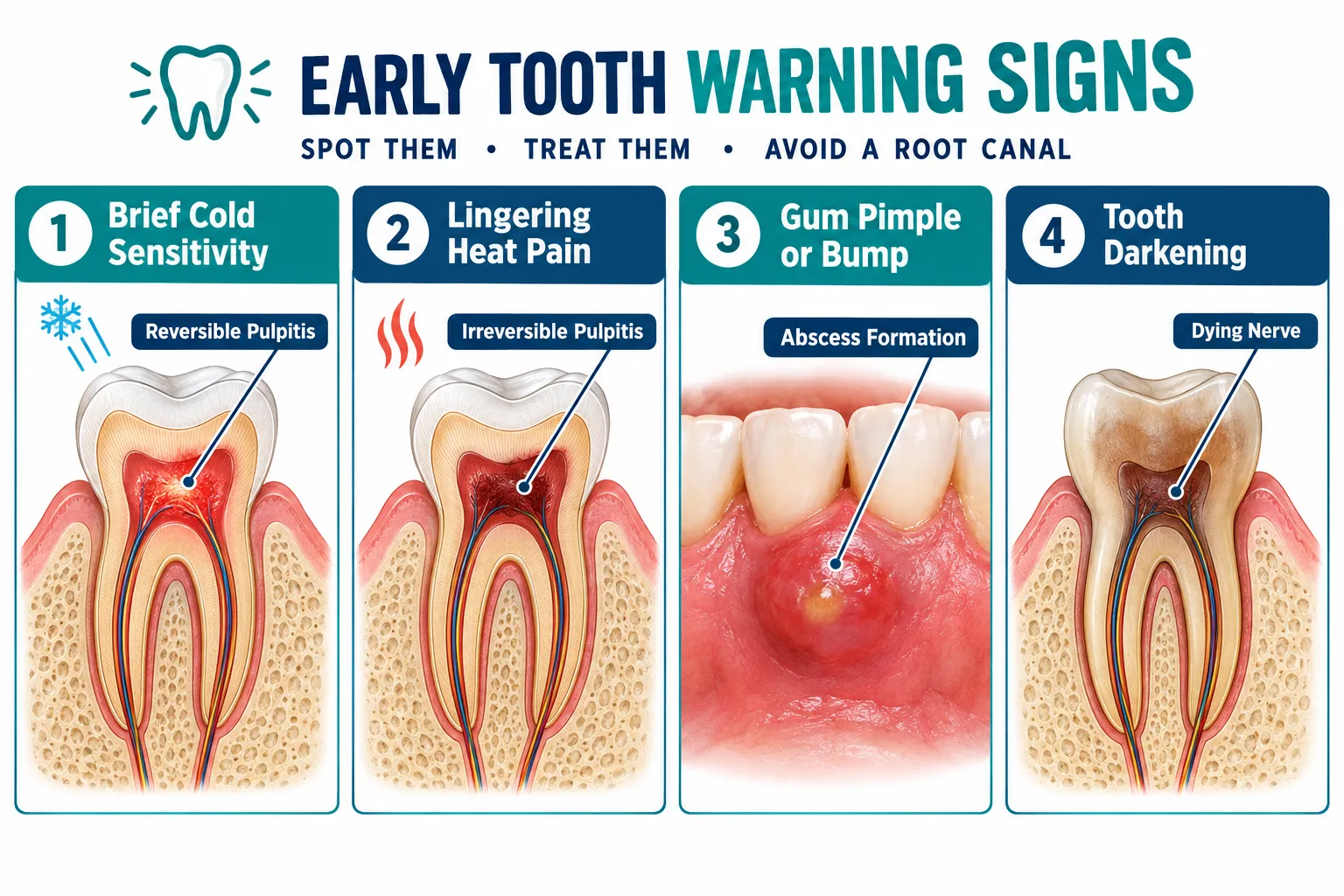
The key word here is “brief.” Pain that settles quickly once the stimulus is removed points to a pulp that is stressed but not yet permanently damaged. This is the window in which conservative treatment, removing the decay and placing a restoration, can allow the tooth to recover without progressing to the root canal stage. Missing this window, nevertheless, allows bacteria to burrow deeper, transforming a manageable cavity into a much more serious problem.
If you notice this kind of fleeting sensitivity, do not wait to see whether it gets worse. Schedule a dental evaluation promptly. At Madison Dental Art, the team uses digital X-rays and 3D panoramic scans to assess exactly how deep the decay has traveled before deciding on the most conservative path forward.
You can also read more about how to know if you have a cavity, its signs and symptoms to understand what early decay looks and feels like before it escalates.
2. Pain That Lingers After the Stimulus Is Gone
There is a meaningful clinical difference between discomfort that resolves in seconds and pain that continues for many minutes or hours after the trigger is removed. When heat or cold causes pain that persists, or when you notice a dull, throbbing ache that seems to have no obvious cause, the pulp may have crossed into irreversible pulpitis.
Irreversible pulpitis is characterized by spontaneous pain, pain that worsens with heat and is sometimes temporarily eased by cold, difficulty pinpointing which tooth hurts, and pain that disturbs sleep. At this stage, current clinical guidance from bodies like the Scottish Dental Clinical Effectiveness Programme is clear: the pulp cannot heal on its own, and definitive dental treatment, not watchful waiting, is the only path that prevents further deterioration.
This is also the stage that many patients unknowingly try to manage with over-the-counter painkillers or antibiotics. Updated guidance from the American Dental Association (ADA) emphasizes that antibiotics alone do not resolve pulp inflammation. Relying on medication without treating the tooth structurally only delays care and increases the likelihood that what could have been a straightforward intervention becomes a full root canal or, worse, an extraction.
Comprehending the symptoms that indicate a root canal may be needed can help you gauge the urgency of your situation before calling your dentist.
3. Pain When Biting or Chewing
Healthy teeth do not hurt under normal chewing pressure. When a tooth becomes painful to bite on, especially if the sensation is sharp rather than mild, it can indicate that inflammation has spread beyond the pulp to the tissues surrounding the tooth’s root tip, a condition called apical periodontitis. It can also signal a cracked tooth, which creates a pathway for bacteria to reach the pulp faster than most patients expect.
A cracked tooth is one of the trickier problems to catch because it may not always appear on a standard X-ray. Digital imaging technology, including the kind used at Madison Dental Art’s imaging suite, offers much better diagnostic resolution. Treating a cracked tooth early, often with a crown, can seal the crack before bacteria penetrate the pulp.
If you have been grinding your teeth at night, wearing a night guard prescribed by your dentist is one of the most practical steps you can take to prevent cracks and the cascade of problems they cause.
4. Swollen, Tender, or Pimple-Like Bumps on the Gums
A small raised bump on the gum near a painful tooth is not a minor nuisance. It is almost always a fistula, a channel the body has created to drain pus from an abscess forming at the tooth’s root. At this point, infection is already present, and the pulp is likely beyond saving without endodontic treatment.
Gum swelling in general, even without a visible bump, combined with tooth pain is a red flag that warrants urgent dental care, not a “wait and see” approach. The signs of a tooth infection can escalate rapidly in some patients, particularly those with compromised immune systems.
Patients should be aware that certain symptoms go beyond dental urgency and require immediate emergency care: fever, swelling that has spread toward the jaw, neck, or eye socket, and any difficulty swallowing or breathing. These can signal a spreading infection that poses serious health risks and demands same-day evaluation.
5. Tooth Darkening or Discoloration
A tooth that gradually darkens from the inside, shifting from its natural shade toward gray, brown, or black, is often signaling that the pulp tissue is dying or has already died. This can happen following a traumatic impact to the tooth, even one that seemed minor at the time and caused no immediate pain.
Dying pulp does not always produce intense pain. In some cases, the discomfort actually diminishes as the nerve tissue breaks down, which can give patients a false sense that the problem has resolved. It has not. Infected, necrotic pulp tissue continues to harbor bacteria that can form an abscess without any warning.
Any noticeable darkening of a tooth, especially after an injury, is a reason to schedule a dental evaluation. The earlier the condition is caught, the greater the chance that vital pulp therapies such as a pulpotomy (removing only the diseased portion of the pulp) can preserve the tooth without a full root canal.
6. Persistent Bad Breath or an Unusual Taste
Chronic bad breath that does not resolve with brushing, flossing, and rinsing can be a sign of active decay or early infection. Bacteria feeding on decayed tooth structure produce sulfur compounds responsible for the odor, and an abscess can contribute a persistent unpleasant taste that comes and goes.
If you are curious about the connection, cavities and bad breath are more closely linked than many patients realize. Addressing the underlying cavity early eliminates the source, restores the tooth, and removes the need for more invasive procedures down the road.
7. Acting Early: What Prevention Actually Looks Like
Avoiding a root canal is less about heroic interventions and more about consistent, proactive habits paired with timely professional care.
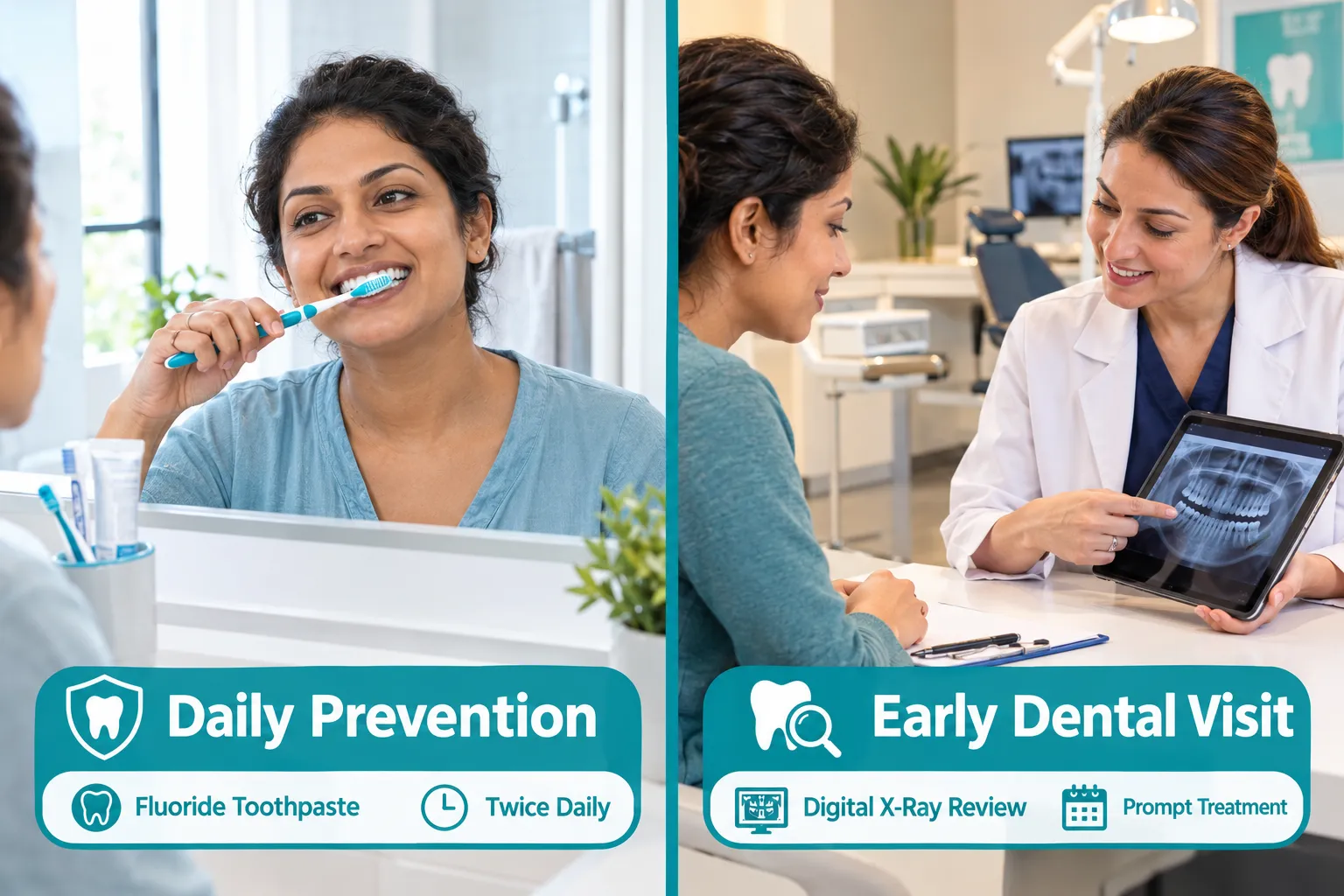
Attending regular checkups, typically every six months, allows your dental team to catch early decay before it reaches the pulp. At Madison Dental Art in Forest Hills, Queens, founder Dr. Alexander Chao and the clinical team use digital X-rays and advanced imaging to detect problems at the earliest possible stage, giving patients the most conservative treatment options available. Patients with intermittent mild sensitivity who still have their pain controlled by over-the-counter analgesics are advised by current clinical guidelines to seek non-urgent dental care, meaning soon, not someday. Those whose pain lasts for hours, disrupts sleep, or does not respond to painkillers should treat the situation as urgent.
Beyond professional visits, practical daily habits matter: brush twice a day with fluoride toothpaste, floss daily, avoid chewing ice or using your teeth as tools, wear a mouthguard for contact sports, and address teeth grinding with your dentist. These are not complicated steps, but they collectively keep enamel intact and bacteria at bay.
If you want to know what happens when a tooth does require endodontic intervention, reviewing what the root canal procedure involves can reduce anxiety and clarify what modern treatment actually entails.
FAQs
Can a tooth heal itself if I catch the problem early enough?
Yes, within limits. When decay is caught at the reversible pulpitis stage, meaning the pulp is inflamed but not yet permanently damaged, conservative treatment such as removing the decay and placing a proper restoration can allow the pulp to heal. Nonetheless, once the pulp becomes irreversibly inflamed or infected, it cannot regenerate on its own, and professional endodontic treatment or extraction becomes necessary.
Is tooth sensitivity always a sign I need a root canal?
Not always. Brief sensitivity to cold or sweet stimuli that fades within seconds is often a sign of early decay or enamel erosion, conditions that can be treated conservatively. Sensitivity that lingers for minutes or hours, occurs spontaneously, or is triggered by heat is a more serious signal. A proper clinical evaluation, including X-rays, is the only reliable way to determine the cause and the appropriate treatment.
What happens if I ignore the early warning signs?
Ignoring early symptoms allows bacteria to advance deeper into the tooth structure. What starts as reversible pulpitis can progress to irreversible pulpitis, then to abscess formation, bone loss around the root, and ultimately tooth loss. In some cases, a spreading dental infection can become a medical emergency. Seeking care at the first sign of persistent sensitivity or pain gives you the widest range of treatment options.
How often should I visit the dentist to help avoid a root canal?
Most adults benefit from professional checkups and cleanings every six months, though your dentist may recommend more frequent visits based on your individual risk factors such as a history of cavities, gum disease, or dry mouth. Regular visits allow early detection of decay and enamel changes before they reach the pulp, which is the single most effective strategy for avoiding root canal treatment.
References
- American Association of Endodontists. (2022). Saving your natural tooth. https://www.aae.org/patients/dental-procedures/root-canals/save-your-natural-tooth/
- American Dental Association. (2023). Antibiotic stewardship in dentistry. https://www.ada.org/resources/research/science-and-research-institute/oral-health-topics/antibiotic-stewardship
- Scottish Dental Clinical Effectiveness Programme. (2023). Guidance on the management of pulpitis. https://www.sdcep.org.uk/
- National Institute of Dental and Craniofacial Research. (2021). Tooth decay. U.S. Department of Health and Human Services. https://www.nidcr.nih.gov/health-info/tooth-decay
- Harvard Health Publishing, Harvard Medical School. (2022). Tooth pain: When to call a dentist. https://www.health.harvard.edu/pain/tooth-pain-when-to-call-a-dentist
Madison Dental Art
Content written and reviewed by
Madison Dental Art Review Board
Madison Dental Art : Experienced dentists and specialists dedicated to providing accurate, trusted, and patient-focused oral health information.
Important information
The content of this article is for strictly educational and informational purposes. It does not replace in-person professional medical diagnosis, advice, or treatment.


