Ever wondered does nitrous oxide takes away anxiety during dentist visits, or is it just another dental myth? Many patients swear by its calming effects, yet few truly understand how it works. In this article, we’ll uncover what really happens when you inhale “laughing gas,” and why its benefits may surprise you more than you expect. Keep reading, your next appointment might feel very different.
Feel more relaxed during your visit at Gentle Touch Dentist.
TL;DR:
Nitrous oxide helps reduce dental anxiety by creating a fast, calming effect while keeping patients conscious and responsive. Before treatment, clinics review medical history and explain what to expect, while during the procedure, trained staff use controlled equipment, gradual dosing, and continuous monitoring to maintain safety and comfort. Typical sensations are mild and fade quickly, but any severe symptoms should be reported immediately.
How Does Nitrous Oxide Work to Reduce Anxiety at the Dentist?
Nitrous oxide works by creating a rapid, predictable calming effect when inhaled as a controlled blend with oxygen. At low-to-moderate concentrations, it enhances inhibitory GABA activity and modulates other neurotransmitter pathways. This combination leads to a sense of relaxation, reduced awareness of discomfort, and a light feeling of detachment—all while the patient stays awake and responsive.
A major benefit is its fast onset and offset. Most patients feel its effects within minutes, and once the gas stops, the sensations fade quickly after breathing pure oxygen. This makes nitrous oxide ideal for short dental procedures.
Another essential feature is titration. The concentration is increased gradually, often in small increments, to reach the minimal effective dose for comfort. This personalized adjustment helps prevent excessive sedation.
Despite its calming influence, nitrous oxide allows patients to remain conscious, follow instructions, breathe normally, and maintain protective reflexes. This is why it is classified as minimal to moderate conscious sedation rather than general anesthesia.
Preparing for a Dental Appointment with Nitrous Oxide
Before your visit, the clinic will look over your medical and dental history to make sure nitrous oxide is safe for you. They may ask about respiratory issues, pregnancy, recent alcohol or drug use, psychiatric medications, and any past reactions to sedatives. Questions about current illnesses and recent eating or drinking may also come up, depending on the clinician’s instructions. Some conditions or medications may require adjustments to how the gas is used.
For practical preparation, aim for comfort. Wear loose clothing, and avoid heavy makeup or strong fragrances so the mask fits well and monitoring isn’t affected. For eating and drinking, follow the clinic’s guidance. Light meals are usually allowed with minimal N₂O sedation, but stricter rules apply if other sedatives are used. Since nitrous oxide wears off quickly, most people can drive afterward, but if you think you may feel groggy, plan for transportation.
You will also receive informed consent information. The clinic should explain the sensations you might feel along with how they will adjust the gas and monitor you. They’ll also mention possible side effects, such as nausea or dizziness, and discuss alternatives if needed. You’ll typically sign a form acknowledging the risks and benefits.
Administering Nitrous Oxide Safely During the Procedure
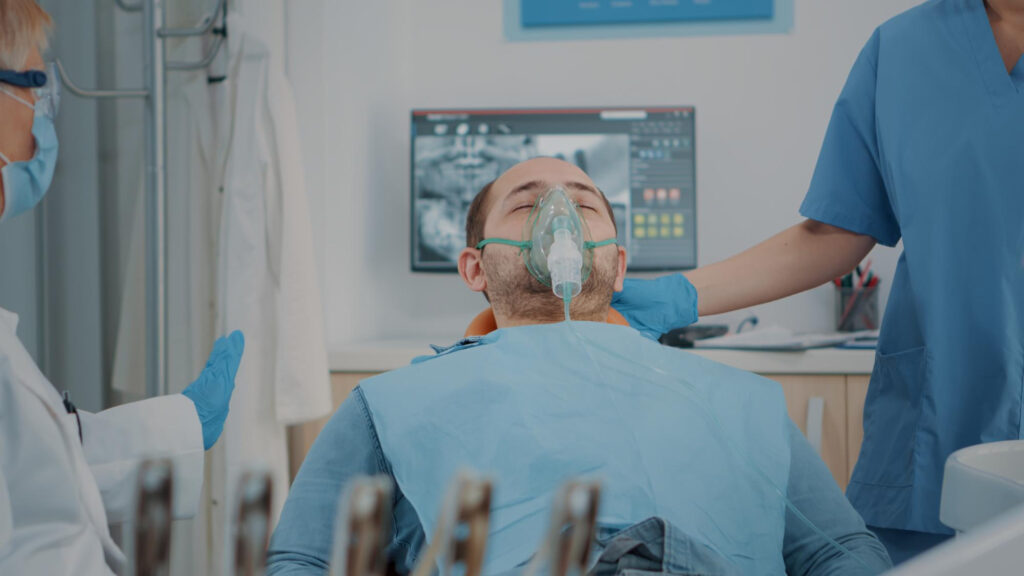
Nitrous oxide is given through a calibrated system that mixes N₂O and oxygen and delivers it through a nasal mask or hood. These systems include safety features that ensure oxygen is always present and prevent unsafe concentrations. Clinics also use scavenging systems to limit staff exposure.
During the procedure, the clinician uses a titration approach. They start with 100% oxygen, then slowly add nitrous oxide in small steps until you reach the minimum level needed for comfort. After the procedure, they stop the nitrous oxide and give you 100% oxygen for a short time to clear out any remaining gas.
Nitrous oxide should only be administered by trained dental personnel who follow professional guidelines and local regulations. Staff must be trained in airway management and basic life-support, and many areas require specific certification to use N₂O.
Administering Nitrous Oxide Safely During the Procedure
During nitrous oxide sedation, the clinician provides continuous monitoring to ensure the patient remains safe and comfortable. This includes observing the patient’s level of consciousness, breathing, skin color, and overall comfort. If a patient has more complex medical needs or requires a deeper level of sedation, additional tools may be used. Guidelines recommend increasing the level of monitoring when patient risk or sedation depth rises.
Signs that the nitrous oxide level needs adjustment.
- If sedation is too light, the patient may show ongoing anxiety, movement, or discomfort. In these cases, the clinician may increase the N₂O concentration in small steps.
- If sedation becomes too deep, symptoms like slurred speech, reduced responsiveness, or slow breathing may appear. The clinician will then lower or stop the nitrous oxide, provide oxygen, and offer supportive care. Because nitrous oxide is titrated gradually, significant over-sedation is rare when proper protocols are followed.
Proper documentation and safety checks are also essential. The clinician records the pre-sedation evaluation, the concentrations used, monitoring findings, and the patient’s recovery status. Emergency equipment must be readily accessible throughout the procedure.
Monitoring Effects and Adjusting Dosage for Comfort
During nitrous oxide sedation, the goal is to ensure the patient stays safe, comfortable, and properly relaxed throughout the procedure. This is done through continuous observation, careful adjustments, and structured safety checks. The following areas guide how clinicians monitor effects and modify dosage when needed.
Clinical monitoring
- Continuous observation of consciousness, breathing pattern, skin color, and overall comfort
- Added monitoring for higher-risk patients or deeper sedation: pulse oximetry, blood pressure, and sometimes capnography
- Monitoring intensity increases based on patient risk and sedation depth
Signs that indicate adjustment is needed
- Too light: persistent anxiety, movement, or pain → clinician increases N₂O in small increments
- Too deep: slurred speech, reduced responsiveness, or depressed breathing → clinician lowers or stops N₂O, gives oxygen, and provides supportive care
- Gradual titration makes serious over-sedation uncommon when protocols are followed
Documentation and safety checks
- Record of pre-sedation evaluation, concentrations used, monitoring observations, and recovery status
- Emergency equipment kept immediately available: oxygen, suction, airway tools, and essential emergency medications
Managing Common Sensations While Breathing Nitrous Oxide
When breathing nitrous oxide, it’s normal to experience lightheadedness, warmth, tingling, a floating or detached feeling, or changes in how sounds and time are perceived. These sensations come from dose-related effects on the central nervous system, are generally harmless, and usually fade quickly once the gas is stopped and you breathe oxygen. Most patients find them mild and often pleasant.
Some patients may notice nausea, dizziness, or a brief headache. These effects are uncommon but can happen with higher concentrations, a full stomach, or when combined with other medications. Clinicians lower the risk by using the lowest effective dose, adjusting it gradually, and giving a short period of oxygen afterward to clear the remaining gas.
It’s important to alert the team if you feel short of breath, have chest pain, become excessively drowsy, or experience persistent vomiting. Mild sensations like warmth or tingling are expected, and the team can adjust the level to keep you comfortable.
Key Takeaways
- Nitrous oxide provides fast, controlled anxiety relief.
It creates a calming effect within minutes, reduces awareness of discomfort, and keeps the patient conscious and responsive. Its rapid onset and quick recovery make it ideal for short dental procedures. - Proper preparation ensures safe and comfortable use.
Clinics review medical history, provide guidance on clothing and meals, and explain expected sensations and side effects. Most patients can drive afterward, but transportation may be advised if grogginess occurs. - Safe administration relies on calibrated equipment and trained staff.
A controlled N₂O–oxygen blend is delivered through a nasal mask, with titration in small steps. Only trained personnel following professional guidelines should administer nitrous oxide. - Continuous monitoring helps maintain the right sedation level.
Clinicians track consciousness, breathing, and comfort, using additional monitoring tools when needed. They adjust N₂O levels if sedation is too light or too deep, reducing risks through gradual titration. - Common sensations are normal but should be reported if severe.
Mild effects like tingling, warmth, or lightheadedness are typical and fade quickly. Nausea or dizziness can occur but are minimized with proper dosing. Serious symptoms require immediate attention.
FAQs:
Does nitrous oxide help with anxiety at the dentist?
Yes. Nitrous oxide provides a fast, calming effect that reduces anxiety while keeping you awake, comfortable, and able to respond.
What do dentists give for anxiety?
Dentists commonly use nitrous oxide, and in some cases may offer oral sedatives or other calming techniques depending on the patient’s needs.
How to reduce anxiety at the dentist?
Using nitrous oxide, discussing concerns with your dental team, and preparing for your appointment with clear guidance can help ease anxiety.
Is nitrous worth it at the dentist?
For many patients, yes. Nitrous oxide offers quick relief from anxiety, wears off fast, and provides a more comfortable overall experience.
Sources.
Khinda, V., Rao, D., & Sodhi, S. P. S. (2023). Nitrous Oxide Inhalation Sedation Rapid Analgesia in Dentistry: An Overview of Technique, Objectives, Indications, Advantages, Monitoring, and Safety Profile. International journal of clinical pediatric dentistry, 16(1), 131–138. https://doi.org/10.5005/jp-journals-10005-1807
Kuroiwa, K., Harano, N., Shigeyama-Tada, Y., Ono, K., & Watanabe, S. (2021). Effects of inhalation sedation with nitrous oxide on intraoral senses. pediatric dental journal, 31(3), 248-255. https://doi.org/10.1016/j.pdj.2021.08.002
You May Also Like: