 by Madison Dental Art Review Board
Nearly 40% of pregnant women experience a dental problem that requires professional attention, yet many delay or skip dental care out of fear that X-rays will harm their baby. That fear, while understandable, is not supported by current evidence. The question of whether can you get dental x-rays while pregnant has a clear, science-backed answer: yes, when clinically necessary, dental X-rays are considered safe during pregnancy.
This article explains exactly why, what precautions are taken, and how to make the smartest decisions for your oral health and your baby’s wellbeing.
Table of Contents
Key Takeaways
- Dental X-rays are considered safe during pregnancy when they are clinically necessary, according to major dental and medical organizations.
- The radiation dose from a dental X-ray is extremely low, far below any threshold associated with fetal harm.
- Modern digital X-ray technology reduces radiation exposure even further compared to older film-based systems.
- Delaying necessary dental treatment during pregnancy can pose greater risks than the X-ray itself.
- Always inform your dental team that you are pregnant so they can tailor your care appropriately.
Why Pregnant Women Fear Dental X-Rays, And What the Evidence Actually Shows
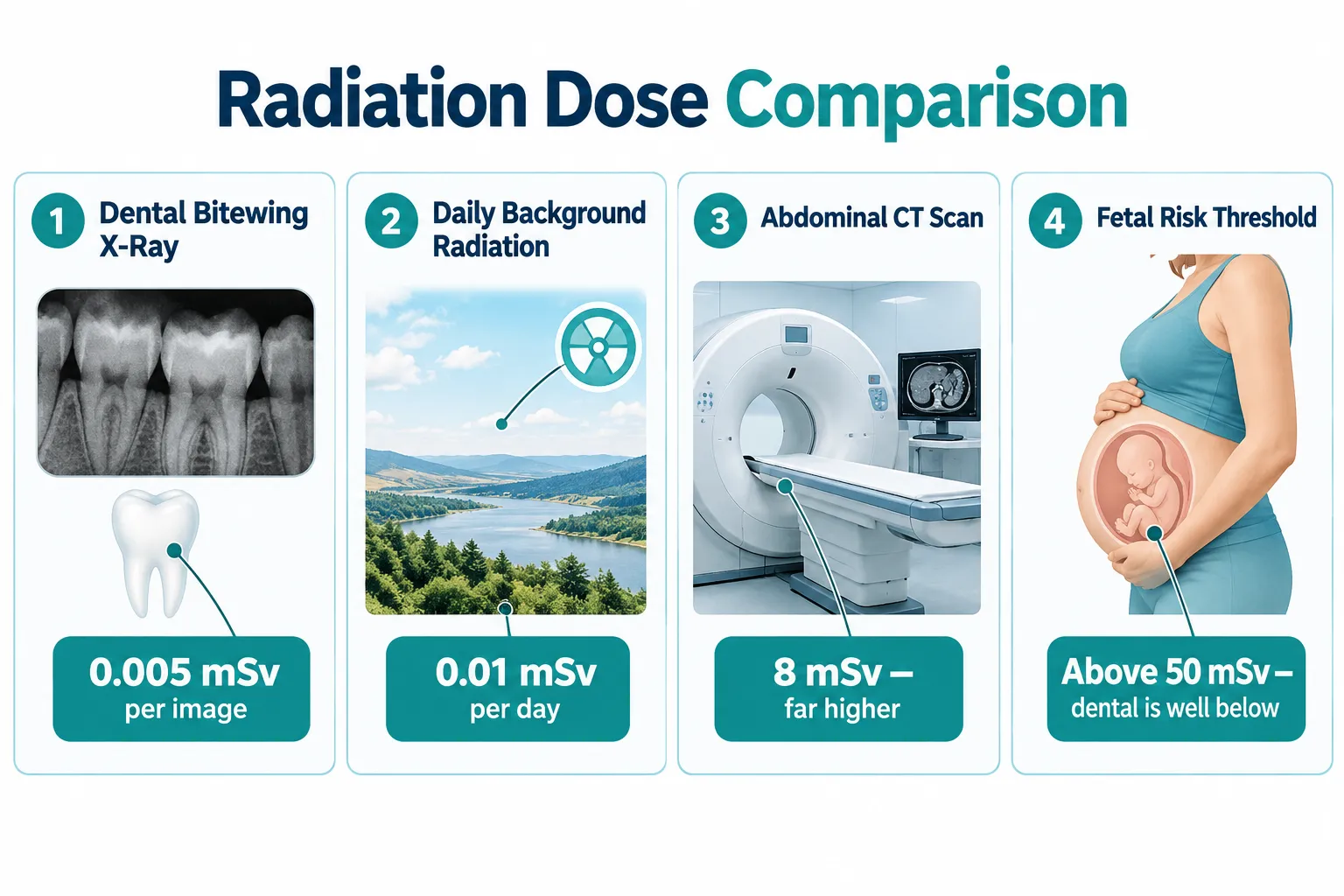
The concern is intuitive: radiation sounds dangerous, and protecting a developing baby is every parent’s instinct. But the actual radiation dose involved in a dental X-ray is remarkably small. A standard bitewing X-ray, the kind used to check for cavities between teeth, delivers roughly 0.005 millisieverts (mSv) of radiation. To put that in perspective, you absorb about 0.01 mSv just from natural background radiation on a typical day.
The fetal risk threshold recognized by radiation safety experts is above 50 mSv of direct fetal exposure. A full set of dental X-rays delivers a fraction of a fraction of that amount. The developing fetus is also located far from the mouth, meaning the beam never points toward the abdomen during a standard dental X-ray.
Major professional organizations, including the American Dental Association, the American College of Obstetricians and Gynecologists, and the American College of Radiology, all confirm that dental X-rays are safe for pregnant patients when there is a clinical reason to take them. Their guidance is consistent: do not delay necessary imaging, but avoid purely elective X-rays that can reasonably wait until after delivery.
The greater risk is often the untreated dental problem itself. Untreated infections, abscesses, and advanced gum disease have been linked in research to pregnancy complications including preterm birth and low birth weight. Avoiding a necessary X-ray to diagnose and treat a problem is not a risk-free choice.
Can You Get Dental X-Rays While Pregnant Safely? Comprehending the Precautions
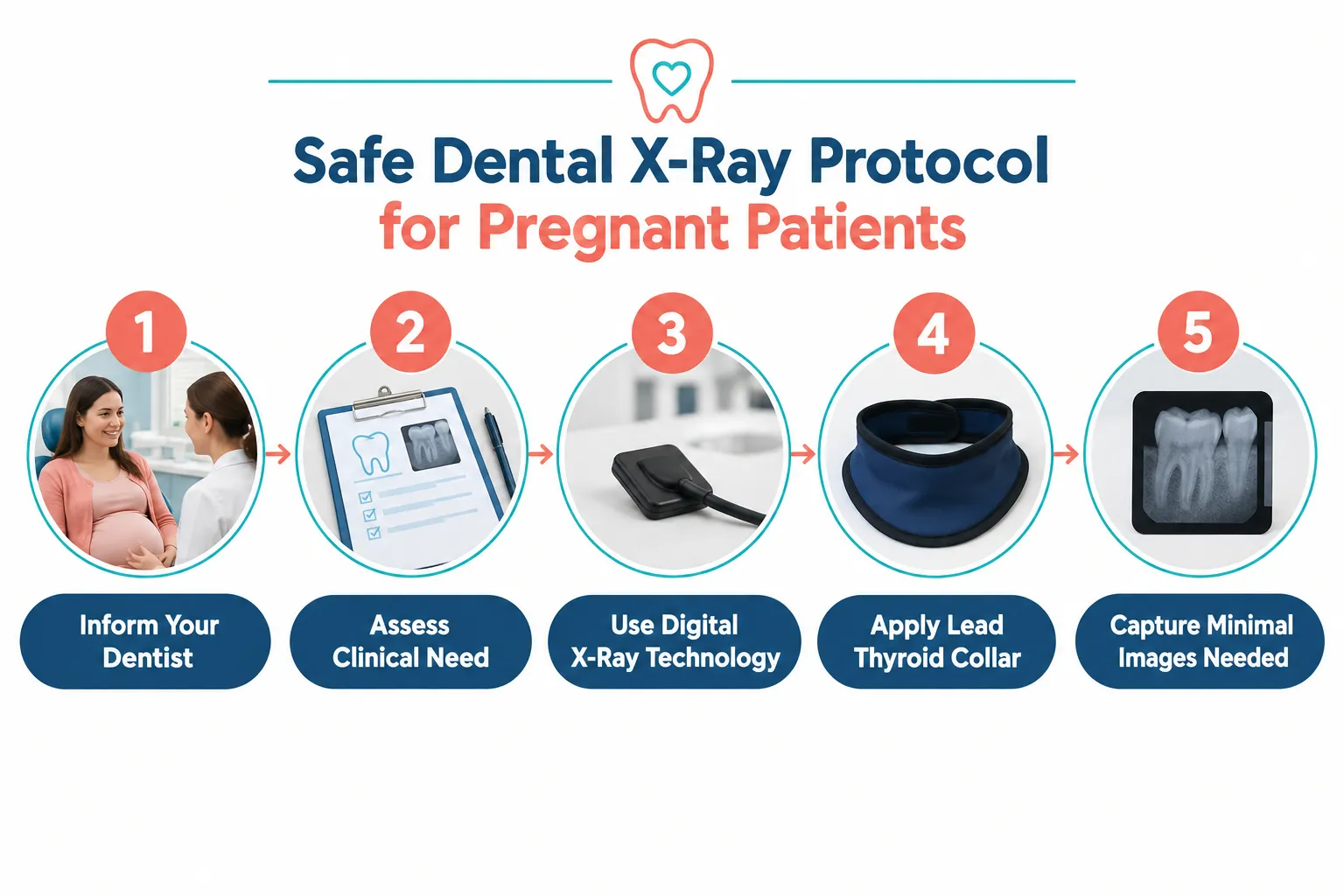
The answer is yes, with appropriate precautions that any well-equipped dental practice will already have in place. Here is what safe dental imaging during pregnancy looks like in practice.
Digital X-Ray Technology Reduces Exposure Further
Modern dental practices use digital dental X-ray technology rather than older film-based systems. Digital sensors require significantly less radiation to produce a clear, diagnostic-quality image. At Madison Dental Art, our digital X-ray system is part of a broader commitment to advanced, patient-safe imaging technology.
Protective Equipment Is Standard
A lead apron covering the torso and a thyroid collar are routinely offered to all patients during dental X-rays. While updated guidelines from several professional bodies now indicate that routine abdominal shielding is no longer required based on the extremely low scatter radiation involved, many practices, including ours, continue to offer it as a standard courtesy, particularly for pregnant patients who want that extra layer of reassurance.
Only Necessary Images Are Taken
The guiding principle in dental imaging is “as low as reasonably achievable,” often called the ALARA standard. This means your dentist takes only the number of images genuinely needed to make a clinical diagnosis, no more. For a pregnant patient, this principle is applied with extra care.
Timing Within Pregnancy
While dental X-rays are considered safe throughout all three trimesters, many dentists prefer to schedule non-urgent imaging during the second trimester when possible. The first trimester is a period of critical fetal organ development, and the third trimester can make sitting still in a dental chair uncomfortable. That said, if a dental emergency arises, a suspected abscess, a cracked tooth, or a severe infection, imaging should not be delayed regardless of trimester.
Clinical Note:If you are experiencing persistent tooth pain, swelling, or signs of a dental abscess during pregnancy, seek care promptly. Untreated oral infections can enter the bloodstream and pose real risks to both mother and baby. A dental X-ray to diagnose and treat the problem is the safer path.
What Dental Treatments Are Safe During Pregnancy, and What to Postpone
Comprehending when dental X-rays are appropriate is part of a broader picture of prenatal oral health. Here is a practical guide to what is generally safe, what should be timed carefully, and what can wait.
Safe and Recommended During Pregnancy
- Routine dental checkups and cleanings, These are not only safe but strongly encouraged. Hormonal changes during pregnancy increase the risk of gingivitis and gum disease, making professional cleanings especially important.
- Dental X-rays when clinically necessary, As discussed, safe with standard precautions.
- Cavity fillings and crowns, Treating active decay prevents infection from spreading. Local anesthetics used in dentistry (such as lidocaine) are considered safe during pregnancy.
- Treatment of dental abscesses, Prompt treatment is essential. If you are in the Forest Hills or Queens area and experiencing symptoms of a dental abscess, our team at Madison Dental Art can evaluate and treat you safely.
- Emergency root canals, If a tooth nerve becomes infected, treatment should not be delayed.
Procedures to Time Carefully or Postpone
| Procedure | Recommendation |
|---|---|
| Elective X-rays (no symptoms) | Postpone until after delivery |
| Teeth whitening | Postpone, see our guide on whether pregnant women can get teeth whitening |
| Elective cosmetic procedures | Postpone |
| Orthodontic adjustments (existing braces) | Continue as scheduled |
| New orthodontic treatment | Discuss timing with your dentist |
If you are curious about cosmetic dental work and pregnancy more broadly, our article on whitening your teeth while pregnant without risks covers that topic in detail.
Oral Health During Pregnancy: Why It Matters More Than You Think
Pregnancy changes your body in ways that directly affect your mouth. Elevated estrogen and progesterone levels cause gum tissue to become more sensitive and reactive to plaque. This condition, called pregnancy gingivitis, affects a significant portion of pregnant women and can progress to more serious gum disease if left untreated.
Common oral health changes during pregnancy include:
- Increased gum sensitivity and bleeding
- Higher risk of cavities due to dietary changes and morning sickness (stomach acid erodes enamel)
- Dry mouth, which reduces saliva’s natural protective effect
- Loose teeth in some cases, due to hormonal effects on the ligaments supporting teeth
Maintaining regular dental checkups during pregnancy is one of the most effective things you can do for both your own health and your baby’s. The American College of Obstetricians and Gynecologists explicitly recommends that pregnant women continue routine dental care throughout pregnancy.
At Madison Dental Art, our team, including founder Dr. Alexander Chao, who graduated in the top 3% of his class at NYU College of Dentistry, and periodontology specialist Dr. Robert Weber, a Diplomate of the American Board of Periodontology, is experienced in providing safe, thoughtful care for pregnant patients. We understand that this is a time when trust and clear communication matter more than ever.
Talking to Your Dental Team: What to Tell Them Before Your Appointment
Before any dental appointment during pregnancy, share the following information with your dental team:
- How far along you are, Trimester matters for timing decisions.
- Any pregnancy complications, High-risk pregnancies may warrant extra coordination with your OB-GYN.
- Medications you are taking, Some prenatal vitamins and medications affect dental treatment decisions.
- Any symptoms you are experiencing, Pain, swelling, bleeding gums, or sensitivity should all be reported.
- Your OB-GYN’s contact information, For complex cases, your dentist and obstetrician may want to communicate directly.
Your dentist should never make you feel rushed or dismissed when you raise concerns about X-rays during pregnancy. A good dental team will explain the clinical reason for any imaging, discuss alternatives if they exist, and take the time to answer your questions.
FAQs:
Can you get dental x-rays while pregnant in the first trimester?
Yes, dental X-rays can be taken in the first trimester when there is a genuine clinical need, for example, to diagnose a suspected infection or evaluate a painful tooth. The radiation dose is far too low to cause fetal harm. That said, many dentists prefer to defer purely elective imaging until the second trimester as an extra precaution, since the first trimester is when major organ development occurs. If you are experiencing a dental emergency in the first trimester, do not delay care. Inform your dentist of your pregnancy and let them guide the decision together with you.
Is it safe to have a full set of X-rays taken during pregnancy?
A full mouth series of X-rays, which includes multiple images, still delivers a total radiation dose that is well below any threshold associated with fetal harm. Nevertheless, the ALARA principle means your dentist should only take the number of images actually needed for diagnosis. A full series is rarely necessary at a routine checkup. If your dentist recommends a comprehensive set of X-rays, ask why each image is needed. A good clinician will be happy to explain.
Do I need a lead apron during dental X-rays while pregnant?
While updated professional guidelines indicate that the scatter radiation from dental X-rays is too low to require mandatory abdominal shielding, most dental offices, including Madison Dental Art, continue to offer a lead apron and thyroid collar as a standard precaution for pregnant patients. It causes no harm and provides peace of mind. If you would like one, simply ask.
What if I need an X-ray but my dentist is hesitant because I am pregnant?
Some patients encounter dentists who are overly cautious and refuse to take any X-rays during pregnancy, even when clinically necessary. This is not consistent with current evidence-based guidelines. If you are in pain, have signs of infection, or need imaging to guide treatment, you deserve care. At Madison Dental Art in Forest Hills, Queens, our team follows current clinical guidelines and will never withhold necessary diagnostic imaging based on outdated fears.
References
- American Dental Association. (2022). Oral health during pregnancy. ADA.org. https://www.ada.org/resources/research/science-and-research-institute/oral-health-topics/pregnancy
- American College of Obstetricians and Gynecologists. (2021). Oral health care during pregnancy and through the lifespan (Committee Opinion No. 569, reaffirmed 2021). ACOG.org. https://www.acog.org/clinical/clinical-guidance/committee-opinion/articles/2013/08/oral-health-care-during-pregnancy-and-through-the-lifespan
- National Maternal and Child Oral Health Resource Center. (2022). Oral health care during pregnancy: A national consensus statement. Georgetown University. https://www.mchoralhealth.org/PDFs/OralHealthPregnancyConsensus.pdf
- U.S. Food and Drug Administration. (2023). Radiation-emitting products: Dental X-rays. FDA.gov. https://www.fda.gov/radiation-emitting-products/medical-x-ray-imaging/dental-x-rays
- Health Resources and Services Administration (HRSA). (2021). Oral health and pregnancy. HRSA.gov. https://www.hrsa.gov/sites/default/files/hrsa/oral-health/oral-health-pregnancy.pdf
Madison Dental Art
Content written and reviewed by
Madison Dental Art Review Board
Madison Dental Art : Experienced dentists and specialists dedicated to providing accurate, trusted, and patient-focused oral health information.
Important information
The content of this article is for strictly educational and informational purposes. It does not replace in-person professional medical diagnosis, advice, or treatment.


