A single dental implant can cost between $3,000 and $6,000 — and full-arch solutions can exceed $20,000. For many patients in Forest Hills, Queens, and across New York City, that price tag is the one thing standing between them and a fully restored smile. The good news is that the answer to the question “are there financing options available for dental implants” is a clear and resounding yes — and the range of choices available in 2026 is broader than most patients realize.
Whether you are replacing one tooth or considering a complete restoration, comprehending your payment options before your first consultation can make the entire process far less stressful. This guide breaks down every major financing path, so you can walk into your appointment informed and ready to move forward.
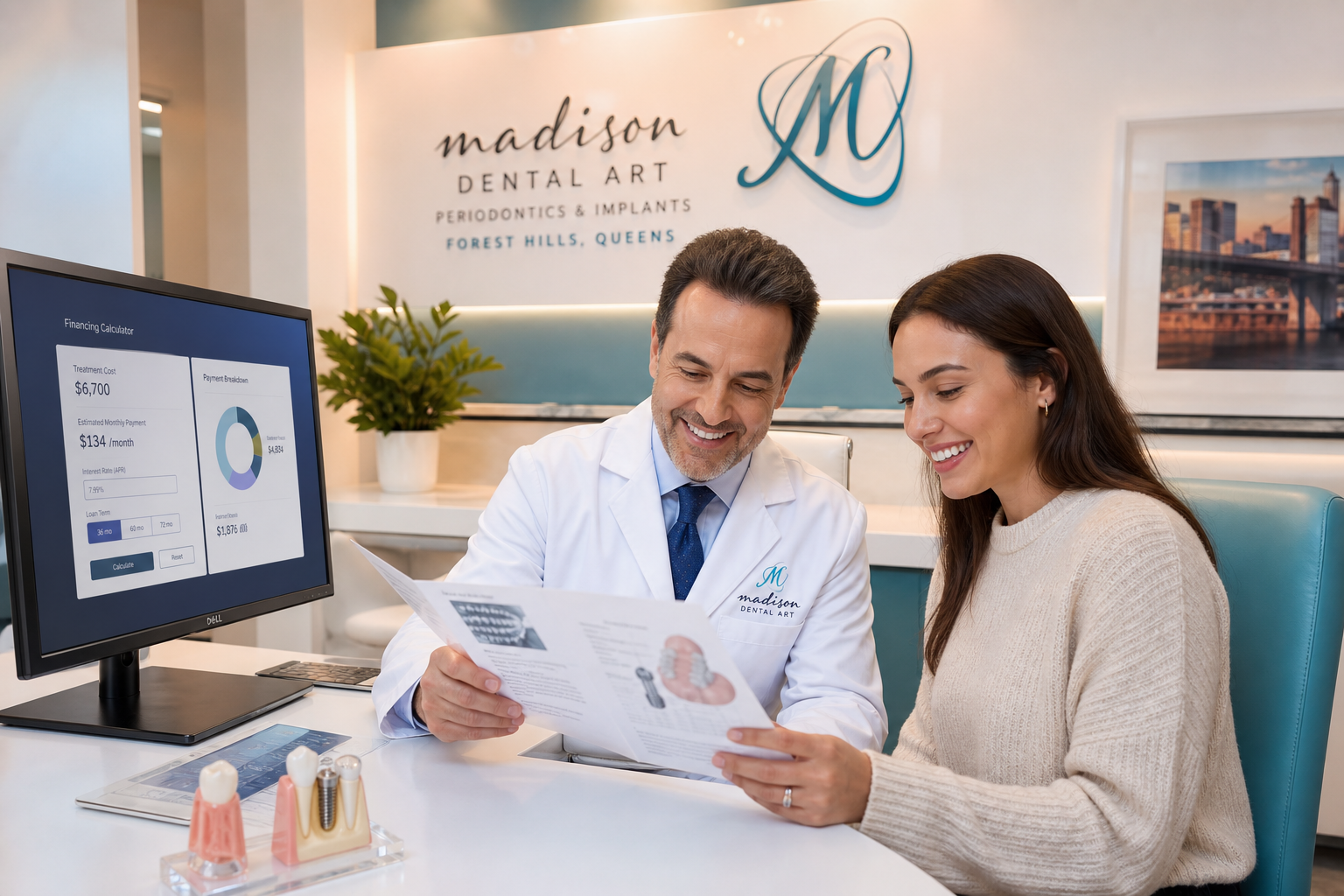
Affordable plans dental implants in Forest Hill.
Key Takeaways
- Dental implant financing options in 2026 include in-house payment plans, third-party lenders, medical credit cards, and pre-tax health accounts.
- HSAs and FSAs can reduce your effective implant cost by 20% to 35% by using pre-tax dollars.
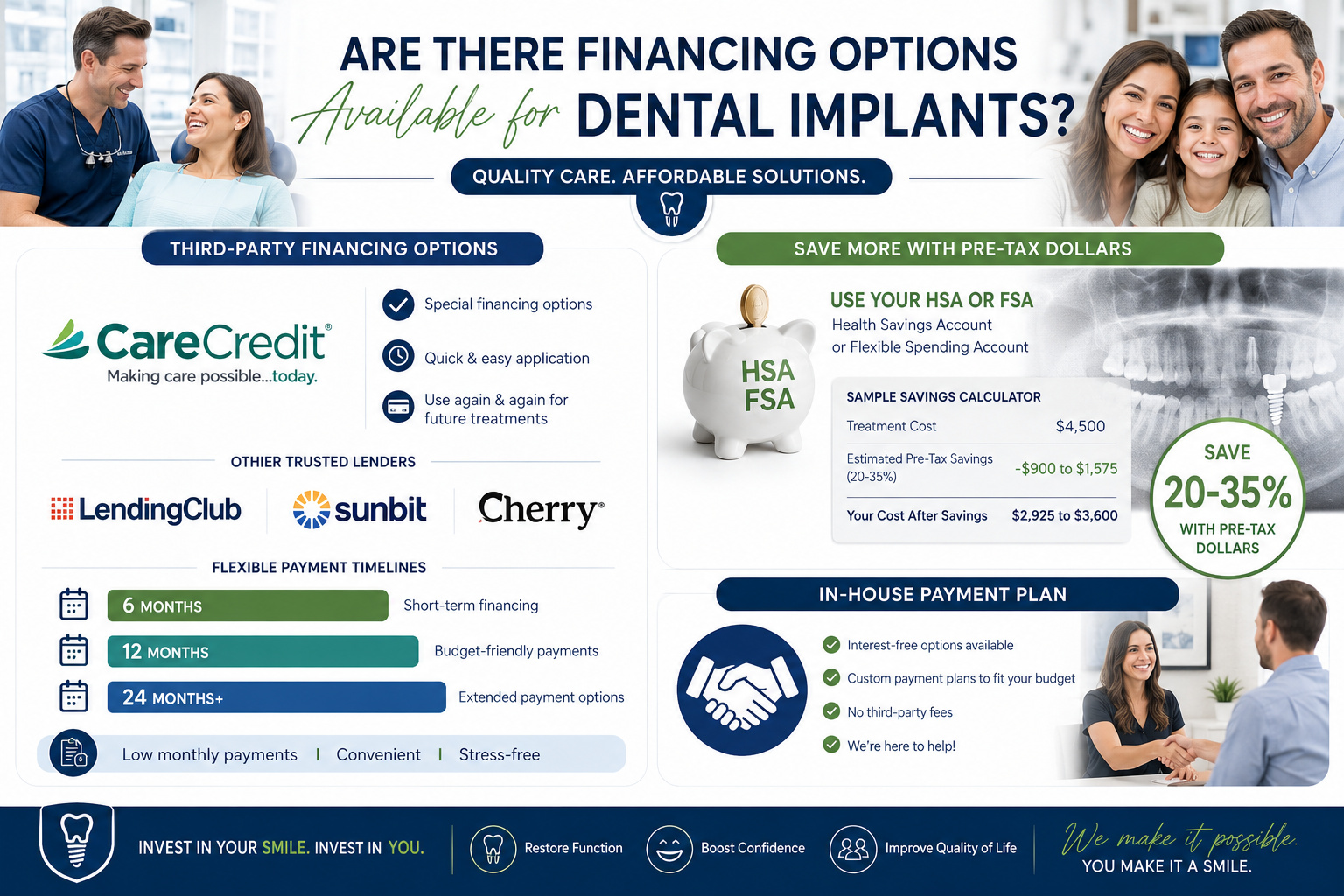
- Third-party lenders like CareCredit offer no-interest promotions for 6 to 24 months when paid in full.
- Some financing programs report approval rates above 80%, making implants accessible across a wide credit spectrum.
- Speaking with your dental team early about cost and financing leads to better planning and fewer surprises.
Are There Financing Options Available for Dental Implants Through Third-Party Lenders
Third-party financing is the most widely used path for patients who want predictable monthly payments without depleting their savings. Several well-established companies specialize in healthcare financing, and each offers a different structure.
CareCredit
CareCredit functions like a dedicated healthcare credit card. It offers no-interest promotional periods of 6, 12, 18, or 24 months when the full balance is paid within that window. Approval decisions are typically immediate, and the card can be used for other medical and dental expenses as well. The caution: if the balance is not paid in full before the promotional period ends, deferred interest is applied retroactively.
LendingClub
LendingClub provides extended repayment terms ranging from 24 to 84 months. This makes it a strong option for patients who need a longer runway to pay off a larger treatment plan, such as full-arch implants.
Cherry Financing
Cherry offers loan amounts up to $35,000 with payment plans from 3 to 60 months. It includes true 0% APR options and no hidden fees. Importantly, Cherry reports approval rates above 80% across the credit spectrum, which means patients who have been turned down elsewhere often qualify here.
Sunbit
Sunbit provides loan amounts from $2,500 to $55,000 with repayment terms up to 96 months (8 years). APRs range from 4.99% to 15.99%, and there are no retroactive interest penalties — a meaningful distinction from deferred-interest products.
Proceed Finance
Proceed Finance offers low interest rates with repayment terms up to 120 months, making it one of the most flexible long-term options for patients facing larger treatment costs.
Important note: Always read the full terms of any financing agreement before signing. Ask specifically whether interest is “deferred” or “waived,” as these are very different outcomes if you carry a balance past the promotional period.
In-House Payment Plans and Pre-Tax Accounts
Not every financing solution involves a third-party lender. Some of the most cost-effective options come directly from your dental practice or your own employer benefits.
In-House Payment Plans
Many dental practices offer direct payment arrangements. A typical structure requires a down payment of 20% to 50% of the total cost, with the remainder paid in monthly installments over 6 to 24 months — often with little or no interest. These plans do not require a credit check in some cases, making them accessible to patients who prefer to keep their financing private and simple.
Health Savings Accounts (HSAs) and Flexible Spending Accounts (FSAs)
This is one of the most underutilized financing tools available. Both HSAs and FSAs allow you to pay for dental implants using pre-tax dollars, which effectively reduces your out-of-pocket cost by 20% to 35% depending on your tax bracket. If your employer offers either account type, maximizing your contribution before your implant procedure is a straightforward way to reduce the real cost.
The main difference: FSA funds typically must be used within the plan year, while HSA funds roll over indefinitely and can even be invested.
Home Equity Loans and Lines of Credit
For patients who own property in the New York City area, a home equity loan or HELOC can offer fixed interest rates over 5 to 15 years. Interest rates are generally lower than medical credit cards. Nevertheless, this option ties dental financing to your home, which carries its own financial considerations and should be discussed with a financial advisor.
Are There Financing Options Available for Dental Implants When Insurance Is Involved
Dental insurance coverage for implants varies widely. Some plans cover a portion of the crown or preparatory procedures, while others exclude implants entirely as a “cosmetic” treatment. Knowing what your plan covers — and what it does not — is essential before choosing a financing method.
Our article on whether dental insurance covers implants walks through the most common coverage scenarios in detail. Even partial insurance coverage can meaningfully reduce the amount you need to finance.
If you carry Blue Cross Blue Shield or Delta Dental, Madison Dental Art accepts both plans. You can find insurance-specific information for Blue Cross Blue Shield patients in Forest Hills and Delta Dental patients in Forest Hills on our website.
Choosing the Right Financing Path: A Quick Comparison
| Option | Best For | Interest | Credit Check |
|---|---|---|---|
| CareCredit | Short-term, no-interest payoff | Deferred (0% promo) | Yes |
| LendingClub | Extended monthly payments | Fixed rate | Yes |
| Cherry | Broad credit spectrum | 0% APR options | Soft check |
| Sunbit | Large balances, long terms | 4.99%–15.99% | Yes |
| In-House Plan | Patients avoiding third parties | Low or none | Sometimes no |
| HSA/FSA | Tax-advantaged savings | None | No |
| Home Equity | Low-rate, long-term financing | Fixed/variable | Yes |
What to Expect at Madison Dental Art
At Madison Dental Art, dental implants are placed by Dr. Robert Weber, a board-certified Diplomate of the American Board of Periodontology. Dr. Weber brings specialist-level expertise in the bone and gum structures that determine long-term implant success. Our team uses 3D panoramic imaging to plan each case with precision, and we walk every patient through a complete cost and financing discussion before treatment begins.
If you are weighing implants against other tooth replacement options, our comparison of dental implant options for a confident smile and our guide on whether dental implants are worth it can help you make a fully informed decision.
For patients who need preparatory work such as bone grafting, our resource on bone grafting costs for dental implants explains what to expect financially before the implant itself is placed.
FAQs
Are there financing options available for dental implants if I have less-than-perfect credit?
Yes. Several financing programs, including Cherry and some in-house payment plans, are specifically designed for patients across the credit spectrum. Cherry reports approval rates above 80%, and in-house plans at many practices do not require a third-party credit check at all. Speaking directly with your dental team about your situation is always the best first step.
Can I use my HSA or FSA to pay for dental implants?
Yes. The IRS classifies dental implants as a qualified medical expense, which means both Health Savings Accounts and Flexible Spending Accounts can be used to cover implant costs. Using pre-tax dollars effectively reduces your out-of-pocket expense by 20% to 35%, depending on your tax bracket. Check with your plan administrator to confirm your specific account’s rules.
How long does a typical dental implant financing plan last?
It depends on the lender and the total amount financed. Short-term no-interest plans through companies like CareCredit run 6 to 24 months. Extended plans through LendingClub can run 24 to 84 months. Sunbit offers terms up to 96 months, and Proceed Finance extends up to 120 months. In-house plans at dental practices typically run 6 to 24 months. The right term depends on your monthly budget and total treatment cost.
Does Madison Dental Art offer financing for dental implants?
Madison Dental Art works with patients to find a payment approach that fits their needs. We encourage you to contact our Forest Hills office directly at (718) 268-8228 or visit our contact page to discuss your specific situation. Our team will review your insurance coverage, discuss applicable financing options, and help you build a clear treatment and payment plan before any procedure begins.
References
- American Dental Association. (2023). Dental implants: Patient information. ADA.org. https://www.ada.org/resources/research/science-and-research-institute/oral-health-topics/dental-implants
- National Institute of Dental and Craniofacial Research. (2022). Tooth loss in adults. NIDCR, U.S. Department of Health & Human Services. https://www.nidcr.nih.gov/research/data-statistics/tooth-loss/adults
- U.S. Internal Revenue Service. (2023). Publication 502: Medical and dental expenses. IRS.gov. https://www.irs.gov/publications/p502
- American Academy of Periodontology. (2022). Dental implants. Perio.org. https://www.perio.org/for-patients/periodontal-treatments-and-procedures/dental-implant-surgery/
- U.S. Consumer Financial Protection Bureau. (2021). Medical debt and credit reports. CFPB.gov. https://www.consumerfinance.gov/about-us/blog/medical-debt-credit-reports/