 by Madison Dental Art Review Board
Nearly 15 million root canals are performed in the United States every year, yet many patients still ask their dentist to “just pull it.” That instinct is understandable, but it often leads to a longer, more costly journey than saving the tooth in the first place. Comprehending the real differences in root canal vs. extraction: how to decide when a tooth is failing is one of the most valuable pieces of dental knowledge you can have.
At Madison Dental Art in Forest Hills, Queens, we walk patients through this decision every week. The goal of this guide is to give you the clinical facts, the questions to ask your dentist, and a clear framework for choosing the path that protects your long-term oral health.
Table of Contents
Key Takeaways
- Saving a natural tooth is almost always the preferred clinical outcome when the tooth is restorable.
- Modern root canal treatment carries a success rate of roughly 89-93% and is generally no more uncomfortable than getting a filling.
- Extraction is the right choice when a tooth is structurally unsalvageable, poses a systemic health risk, or when bone support is too compromised to restore it.
- Pulling a tooth without replacing it triggers bone loss, shifting of neighboring teeth, and bite problems that cost more to correct later.
- A full clinical exam, including digital X-rays or a 3D panoramic scan, is the only reliable basis for this decision.
What “Tooth Failure” Actually Means
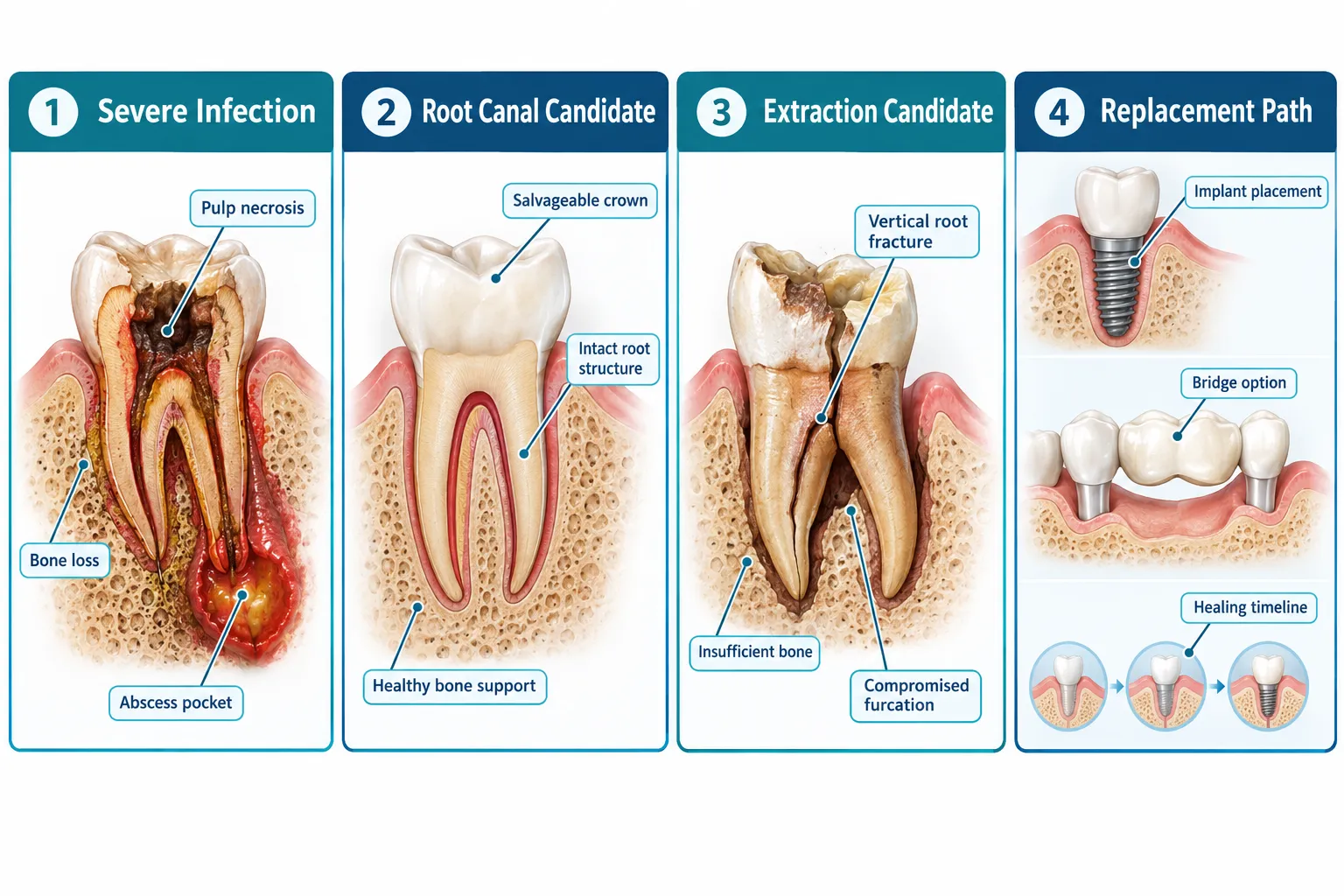
A tooth is considered “failing” when its pulp (the inner nerve and blood vessel tissue), its root, or the surrounding bone has been damaged beyond normal repair with a filling or crown alone. Common causes include deep decay, signs of a tooth infection, advanced gum disease, a cracked root, or trauma.
Not every failing tooth needs to come out. The central question is whether the tooth can be stabilized and restored to full function, and that depends on factors only a dentist can evaluate with proper imaging.
Common Warning Signs That a Tooth Is in Trouble
- Persistent or throbbing pain that does not resolve on its own
- Prolonged sensitivity to heat or cold after the stimulus is removed
- A pimple-like bump on the gum near the tooth (dental abscess)
- Darkening or discoloration of the tooth
- Swelling in the jaw or face
- Looseness in a tooth that was previously stable
If you recognize any of these symptoms, reading about symptoms and the need for a root canal is a helpful starting point, but scheduling an in-person evaluation is the necessary next step.
Root Canal vs. Extraction: How to Decide When a Tooth Is Failing, The Clinical Framework
This is the core decision, and it hinges on several distinct clinical factors. Neither option is universally better. The right answer depends on your specific tooth, your overall health, and your long-term goals.
When a Root Canal Is the Right Choice
A root canal removes infected or dying pulp tissue, disinfects the root canals, seals them, and typically finishes with a crown to restore strength. It keeps your natural tooth in place, and that matters more than most people realize.
The tooth is restorable. If enough healthy tooth structure remains above the gumline to support a crown, root canal therapy is almost always the preferred option. Natural teeth provide a level of chewing efficiency, sensory feedback, and bone stimulation that no prosthetic can fully replicate.
The surrounding bone is intact. Root canal success depends partly on the bone and gum tissue around the tooth remaining healthy. When bone levels are adequate, endodontic treatment in Forest Hills offers an excellent long-term outcome.
Systemic health factors favor retention. Patients managing conditions such as uncontrolled diabetes, bleeding disorders, or those on certain medications (like bisphosphonates for osteoporosis) may face greater surgical risks with extraction. In these cases, a root canal avoids the healing challenges of an open surgical site.
You want to avoid replacement costs. A root canal followed by a crown is, in most cases, significantly less involved, financially and in terms of recovery time, than an extraction followed by an implant, bridge, or partial denture.
“Preserving a natural tooth is the gold standard. The bone around that tooth, the ligament holding it, and the sensory feedback it provides simply cannot be fully duplicated by any artificial replacement.”
When Extraction Is the Right Choice
Extraction becomes clinically appropriate, and sometimes the only reasonable option, in these situations:
| Clinical Situation | Why Extraction Is Indicated |
|---|---|
| Vertical root fracture | A split root cannot be sealed; bacteria will continue to invade |
| Severe bone loss (advanced periodontitis) | No stable foundation for the tooth to remain functional |
| Tooth too structurally compromised | Not enough tooth structure to hold a crown after root canal |
| Failed retreatment with ongoing infection | When a reinfected root canal cannot be resolved by further endodontic care |
| Severe overcrowding (orthodontic need) | Strategic removal to allow proper alignment |
Even when extraction is necessary, the story does not end there. Leaving the gap open is rarely the right call, bone resorption begins within weeks of losing a tooth, neighboring teeth drift, and the opposing tooth may over-erupt. Comprehending your tooth replacement options after extraction is a critical part of the conversation.
Root Canal vs. Extraction: Comparing Recovery, Comfort, and Long-Term Outcomes
One of the biggest myths still circulating is that root canals are exceptionally painful. Modern endodontic techniques, effective local anesthesia, and options like nitrous oxide sedation have made the procedure far more comfortable than its reputation suggests. Most patients report that the procedure itself feels similar to getting a filling.
Recovery at a Glance
Root canal recovery: Most patients return to normal activities within one to two days. Mild soreness in the treated area for a few days is common and manageable with over-the-counter pain relief. You can read a detailed breakdown at what to do after a root canal.
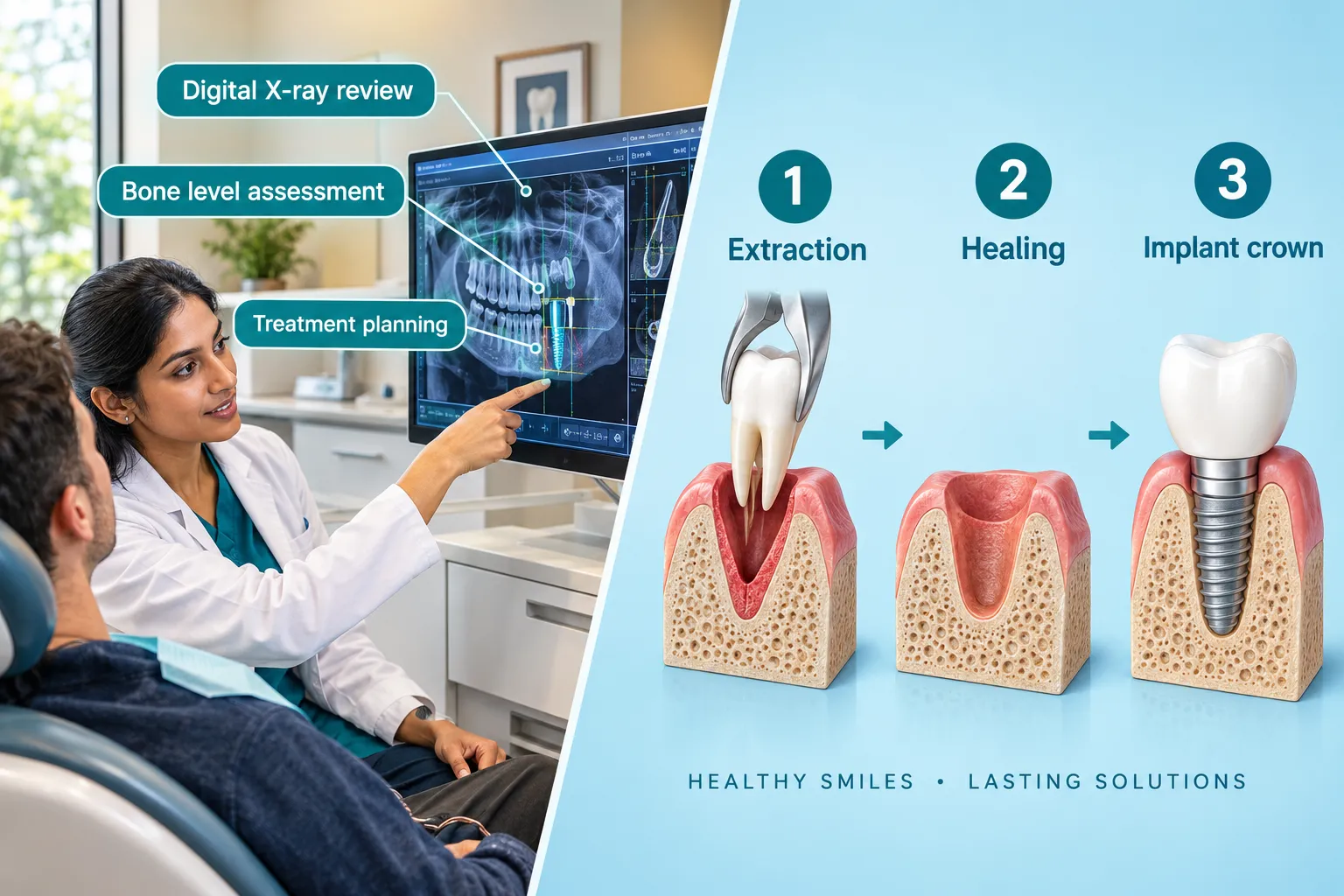
Extraction recovery: Simple extractions typically heal within one to two weeks for the soft tissue, though bone remodeling takes months. Surgical extractions of broken or impacted teeth require a longer, more involved recovery. For a full timeline, see our guide on tooth extraction recovery.
Long-Term Outcomes
Modern root canal treatment achieves a clinical success rate of approximately 89-93% when performed properly and followed up with an appropriate crown. That means the vast majority of treated teeth remain functional for many years, often a lifetime.
Extraction followed by an implant is also a highly successful pathway, but it involves multiple procedures, a healing period of several months before the implant can be loaded, and a higher overall investment of time and resources. It is the right path when the tooth truly cannot be saved, not a shortcut to avoid a root canal.
The Role of Advanced Diagnostics in Making the Right Call
No dentist can recommend root canal vs. extraction from symptoms alone. At Madison Dental Art, Dr. Alexander Chao and our clinical team use digital X-rays and 3D panoramic scanning to evaluate root anatomy, bone levels, infection spread, and structural integrity before recommending a course of action.
This level of precision imaging, available at our Forest Hills office, is what separates a well-informed treatment plan from a guess. It also ensures that if a root canal is recommended, it is because the tooth genuinely has a strong chance of long-term success.
What Happens If You Do Nothing?
Delaying treatment for a failing tooth is not a neutral decision. An untreated dental abscess can spread infection to the jaw, neck, or deeper tissues, a serious and potentially dangerous complication. Beyond the immediate health risk, a failing tooth that is left in place without treatment will continue to deteriorate, ultimately limiting your options and increasing the complexity of any future treatment.
If cost is a concern, Madison Dental Art accepts multiple insurance plans. Visit our insurance information page to understand your coverage before your appointment.
FAQs
Can I always choose a root canal instead of extraction?
Not always. The choice depends on the clinical condition of the tooth. If a tooth has a vertical root fracture, severe bone loss, or is structurally too damaged to support a crown, a root canal will not produce a functional, lasting result. Your dentist will use X-rays and a clinical examination to determine whether the tooth is genuinely restorable before recommending endodontic treatment.
Is a root canal more expensive than an extraction?
The initial cost of a root canal plus a crown is typically higher than a simple extraction on its own. Nevertheless, when you factor in the cost of replacing the extracted tooth, through a dental implant, bridge, or partial denture, extraction often becomes the more expensive option over time. Leaving the gap unfilled is not cost-neutral either, as it leads to bone loss and shifting teeth that require further treatment.
How do I know if my root canal has failed and extraction might be needed?
Signs that a root canal may not have resolved the problem include persistent pain, swelling that returns after treatment, a recurring pimple on the gum, or sensitivity that does not improve. Our detailed resource on how to know if a root canal is failing outlines what to watch for. In some cases, a retreatment can save the tooth; in others, extraction becomes necessary.
What tooth replacement option is best after an extraction?
The most commonly recommended long-term replacement for a single missing tooth is a dental implant, which preserves bone and functions like a natural tooth root. Bridges and partial dentures are also effective options depending on the patient’s bone levels, adjacent teeth, and overall health. Our periodontology specialist, Dr. Robert Weber, a Diplomate of the American Board of Periodontology, performs implant placements at Madison Dental Art.
References
- American Association of Endodontists. (2022). Scope of endodontics: Endodontic diagnosis. https://www.aae.org/specialty/clinical-resources/scope-of-endodontics/
- American Association of Endodontists. (2023). Cracked teeth. https://www.aae.org/patients/dental-symptoms/cracked-teeth/
- National Institute of Dental and Craniofacial Research. (2021). Dental caries (tooth decay). https://www.nidcr.nih.gov/health-info/tooth-decay
- Aminoshariae, A., Kulild, J., & Fouad, A. (2021). Evidence-based recommendations for antibiotic usage to treat endodontic infections and pain: A systematic review of randomized controlled trials. Journal of the American Dental Association, 152(3), 186-196. https://doi.org/10.1016/j.adaj.2020.11.012
- American Dental Association. (2023). Root canals. https://www.ada.org/resources/research/science-and-research-institute/oral-health-topics/root-canals
Madison Dental Art
Content written and reviewed by
Madison Dental Art Review Board
Madison Dental Art : Experienced dentists and specialists dedicated to providing accurate, trusted, and patient-focused oral health information.
Important information
The content of this article is for strictly educational and informational purposes. It does not replace in-person professional medical diagnosis, advice, or treatment.


