 by Madison Dental Art Review Board
Nearly 90% of dental diseases, including cavities between teeth and early bone loss, are invisible to the naked eye. Without radiographs, a dentist is essentially working with one hand tied behind their back. Yet one of the most common questions patients ask is: how often should you get dental x-rays? The answer is not a single number. It depends on your age, oral health history, risk factors, and what your dentist finds during a clinical exam. This guide breaks down exactly what current guidelines recommend, what factors change the equation, and how the team at Madison Dental Art approaches imaging for patients across Forest Hills, Queens, and greater New York City.
Table of Contents
Key Takeaways
- There is no universal “once a year” rule for dental x-rays, frequency is determined by individual risk, age, and clinical findings.
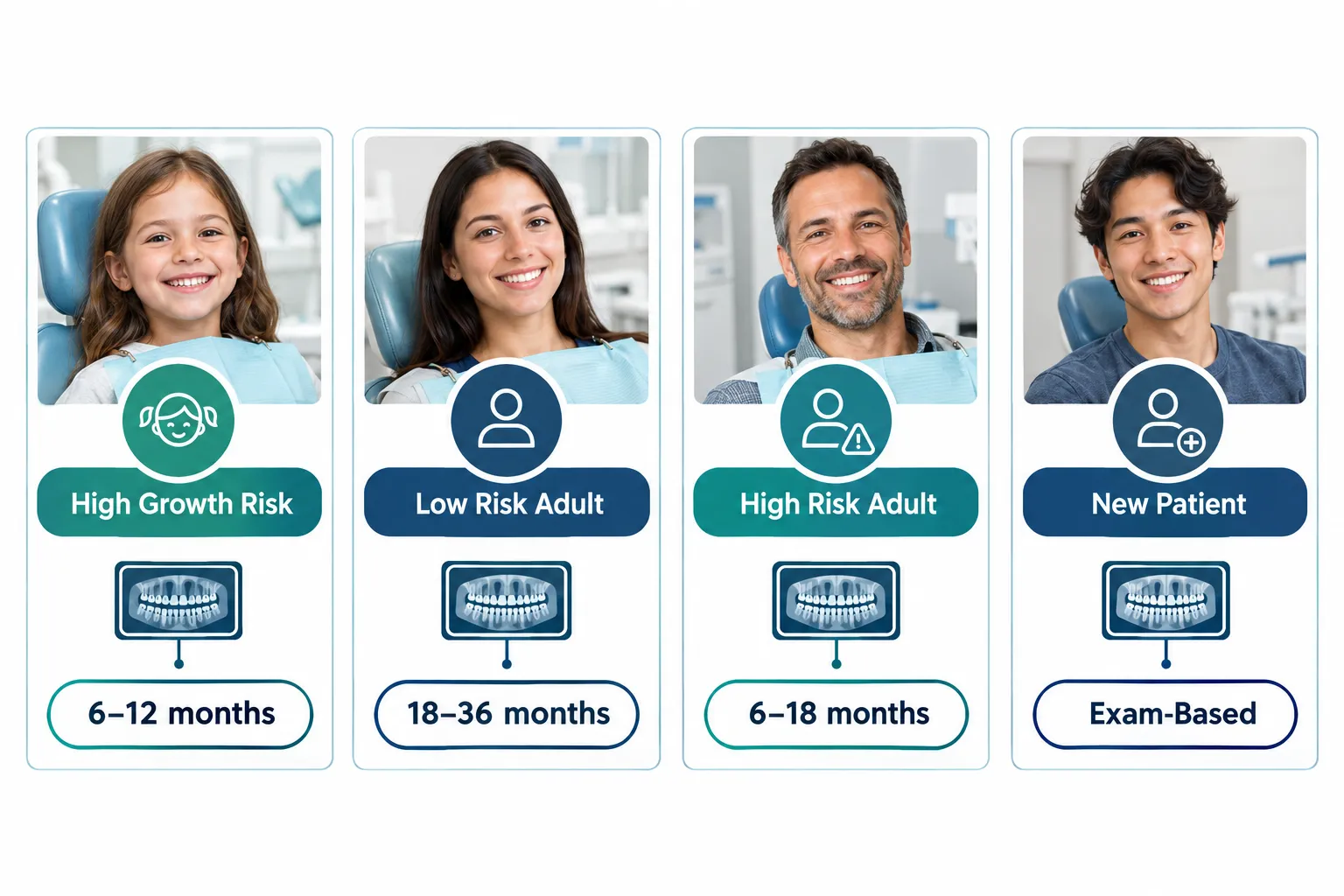
- Low-risk adults may only need bitewing x-rays every 18 to 36 months; high-risk adults may need them every 6 to 18 months.
- Children and teenagers typically require more frequent imaging because their teeth and jaws are actively developing.
- The ALARA principle (As Low As Reasonably Achievable) guides all dental imaging decisions in 2026.
- Insurance coverage should never be the sole reason for scheduling, or skipping, dental x-rays.
What Dental X-Rays Actually Show
Dental radiographs reveal what a visual exam cannot. They expose decay forming between teeth, infections developing at the root tip, bone loss caused by gum disease, impacted teeth, cysts, and early signs of oral pathology. Without this information, small problems grow into costly, painful ones.
There are several types of dental x-rays, each serving a different purpose:
| X-Ray Type | What It Shows | Common Use |
|---|---|---|
| Bitewing | Crowns of upper and lower back teeth | Detecting cavities between teeth |
| Periapical | Full tooth from crown to root tip | Root infections, bone levels |
| Panoramic | Entire mouth in one image | Jaw development, impacted teeth |
| Full-Mouth Series (FMX) | All teeth and supporting bone | Comprehensive baseline record |
| 3D CBCT / Panoramic Scan | Three-dimensional jaw and bone structure | Implant planning, complex cases |
At Madison Dental Art, we use digital dental x-rays in Forest Hills, Queens that emit significantly less radiation than traditional film, typically 80-90% less. Digital sensors also produce sharper images instantly, which means faster, more accurate diagnoses for every patient.
How Often Should You Get Dental X-Rays? Comprehending the Guidelines
The American Dental Association (ADA) and the FDA jointly publish patient-selection criteria that guide dentists on radiograph frequency. Their core message in 2026 is clear: imaging should be clinically justified, not automatic. The question of how often should you get dental x-rays is answered differently for each patient based on a structured risk assessment.
Low-Risk Adult Patients
Adults with no history of cavities, no active gum disease, good oral hygiene, and no symptoms typically fall into the low-risk category. For these patients, bitewing x-rays every 24 to 36 months is generally appropriate. A full-mouth series, once taken as a baseline, does not need to be repeated on a fixed schedule, it is retaken when clinically indicated.
High-Risk Adult Patients
Adults with a history of frequent cavities, active or treated gum disease, dry mouth (often caused by medications), diabetes, or other systemic conditions that affect oral health are considered high-risk. For this group, bitewing x-rays every 6 to 18 months may be recommended. The exact interval is set by the treating dentist based on ongoing monitoring.
If you have been diagnosed with gum disease or require periodontal treatment, more frequent imaging helps track bone levels and treatment response over time.
Children and Teenagers
Children’s mouths change rapidly. Teeth erupt, roots develop, and jaw bones grow, all of which require monitoring. Because primary (baby) teeth are smaller and more tightly spaced, decay can spread quickly and is harder to detect visually. Children at elevated risk may need bitewing x-rays every 6 to 12 months. Low-risk children may be fine with imaging every 12 to 24 months.
Teenagers undergoing orthodontic treatment, whether with braces or clear aligners, often require additional imaging to monitor tooth movement and root health throughout treatment.
New Patients
When you visit a dental practice for the first time, the dentist needs a comprehensive picture of your oral health. Nevertheless, current guidelines are clear: a full-mouth series is not automatically required for every new patient. The decision is based on your clinical examination, dental history, and the availability of recent radiographs from a previous provider. If you have recent x-rays, bring them, or ask your former dentist to transfer them. This avoids unnecessary repeat imaging.
The ALARA Principle: Radiation Safety in Modern Dentistry
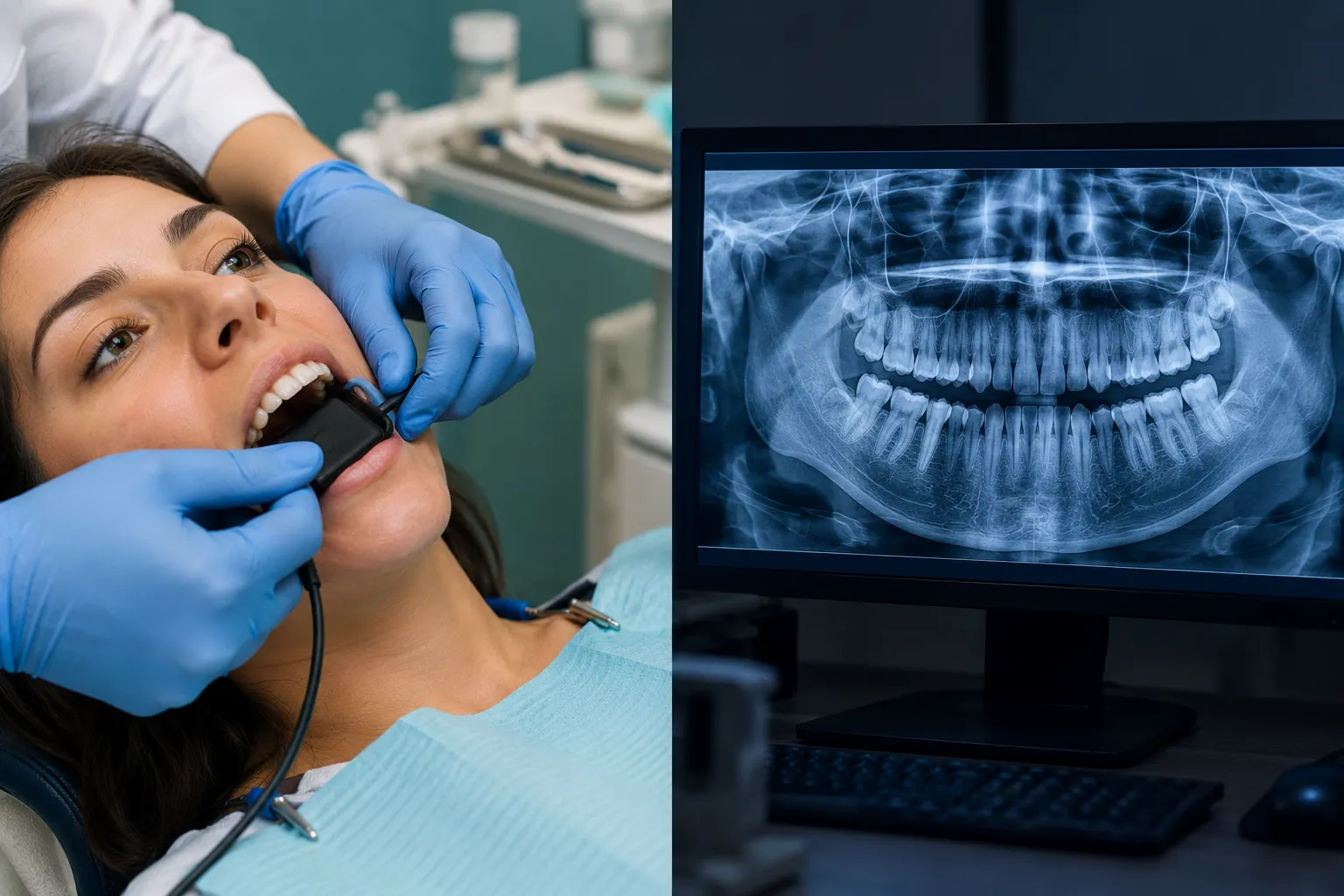
Every imaging decision at a responsible dental practice is guided by the ALARA principle: As Low As Reasonably Achievable. This means using the minimum radiation dose necessary to obtain diagnostically useful images. In 2026, this principle is more achievable than ever thanks to advances in digital sensor technology and 3D panoramic imaging.
Practical ALARA measures include:
- Using digital sensors instead of traditional film (dramatically lower dose)
- Collimating the x-ray beam to expose only the area being imaged
- Using lead aprons and thyroid collars for patient protection
- Selecting the correct film speed or sensor sensitivity for each image type
- Avoiding retakes by using proper technique the first time
The radiation dose from a full set of dental x-rays is comparable to the natural background radiation you receive during a short airplane flight. While the risk is extremely low, the principle of minimizing unnecessary exposure remains a professional and ethical standard.
It is also worth noting that insurance coverage should never dictate x-ray frequency. Some plans cover bitewing x-rays once a year, but that does not mean you need them annually if your risk profile does not call for it. Conversely, if your dentist recommends imaging more frequently than your plan covers, that clinical recommendation should take priority. You can review insurance options at Madison Dental Art’s insurance page to understand what your plan includes.
Special Circumstances That Change the Frequency
Beyond routine risk categories, certain clinical situations call for targeted imaging outside of any standard schedule:
- Tooth pain or sensitivity, A periapical x-ray is typically taken to evaluate the root and surrounding bone. If you are experiencing signs of a tooth infection, imaging is essential for diagnosis.
- Trauma to the mouth, Any impact that could fracture a root or displace a tooth warrants immediate radiographic evaluation.
- Before restorative procedures, Placing a dental crown, filling, or implant requires current imaging to plan treatment accurately.
- Monitoring implants or bone grafts, Patients with dental implants need periodic radiographs to assess bone integration and implant health.
- Monitoring ongoing treatment, Patients undergoing root canal therapy, periodontal treatment, or orthodontic care require imaging at specific treatment milestones.
Panoramic and 3D Scans: No Fixed Schedule
Panoramic x-rays and 3D cone beam CT (CBCT) scans are powerful diagnostic tools, but they are not part of a routine annual schedule. A panoramic scan is typically taken as a baseline for new patients, before orthodontic treatment, before implant placement, or when evaluating jaw conditions. There is no recommended fixed interval for repeat panoramic imaging, it is ordered when a specific clinical question needs answering.
At Madison Dental Art, our 3D panoramic scanning technology allows our team, including periodontology specialist Dr. Robert Weber, to plan complex procedures like implant placement and osseous surgery with exceptional precision.
How Often Should You Get Dental X-Rays? A Quick Reference Summary
Quick Reference: Recommended X-Ray Intervals by Patient Type- Low-risk adults: Bitewing x-rays every 24-36 months
- High-risk adults: Bitewing x-rays every 6-18 months
- Low-risk children: Bitewing x-rays every 12-24 months
- High-risk children: Bitewing x-rays every 6-12 months
- New patients: Based on clinical exam and prior record availability
- Panoramic / 3D scans: As clinically indicated, no fixed schedule
The best way to determine your personal imaging schedule is to pair x-ray decisions with your regular dental checkup. If you are unsure how often you should be seen for routine care, our guide on how often you should get a dental checkup covers that in detail.
FAQs
Can I ask my dentist to skip x-rays if I feel fine?
Yes, you can express your preferences, and a good dentist will always explain why imaging is being recommended. Nevertheless, many serious dental problems, including cavities between teeth, bone loss from gum disease, and root infections, produce no pain or visible symptoms in their early stages. Declining x-rays when they are clinically indicated may mean that problems go undetected until they require more extensive treatment.
Are dental x-rays safe during pregnancy?
Current evidence supports that dental x-rays, when performed with proper shielding (lead apron and thyroid collar) and using digital sensors, are considered safe during pregnancy. The American College of Obstetricians and Gynecologists notes that necessary dental treatment should not be delayed during pregnancy. That said, elective imaging is typically postponed until after delivery. Always inform your dentist if you are pregnant or may be pregnant so they can make the most appropriate recommendation.
Do children really need x-rays more often than adults?
Generally, yes. Children’s teeth are smaller and more closely spaced, making it harder to detect cavities visually between teeth. Their mouths are also changing rapidly, new teeth are erupting, roots are forming, and jaw bones are growing. These changes need to be monitored. Additionally, decay in primary (baby) teeth can progress faster than in adult teeth. The exact frequency depends on the child’s cavity history and oral hygiene habits, which your dentist will assess at each visit.
My insurance covers x-rays once a year, does that mean I need them annually?
No. Insurance coverage is a financial benefit, not a clinical prescription. What your plan covers reflects an administrative decision by your insurer, not a recommendation from your dentist or any professional dental organization. If your dentist determines that your risk level is low and you do not need x-rays every year, you should follow that clinical guidance. Conversely, if your dentist recommends more frequent imaging than your plan covers, the clinical need takes priority.
References
- American Dental Association. (2012, updated 2024). Dental Radiographic Examinations: Recommendations for Patient Selection and Limiting Radiation Exposure. ADA Council on Scientific Affairs. https://www.ada.org/resources/research/science-and-research-institute/oral-health-topics/dental-x-rays
- U.S. Food and Drug Administration. (2023). Dental X-Rays. FDA Center for Devices and Radiological Health. https://www.fda.gov/radiation-emitting-products/medical-x-ray-imaging/dental-x-rays
- American College of Radiology & American Dental Association. (2021). ACR, ADA Practice Parameter for the Performance of Dental Radiography. https://www.acr.org/-/media/ACR/Files/Practice-Parameters/dental-radiography.pdf
- National Institute of Dental and Craniofacial Research. (2023). Dental Caries (Tooth Decay). National Institutes of Health. https://www.nidcr.nih.gov/research/data-statistics/dental-caries
- American Academy of Pediatric Dentistry. (2022). Guideline on Prescribing Dental Radiographs for Infants, Children, Adolescents, and Individuals with Special Health Care Needs. Pediatric Dentistry, 44(6), 306-311. https://www.aapd.org/globalassets/media/policies_guidelines/bp_radiographs.pdf
Madison Dental Art
Content written and reviewed by
Madison Dental Art Review Board
Madison Dental Art : Experienced dentists and specialists dedicated to providing accurate, trusted, and patient-focused oral health information.
Important information
The content of this article is for strictly educational and informational purposes. It does not replace in-person professional medical diagnosis, advice, or treatment.


