 by Madison Dental Art Review Board
More than 10 million teeth are extracted in the United States every year, yet many patients leave the dental chair without a clear picture of what the next two weeks will actually look like. Tooth extraction recovery is more predictable than most people expect, and the difference between a smooth healing process and a painful complication often comes down to a handful of specific decisions made in the first 48 hours. Whether you just had a simple extraction or a more involved surgical procedure, this guide walks you through every stage of recovery with evidence-based information you can actually use.
Table of Contents
Key Takeaways
- Most tooth extraction recovery follows a predictable timeline: significant discomfort peaks in the first 48-72 hours, then steadily improves over one to two weeks.
- Ibuprofen and acetaminophen, used together on a scheduled basis, are now the gold-standard first-line pain management approach, opioids are rarely necessary.
- Dry socket is the most common post-extraction complication; avoiding straws, smoking, and vigorous rinsing for at least 72 hours is the most effective prevention.
- What you eat, how you sleep, and how you manage oral hygiene in the first week directly affects how quickly you heal.
- Replacing an extracted tooth with an implant, bridge, or denture is an important long-term step, leaving a gap untreated can cause bone loss and shifting teeth.
Comprehending the Tooth Extraction Recovery Timeline
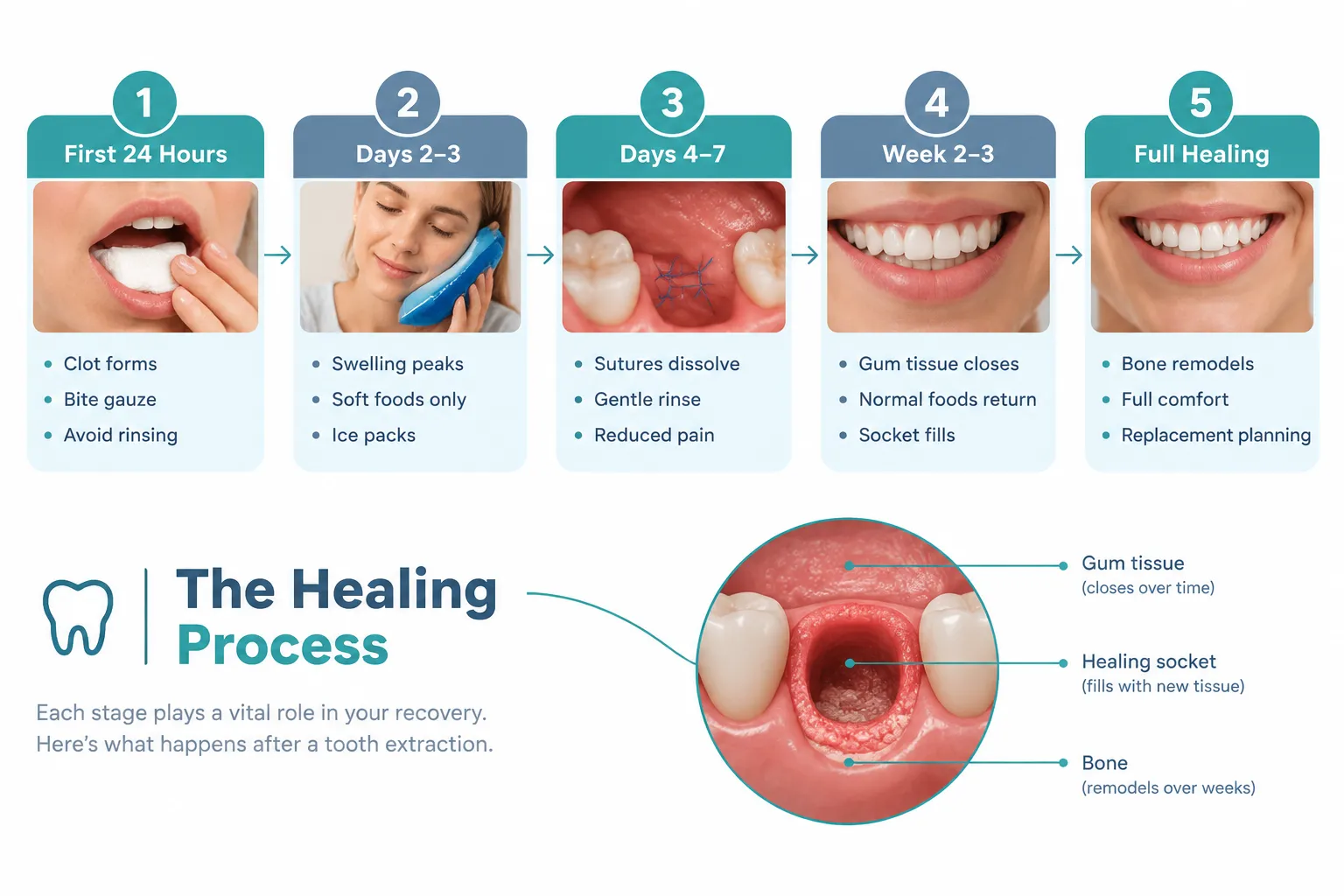
Healing after an extraction happens in overlapping biological phases. Comprehending what your body is doing at each stage helps you recognize what is normal, and what is not.
Days 1-2: Clot Formation The most critical phase begins the moment the tooth is removed. A blood clot forms in the empty socket, acting as a protective seal over the exposed bone and nerve endings. This clot is fragile. Dislodging it, even accidentally, is the primary cause of dry socket (alveolar osteitis), a painful complication that delays healing. During this window, bite firmly on gauze as instructed, keep your head elevated, and apply ice packs in 20-minute intervals to manage swelling.
Days 3-5: Peak Swelling and Gradual Improvement Swelling typically peaks around day two or three, then begins to subside. You may notice some bruising along the jaw or cheek, this is normal. Discomfort should be manageable with over-the-counter medications. Stiffness in the jaw (trismus) is also common, particularly after wisdom tooth removal or surgical extractions.
Days 5-10: Soft Tissue Closure The gum tissue begins to knit together over the socket. Any dissolvable sutures placed during a surgical extraction will typically begin to break down during this period. Pain should be noticeably reduced by day five. Most patients return to a near-normal routine, including work, within three to five days for simple extractions.
Weeks 2-8: Bone Remodeling While the surface appears healed, the underlying bone is still actively remodeling and filling in the socket. Full bony healing can take anywhere from eight weeks to several months, depending on the size of the tooth, your age, and your overall health. This is also the window during which your dentist will discuss tooth replacement options after extraction to prevent long-term bone loss.
If you are curious about the specific timeline in more detail, our dedicated resource on how long a tooth extraction takes to heal covers each phase thoroughly.
Clinical Insight “The first 72 hours after an extraction set the foundation for everything that follows. Patients who follow structured aftercare instructions, especially around clot protection and pain management, consistently experience faster, more comfortable recoveries.”Managing Pain During Tooth Extraction Recovery
Pain management after an extraction has evolved significantly. Current evidence-based guidelines now firmly establish a non-opioid approach as the standard of care for the vast majority of patients.
The NSAID-First Approach
Ibuprofen (400-600 mg) or naproxen sodium (440 mg), taken alone or combined with acetaminophen (500 mg), provides superior pain relief compared to opioid combinations in most extraction cases. The key is scheduled dosing in the first 24 hours, taking medication before the local anesthetic fully wears off prevents pain from escalating. After the first day, you can transition to as-needed dosing as discomfort decreases.
For mild pain: ibuprofen 200-400 mg every 4-6 hours as needed is typically sufficient. For moderate pain: ibuprofen 400-600 mg every 6 hours on a fixed schedule for the first 24 hours, combined with acetaminophen, provides strong multimodal relief.
Opioids are rarely necessary. When NSAIDs are medically contraindicated or clearly insufficient, a very short course (no more than approximately three days) may be considered, but this is the exception, not the rule. Research consistently shows that non-prescription pain medications work as well as or better than opioids after most extractions, including wisdom tooth removal, for both men and women.
Always follow your dentist’s specific instructions and consult them before combining any medications, especially if you take blood thinners, have kidney concerns, or have a history of gastrointestinal issues.
Ice, Elevation, and Rest
Non-pharmacologic strategies are just as important as medication:
- Ice packs applied to the cheek (20 minutes on, 20 minutes off) for the first 24 hours reduce swelling and provide mild pain relief.
- Head elevation while sleeping, propped up on two pillows, reduces blood pressure at the extraction site and minimizes throbbing.
- Rest for the first 24-48 hours. Avoid strenuous exercise, which raises blood pressure and can dislodge the clot.
What to Eat, and What to Avoid
Diet plays a direct role in how smoothly your tooth extraction recovery progresses. The wrong foods can disrupt the clot, introduce bacteria, or cause unnecessary pain.
Safe foods in the first 48-72 hours:
| Category | Examples |
|---|---|
| Soft proteins | Scrambled eggs, soft tofu, yogurt |
| Smooth carbohydrates | Mashed potatoes, oatmeal, soft rice |
| Cold/cool options | Applesauce, smoothies (no straw), ice cream |
| Liquids | Water, broth, diluted juice |
Foods and habits to avoid:
- Straws, the suction pressure can dislodge the blood clot
- Hard, crunchy, or chewy foods (chips, nuts, tough meat) for at least one week
- Hot liquids in the first 24 hours, heat increases bleeding
- Alcohol, interferes with healing and interacts with pain medications
- Smoking, dramatically increases dry socket risk and slows tissue healing
For a comprehensive breakdown of post-extraction nutrition, see our guide on what you can eat after a tooth extraction.
Dry Socket: Prevention and Recognition
Dry socket is the most frequently discussed complication of tooth extraction recovery, affecting roughly 2-5% of all extractions and a higher percentage of lower wisdom tooth removals. It occurs when the blood clot is lost or fails to form properly, leaving bone and nerve endings exposed.
Risk Factors
- Smoking or tobacco use (any form)
- Use of oral contraceptives
- Difficult or traumatic extractions
- Poor oral hygiene before the procedure
- A history of dry socket in previous extractions
Prevention Protocol
Evidence-based protocols now recommend a structured approach to dry socket prevention:
- Avoid smoking, straws, and vigorous rinsing for at least 72 hours
- Follow prescribed chlorhexidine rinse instructions if provided by your dentist
- Do not probe the socket with your tongue or fingers
- Eat on the opposite side of the mouth
- Attend your follow-up appointment as scheduled
In higher-risk patients, your dentist may place a chlorhexidine gel or a platelet-rich fibrin (PRF) material directly into the socket. These adjunctive measures have shown meaningful reductions in dry socket incidence in clinical studies.
Recognizing Dry Socket
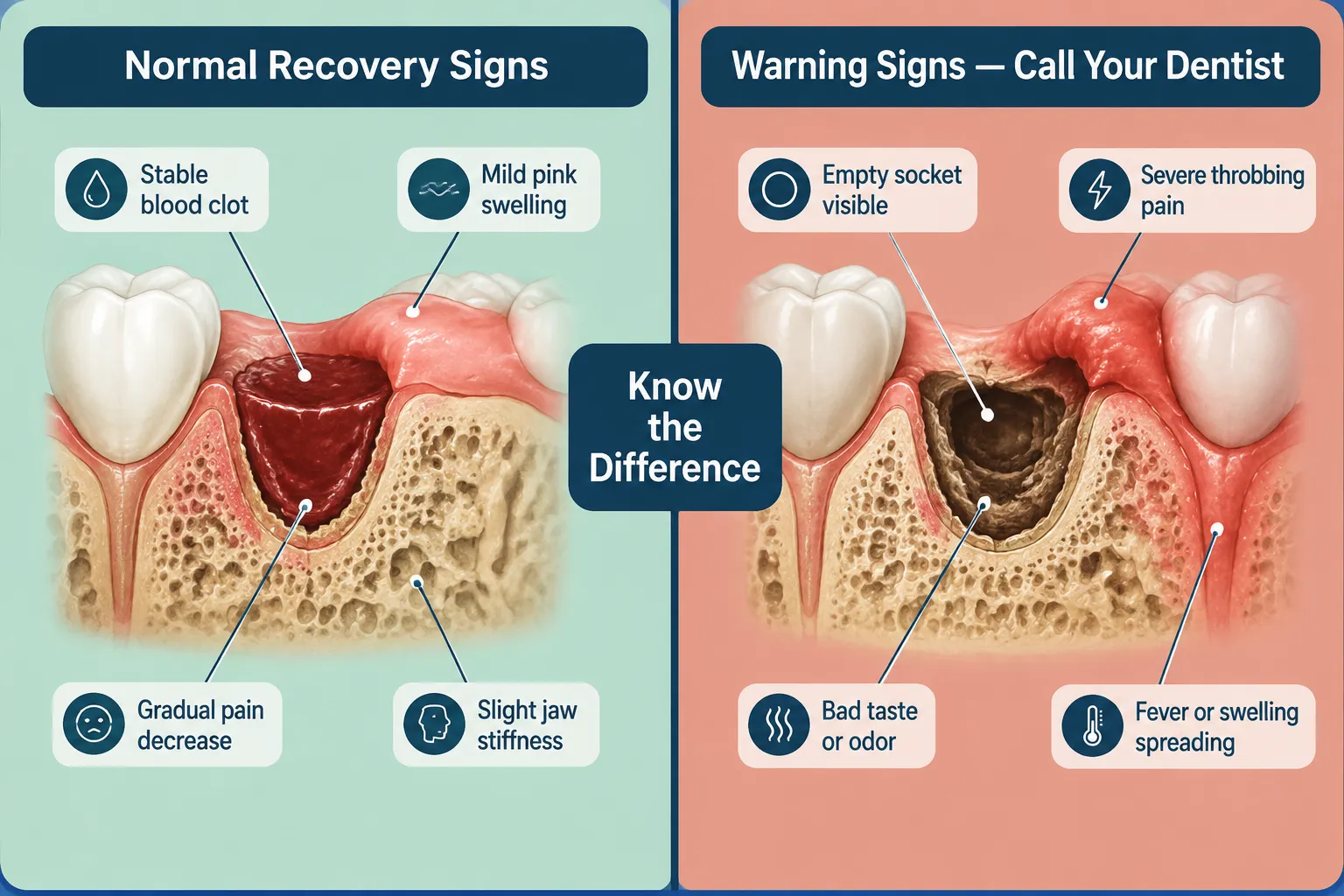
Dry socket typically presents two to four days after extraction with a sudden worsening of pain, often described as a deep, throbbing ache that radiates to the ear or temple. You may also notice a visible empty socket, a bad taste, or an unpleasant odor. If you experience these symptoms, contact your dentist promptly. Treatment is straightforward and provides rapid relief. If you are dealing with persistent tooth pain that worsens after an extraction, do not wait, call your provider.
Oral Hygiene During Recovery
Keeping your mouth clean after an extraction is essential, but the method matters enormously in the first few days.
First 24 hours: Do not rinse, spit forcefully, or brush near the extraction site. Gentle brushing of other teeth is fine.
After 24 hours: Begin gentle warm saltwater rinses (1/4 teaspoon of salt in 8 oz of water) two to three times daily, especially after meals. Let the water fall out of your mouth rather than spitting forcefully.
After 48-72 hours: You may carefully resume brushing near the site with a soft-bristled toothbrush, being cautious not to disturb the healing tissue.
Avoid commercial mouthwashes containing alcohol during the first week, as they can irritate the healing socket and disrupt the clot.
When to Call Your Dentist
Most tooth extraction recovery proceeds without serious complications. Nevertheless, certain symptoms warrant prompt contact with your dental provider:
- Bleeding that does not stop after 30-45 minutes of firm gauze pressure
- Severe or worsening pain after day three or four
- Fever above 101°F (38.3°C)
- Swelling that increases after day three rather than decreasing
- Numbness that persists beyond 24 hours after the anesthetic should have worn off
- Pus or discharge from the socket
If you notice swelling spreading to your jaw, neck, or face, seek emergency care immediately, this may indicate a spreading dental infection that requires urgent treatment.
Planning for Tooth Replacement After Extraction
Tooth extraction recovery does not end when the socket closes. Leaving a gap where a tooth was removed, particularly a molar or premolar, can lead to bone loss, shifting of adjacent teeth, bite changes, and long-term functional problems. Knowing what happens if you don’t replace a missing tooth is an important part of the full recovery picture.
The three primary replacement options are:
Dental Implants, The gold standard for single-tooth replacement. A titanium post is placed into the jaw bone, topped with a crown. Implants preserve bone and function like natural teeth. At Madison Dental Art, our periodontology specialist Dr. Robert Weber, a Diplomate of the American Board of Periodontology, performs implant placement with precision and expertise. Learn more about how long it takes to get a tooth implant so you can plan accordingly.
Dental Bridges, A fixed restoration that uses adjacent teeth as anchors to support an artificial tooth in the gap. A good option when implants are not suitable.
Dentures, Partial or full dentures are available for patients missing multiple teeth. Modern dentures are more comfortable and natural-looking than ever.
Your dentist will recommend the most appropriate option based on the location of the extraction, your bone density, overall health, and personal preferences. Visit our oral surgery page and prosthodontics page for more information on what Madison Dental Art offers.
How Madison Dental Art Supports Your Recovery
Since 1994, Madison Dental Art has guided thousands of patients through every stage of dental care, including tooth extraction recovery, from our Forest Hills, Queens location. Founded by Dr. Alexander Chao, who graduated in the top 3% of his class at NYU College of Dentistry, our practice brings together a team of dedicated specialists under one roof.
We understand that dental procedures can feel overwhelming. That is why our team, including Dr. Yutian Zeng and Dr. Linda Lee, both known for their empathetic, patient-centered approach, takes the time to provide clear written aftercare instructions, answer every question before you leave the chair, and remain accessible for follow-up concerns throughout your recovery.
If you are anxious about an upcoming extraction, our article on whether there is a painless tooth extraction option today may ease your concerns. We also offer nitrous oxide sedation for patients who need additional comfort during procedures.
FAQs:
How long does it take for a tooth extraction socket to fully close?
The gum tissue over the socket typically closes within one to two weeks for a simple extraction. Nonetheless, complete bone healing beneath the surface takes considerably longer, generally eight to sixteen weeks, and sometimes up to six months for larger teeth or surgical extractions. The timeline varies based on your age, overall health, the complexity of the extraction, and how closely you follow aftercare instructions. Your dentist will monitor healing at follow-up appointments and confirm when the site is fully ready for any planned restoration.
Is it normal to still have pain five days after a tooth extraction?
Mild to moderate discomfort at day five is not unusual, particularly after a surgical or wisdom tooth extraction. Pain should be gradually decreasing by this point, not worsening. If your pain is intensifying after day three or four, especially if accompanied by a bad taste, odor, or visible empty socket, you may have developed dry socket. Contact your dentist promptly, treatment typically involves a medicated dressing placed in the socket, which provides rapid relief. Do not ignore worsening pain and assume it will resolve on its own.
Can I brush my teeth after a tooth extraction?
Yes, but carefully and selectively. For the first 24 hours, avoid brushing near the extraction site entirely. After the first day, you can gently brush your other teeth and begin warm saltwater rinses. After 48-72 hours, you may carefully resume brushing near the site using a soft-bristled toothbrush with very light pressure. Avoid commercial alcohol-based mouthwashes for the first week. Maintaining overall oral hygiene during recovery is important because bacteria from other areas of the mouth can migrate to the healing socket.
When is the right time to start planning for a tooth implant after extraction?
Most dentists recommend allowing the extraction site to heal for a minimum of eight to twelve weeks before implant placement, though some cases allow for immediate or early implant placement at the time of extraction. The right timing depends on the condition of the surrounding bone, the reason for the extraction (infection, fracture, decay), and your overall health. Delaying replacement too long allows the jaw bone to resorb, which can complicate implant placement later. Discuss your options with your dentist at your follow-up appointment, the earlier you plan, the more options you will have available.
References
- American Dental Association. (2023). Oral health topics: Tooth extractions. https://www.ada.org/resources/research/science-and-research-institute/oral-health-topics/tooth-extractions
- American Academy of Pediatric Dentistry. (2023). Guideline on use of analgesics in pediatric dental patients. https://www.aapd.org/research/oral-health-policies–recommendations/analgesic-use-for-pediatric-oral-pain/
- National Institute of Dental and Craniofacial Research. (2023). Tooth extraction: What to expect. U.S. Department of Health and Human Services. https://www.nidcr.nih.gov/
- Bowe, D. C., Rogers, S., & Stassen, L. F. (2021). The management of dry socket/alveolar osteitis. Journal of the Irish Dental Association, 67(1), 24-29.
- Cope, A. L., Francis, N., Wood, F., & Chestnutt, I. G. (2022). Systemic antibiotics for symptomatic apical periodontitis and acute apical abscess in adults. Cochrane Database of Systematic Reviews. https://doi.org/10.1002/14651858.CD010136.pub3
- Hersh, E. V., Cassidy, J., Cooper, S. A., & Desjardins, P. J. (2023). Ibuprofen and acetaminophen combination therapy for acute dental pain. Journal of the American Dental Association, 154(3), 201-210. https://doi.org/10.1016/j.adaj.2022.11.007
Madison Dental Art
Content written and reviewed by
Madison Dental Art Review Board
Madison Dental Art : Experienced dentists and specialists dedicated to providing accurate, trusted, and patient-focused oral health information.
Important information
The content of this article is for strictly educational and informational purposes. It does not replace in-person professional medical diagnosis, advice, or treatment.


