 by Madison Dental Art Review Board
A dental abscess that goes untreated does not simply fade away, in rare but documented cases, the infection can spread to the jaw, neck, or beyond, creating a genuine medical emergency. For the vast majority of patients, nevertheless, an infected tooth extraction is a safe, manageable procedure that ends the infection and restores comfort. Comprehending what drives that decision, what the procedure involves, and how to recover well can make the entire experience far less intimidating.
Table of Contents
Key Takeaways
- An infected tooth extraction removes the bacterial source and is often the most effective way to stop a dental infection from spreading.
- Dentists evaluate each case individually, a root canal may save some infected teeth, while others require removal.
- Antibiotics alone cannot cure a tooth infection; definitive surgical treatment (extraction or root canal) is essential.
- Post-extraction warning signs such as worsening pain after day three, fever, or spreading swelling require prompt dental attention.
- Tooth replacement options, including implants, bridges, and dentures, are available after healing is complete.
Why an Infected Tooth May Need to Be Removed
A tooth becomes infected when bacteria breach the outer enamel and reach the soft pulp tissue inside. This can happen through deep decay, a cracked tooth, a failed filling, or advanced gum disease. Once bacteria colonize the pulp, the body mounts an inflammatory response that produces the throbbing pain, swelling, and sensitivity most patients recognize immediately.
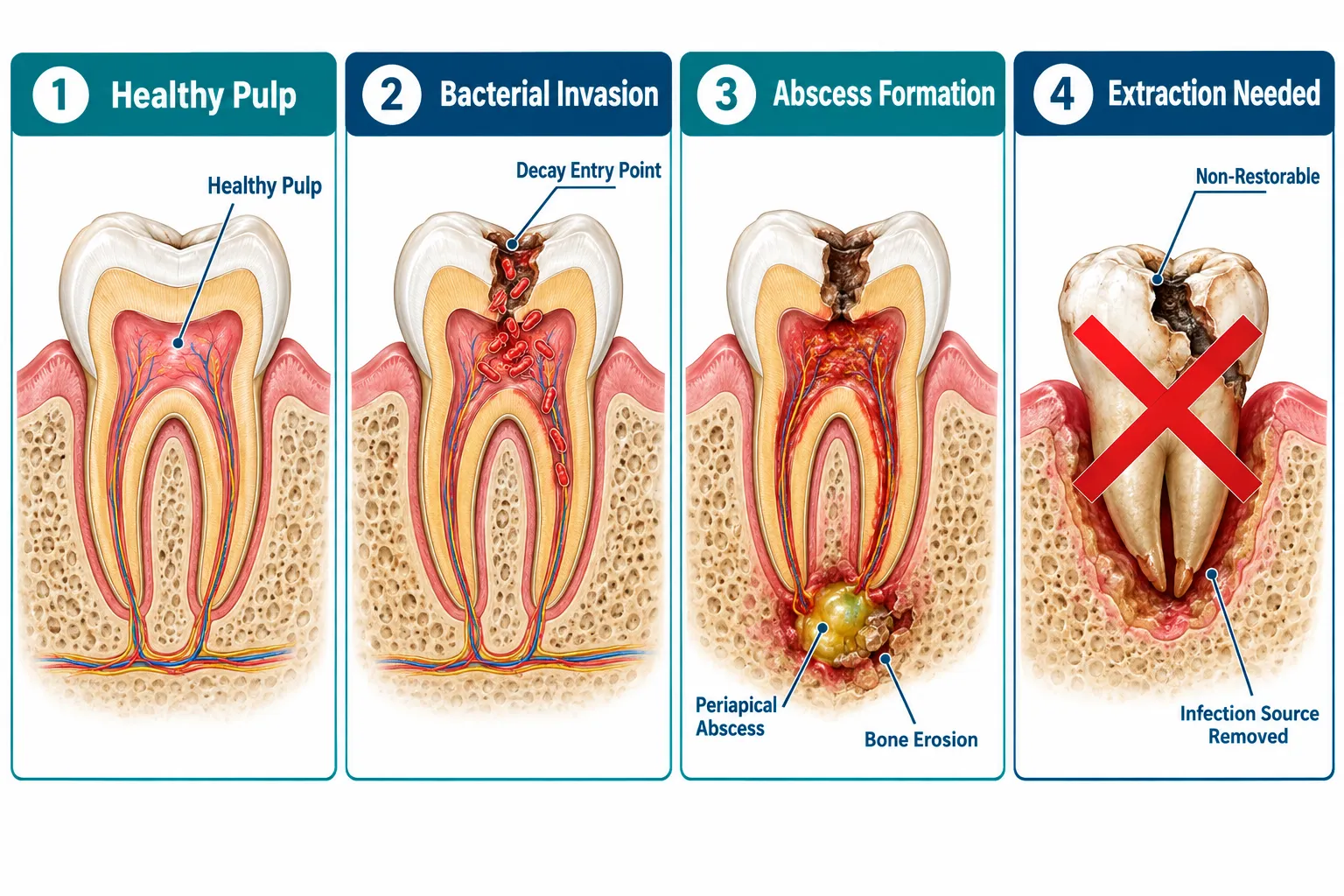
Not every infected tooth requires extraction. When the tooth structure is largely intact and the infection is contained, a root canal treatment performed by an endodontist can remove the infected pulp, seal the canals, and preserve the tooth. Nonetheless, extraction becomes the recommended course of action when:
- The tooth is structurally non-restorable due to extensive decay or fracture
- The infection has caused severe bone loss around the roots
- The tooth shows grade III mobility or deep periodontal pocketing beyond 7 mm
- A previous root canal has become reinfected and retreatment is not viable
- The patient’s overall health makes prolonged treatment impractical
For patients dealing with signs of a tooth infection, including persistent throbbing pain, a pimple-like bump on the gum, or a bad taste in the mouth, prompt evaluation is critical. Delaying care allows the infection to deepen and can significantly complicate treatment.
Clinical note: Major dental guidelines now emphasize that definitive surgical treatment, either drainage, root canal, or extraction, is the cornerstone of managing dental abscesses. Antibiotics are a supportive tool, not a standalone cure.
When Is Same-Day Extraction Possible?
A common question patients ask is whether a dentist will remove an infected tooth on the same visit. The answer depends on the severity of the infection and how well local anesthesia can be achieved. In many cases of localized infection without significant facial swelling or systemic symptoms, same-day extraction of an infected tooth is both safe and preferred. Removing the source promptly stops the infection from spreading further.
When swelling is severe enough to interfere with anesthesia effectiveness, a short course of antibiotics, typically three to seven days, may be prescribed first to reduce inflammation before extraction. This is the exception rather than the rule for otherwise healthy patients with localized infections.
The Infected Tooth Extraction Procedure: Step by Step
Comprehending what actually happens during an infected tooth extraction helps reduce anxiety considerably. At Madison Dental Art in Forest Hills, Queens, our team combines advanced imaging technology with a genuinely patient-centered approach to make the experience as comfortable as possible.
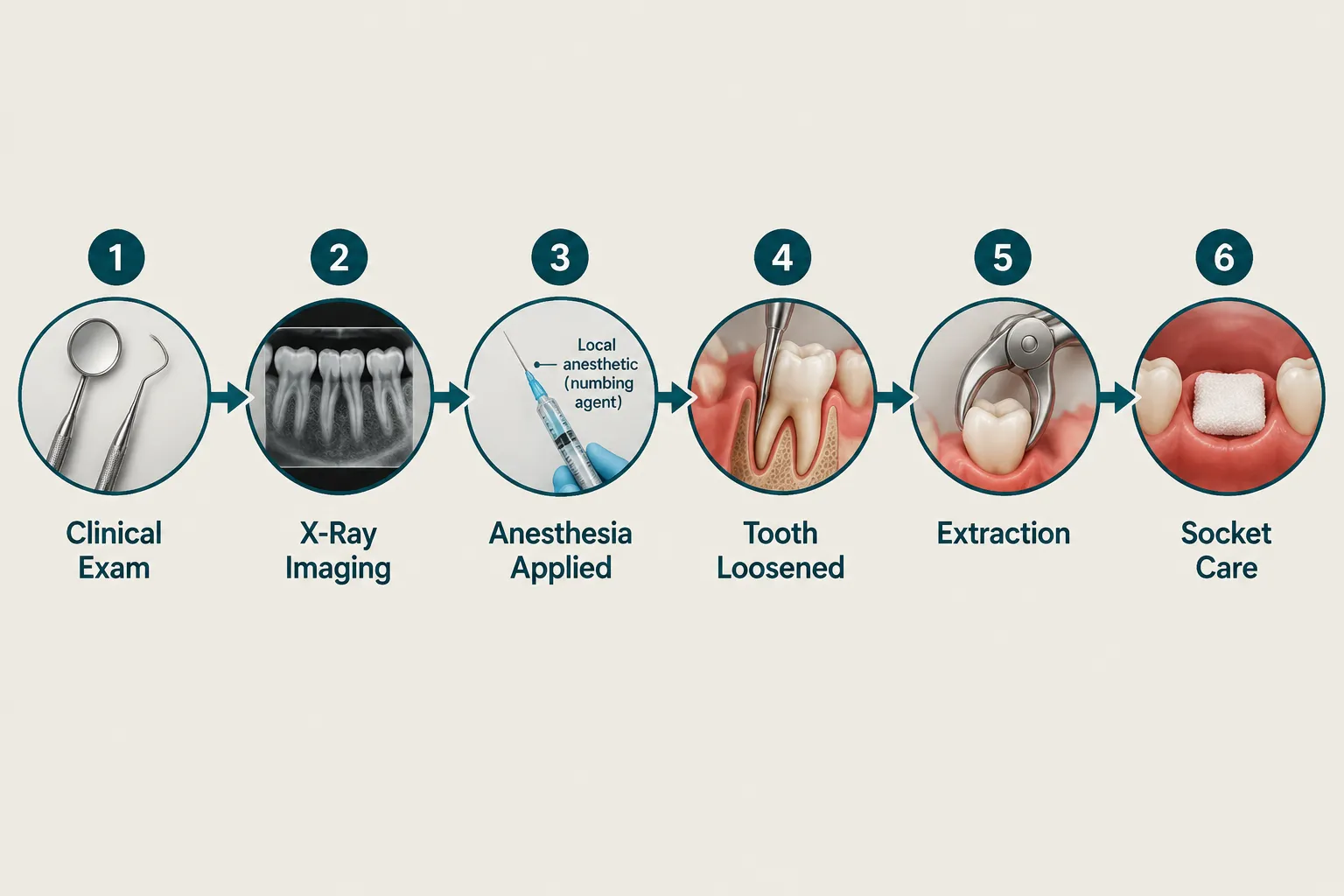
Step 1, Diagnosis and Imaging The dentist takes digital X-rays or a 3D panoramic scan to assess the extent of infection, bone loss, and root anatomy. This imaging guides every subsequent decision.
Step 2, Anesthesia Local anesthetic is administered to numb the tooth and surrounding tissue thoroughly. For anxious patients, nitrous oxide sedation is available to promote relaxation throughout the procedure. If you are concerned about discomfort, you can read more about painless tooth extraction options that modern dentistry offers.
Step 3, Loosening the Tooth The dentist uses a specialized instrument called an elevator to gently loosen the tooth within its socket by working along the periodontal ligament. This reduces the force needed for removal.
Step 4, Removal Dental forceps grip the tooth and use a controlled rocking motion to widen the socket before the tooth is lifted free. For teeth with curved or multiple roots, or those broken at the gum line, a surgical approach involving a small gum incision may be necessary.
Step 5, Socket Care After removal, the socket is cleaned and irrigated to remove any remaining infected tissue. Gauze is placed to control bleeding and encourage clot formation. In some cases, dissolvable sutures close the site.
Many patients are surprised to learn that surgical tooth extraction is far less painful than they expected, largely because modern anesthesia techniques are highly effective even in the presence of infection.
Antibiotics: A Supporting Role, Not the Star
Current clinical guidelines from the American Dental Association and other leading bodies are clear: antibiotics do not replace extraction or root canal treatment. They are prescribed as an adjunct when there are signs of systemic involvement, fever above 38°C (100.4°F), spreading facial cellulitis, swollen lymph nodes, or difficulty swallowing. Repeated antibiotic courses without definitive surgical treatment are ineffective, contribute to antibiotic resistance, and are considered inappropriate care.
When antibiotics are indicated, penicillin-based regimens (such as amoxicillin-clavulanate) are most commonly recommended for odontogenic infections in otherwise healthy adults.
Recovery After Infected Tooth Extraction
Healing after the removal of an infected tooth generally follows a predictable timeline, though infection can slightly extend the initial recovery period.
| Timeframe | What to Expect |
|---|---|
| Day 1-2 | Bleeding, swelling, and soreness are normal |
| Day 3-4 | Swelling should begin to decrease; pain should ease |
| Day 5-7 | Soft tissue begins to close over the socket |
| Week 2-4 | Gum tissue continues to heal; bone remodeling begins |
NSAIDs such as ibuprofen, taken with or without acetaminophen, are the recommended first-line pain relievers after extraction. Current guidelines strongly discourage opioid prescriptions for routine post-extraction pain.
For detailed guidance on what you can safely eat during recovery, our team has prepared a helpful resource on food options after tooth extraction. A full overview of how long tooth extraction healing takes is also available for patients who want a complete timeline.
Warning Signs That Require Immediate Attention
Most post-extraction discomfort is normal and resolves within a week. Nevertheless, certain signs indicate a complication and should never be ignored:
- Pain that worsens after day three rather than improving (possible dry socket)
- Swelling that continues to increase beyond 48-72 hours
- Fever above 38°C (100.4°F) persisting after the procedure
- Foul taste, odor, or visible pus at the extraction site
- Difficulty swallowing or breathing, or swelling spreading toward the neck or eye
The last group of symptoms, particularly difficulty breathing or swallowing and rapidly spreading swelling, may indicate a deep-space infection and require emergency care, not a routine dental callback. If you are ever unsure, it is always better to call immediately.
Replacing the Extracted Tooth
Losing a tooth does not have to be permanent. Once the extraction site has healed, several reliable replacement options are available. Leaving a gap untreated can lead to bone loss, shifting of adjacent teeth, and bite problems over time, a topic we cover in depth in our article on what happens if you don’t replace a missing tooth.
Dental implants are widely considered the gold standard for single-tooth replacement. A titanium post is placed into the jawbone and topped with a natural-looking crown. Our periodontology specialist, Dr. Robert Weber, a Diplomate of the American Board of Periodontology, performs implant placement with exceptional precision.
Dental bridges anchor a replacement tooth to the adjacent natural teeth and are a strong option when implants are not suitable.
Partial dentures offer a removable solution when multiple teeth are missing.
FAQs
Can a dentist perform an infected tooth extraction on the same day I come in?
In many cases, yes. When the infection is localized and local anesthesia can be administered effectively, same-day extraction is often the preferred approach because it removes the bacterial source immediately. If significant swelling is present and is blocking adequate anesthesia, a short antibiotic course may be prescribed first. Every case is evaluated individually, so the best way to know your options is to schedule an evaluation with your dentist as soon as possible.
Is an infected tooth extraction more painful than a regular extraction?
Most patients report that the procedure itself is not significantly more uncomfortable than a standard extraction, thanks to effective local anesthesia. The presence of infection can occasionally make it slightly harder to achieve full numbness, which is one reason dentists sometimes pre-treat severe infections before extracting. At Madison Dental Art, we also offer nitrous oxide sedation for patients who experience dental anxiety, helping to keep you comfortable throughout.
What happens if I leave an infected tooth untreated instead of getting it extracted?
An untreated tooth infection does not resolve on its own. Without definitive treatment, either a root canal or extraction, the bacteria continue to multiply and the infection can spread to the surrounding bone, adjacent teeth, and in serious cases, to the jaw, neck, or deeper structures. While life-threatening complications are rare, they do occur and are entirely preventable with timely care.
How soon after an infected tooth extraction can I get a dental implant?
The timeline varies depending on how much bone was affected by the infection and how well healing progresses. In straightforward cases, implant placement can begin after approximately three to six months of healing. When significant bone loss occurred, bone grafting may be needed first, which extends the timeline. Our team at Madison Dental Art will create a personalized treatment plan after a thorough evaluation.
References
- American Dental Association. (2023). Antibiotic use for the urgent management of dental conditions: Evidence-based clinical practice guideline. Journal of the American Dental Association. https://jada.ada.org
- American Dental Association. (2024). Evidence-based clinical practice guideline on pain management for dental conditions. ADA Center for Evidence-Based Dentistry. https://ebd.ada.org
- National Health Service Scotland. (2024). Dental abscess: Urgent dental care guidance. NHS Education for Scotland. https://www.nes.scot.nhs.uk
- StatPearls Publishing. (2023). Odontogenic infections. National Library of Medicine, National Institutes of Health. https://www.ncbi.nlm.nih.gov/books/NBK538209/
- Choosing Wisely Canada. (2024). Dental toolkit: Recommendations for appropriate antibiotic and analgesic prescribing. https://choosingwiselycanada.org
- Malaysian Ministry of Health. (2022). Clinical practice guideline: Management of periodontal abscess. https://www.moh.gov.my
- MedlinePlus, U.S. National Library of Medicine. (2023). Tooth abscess. https://medlineplus.gov/ency/article/001060.htm
Madison Dental Art
Content written and reviewed by
Madison Dental Art Review Board
Madison Dental Art : Experienced dentists and specialists dedicated to providing accurate, trusted, and patient-focused oral health information.
Important information
The content of this article is for strictly educational and informational purposes. It does not replace in-person professional medical diagnosis, advice, or treatment.


