 by Madison Dental Art Review Board
Nearly 50% of American adults over age 30 show signs of gum recession, yet many delay treatment simply because they cannot find a straight answer on pinhole surgery price. That uncertainty is understandable. Costs vary widely based on how many teeth are affected, who performs the procedure, and where you live. This guide breaks down every factor that shapes the pinhole surgery price in 2026, compares it to traditional alternatives, and helps you walk into your consultation fully informed.
Table of Contents
Key Takeaways
- Pinhole surgery price in the U.S. typically ranges from roughly $500 to $5,000 or more, depending on how many teeth or quadrants are treated.
- Providers bill per tooth, per quadrant, per jaw, or per recession area, comprehending the billing model is critical before comparing quotes.
- Most dental insurance plans classify pinhole surgery as a periodontal procedure; coverage varies significantly by plan.
- The procedure addresses gum recession without a donor site incision, which often means faster recovery than traditional gum grafting.
- Consulting a board-certified periodontist is the most reliable way to receive an accurate, personalized cost estimate.
What Is Pinhole Surgery and Why Does It Matter
Pinhole Surgical Technique (PST) is a minimally invasive approach to treating gum recession. A periodontist creates a tiny entry point, no larger than a pinhole, above the affected gum tissue. Specialized instruments are then used to loosen and reposition the gum over the exposed tooth root. Collagen strips are placed through the same small opening to stabilize the new gum position and encourage tissue regeneration.
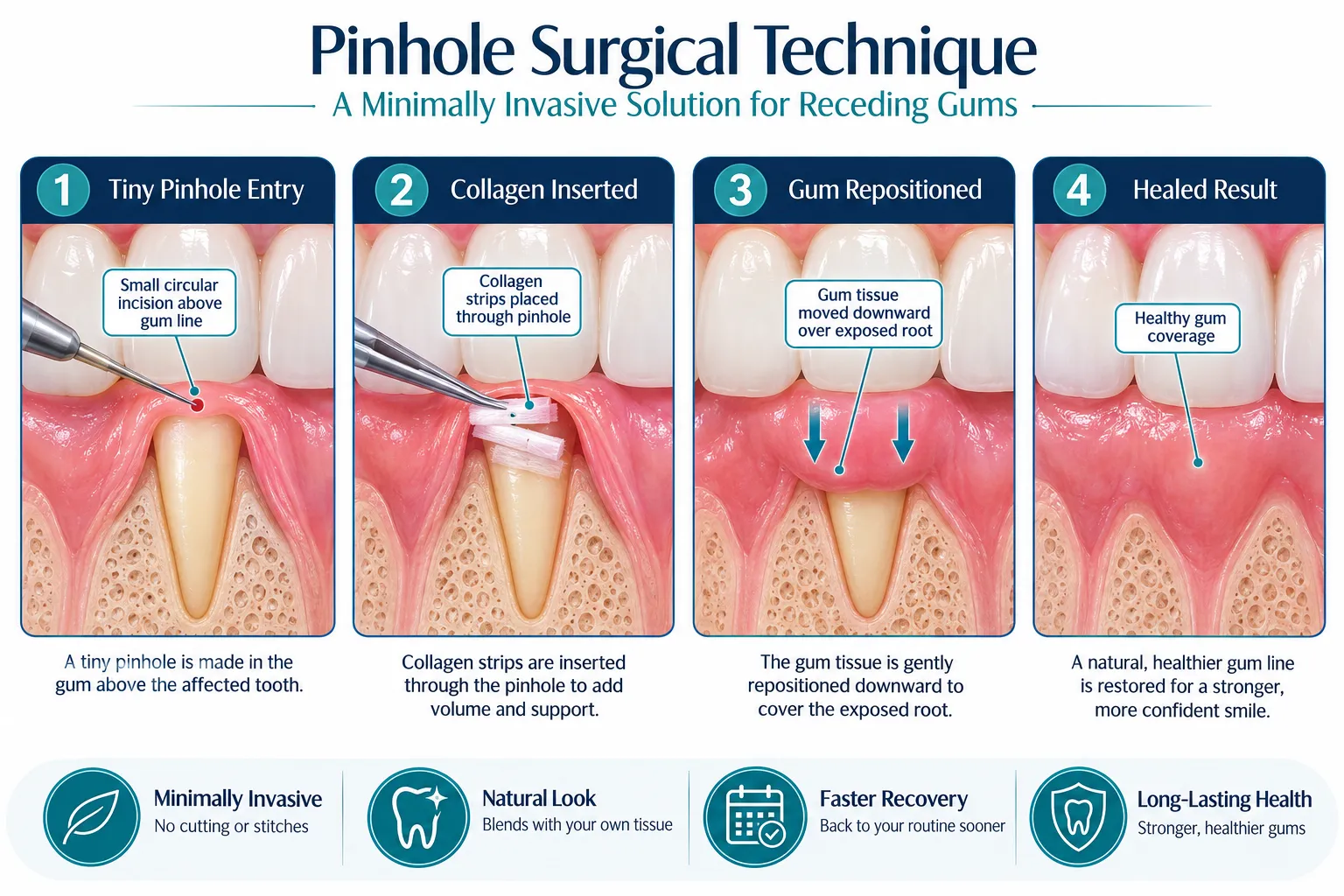
Because there is no donor tissue harvested from the palate, patients typically experience less postoperative discomfort and a faster return to normal activities. Multiple teeth in different areas of the mouth can often be treated in a single appointment, a significant advantage over traditional connective tissue grafts, which usually address one small zone per visit.
Gum recession is not merely a cosmetic concern. Exposed roots are more vulnerable to decay, temperature sensitivity, and structural damage. Left untreated, recession can progress to bone loss and, eventually, tooth loss. Comprehending the oral surgery procedures available for gum-related conditions is an important first step toward protecting your long-term dental health.
How Pinhole Surgery Price Is Calculated
Billing Models: Per Tooth, Per Quadrant, or Per Jaw
One reason pinhole surgery price quotes can seem inconsistent is that providers use different billing units. The most common structures are:
- Per tooth: Ranges from approximately $500 to $1,000 per tooth in most U.S. markets.
- Per quadrant: A quadrant covers one-quarter of the mouth (upper right, upper left, lower right, lower left). Quadrant pricing typically falls between $1,500 and $3,000.
- Per jaw: Some practices offer upper or lower arch pricing, often ranging from $2,500 to $4,500 per jaw.
- Per recession area: Certain clinics define a “recession area” as a cluster of adjacent teeth and price accordingly.
Factors That Drive the Final Cost
| Cost Driver | Impact on Price |
|---|---|
| Number of teeth treated | More teeth = higher total cost |
| Severity of recession | Deeper recession may require more collagen and time |
| Geographic location | NYC and major metro areas command higher fees |
| Provider credentials | Board-certified periodontists typically charge more |
| Sedation or anesthesia | Nitrous oxide or IV sedation adds to the total |
| Diagnostic imaging | 3D scans and digital X-rays may be billed separately |
In high-cost-of-living cities such as New York City, pinhole surgery price tends to sit at the upper end of national ranges. A single-tooth treatment may start near $800 to $1,000, while a comprehensive full-mouth case addressing severe recession across multiple quadrants can exceed $5,000 to $7,000 in some specialty practices.
For patients concerned about the broader financial picture of oral surgery, our resource on how much oral surgery costs without insurance provides helpful context.
Pinhole Surgery Price vs. Traditional Gum Grafting
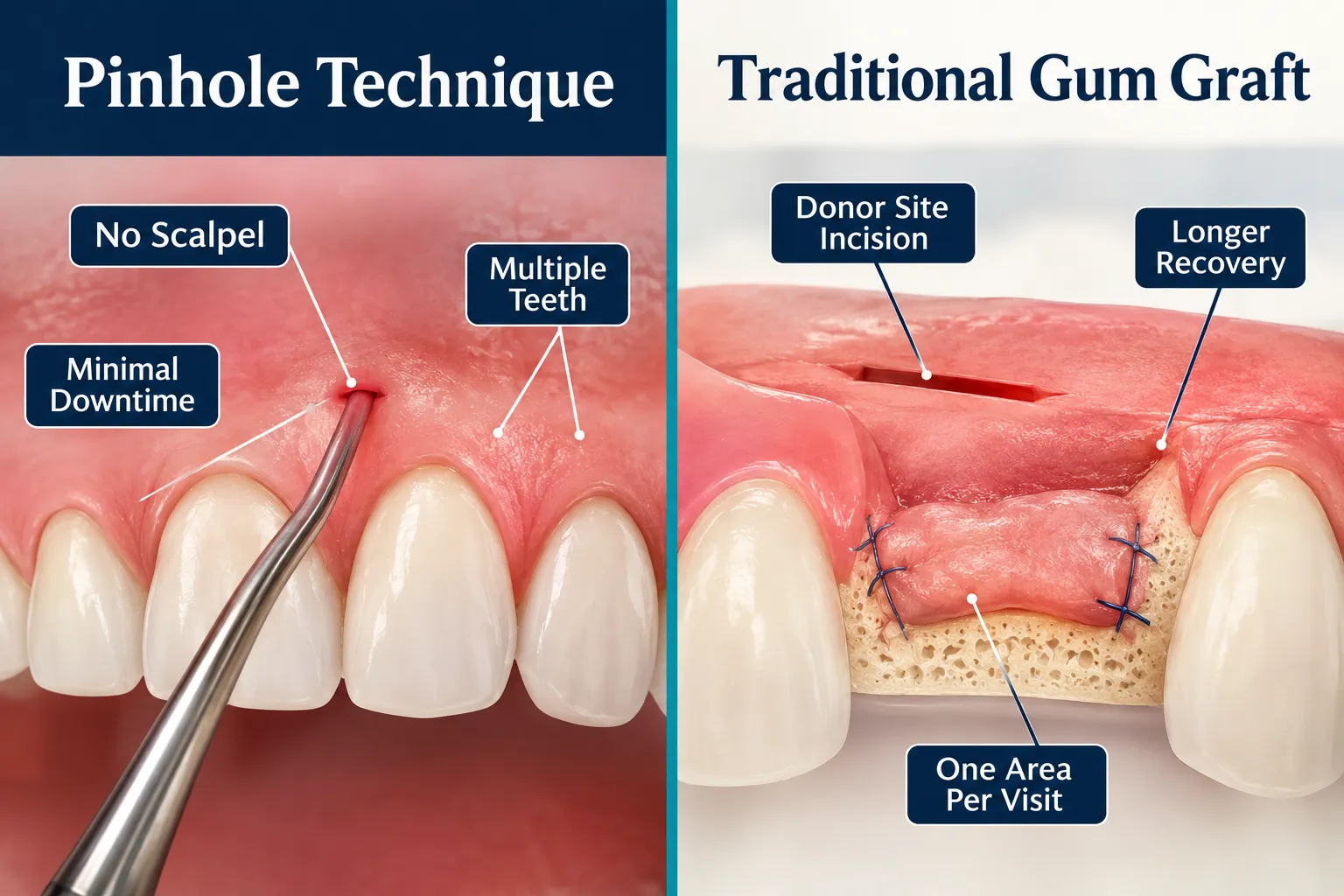
Traditional connective tissue grafting has long been the gold standard for treating gum recession. Comparing the two approaches on cost and value helps patients make a more informed decision.
Traditional gum graft cost: Typically $600 to $1,200 per tooth, or $1,500 to $3,000 per quadrant. Because only one or two areas are usually treated per visit, a patient needing full-mouth correction may require multiple appointments, and multiple fees.
Pinhole surgery price: While the per-tooth or per-quadrant fee can be similar or slightly higher, the ability to treat the entire mouth in one visit often makes the total cost comparable or even lower than completing multiple graft sessions.
Additional cost considerations:
- Fewer appointments mean less time off work and lower transportation costs.
- A single sedation session rather than multiple sessions reduces anesthesia fees.
- Recovery is generally shorter, which can reduce the need for prescription pain management.
Consumer-reported data from dental cost forums consistently shows that patients who needed full-mouth recession correction found pinhole surgery to be cost-competitive once all appointment-related expenses were factored in.
It is also worth noting that gum recession is closely linked to periodontal disease. Patients dealing with active gum disease may need scaling, root planing, or osseous surgery before pinhole treatment can be performed, adding to the overall treatment investment.
Does Insurance Cover Pinhole Surgery Price
This is one of the most common questions patients ask, and the answer is nuanced. Most dental insurance plans categorize pinhole surgery under periodontal procedures. Whether it is covered, and at what percentage, depends on:
- Your specific plan’s periodontal benefit tier. Many PPO plans cover 50% to 80% of periodontal surgical procedures after deductibles are met.
- Medical necessity documentation. If recession is severe enough to threaten tooth structure or bone, insurers are more likely to approve coverage.
- Annual maximum limits. Most dental plans cap annual benefits at $1,000 to $2,000, which may cover only a portion of a comprehensive case.
- Whether PST is listed as a covered procedure. Some older plans have not yet updated their fee schedules to include pinhole technique by name. In those cases, the procedure may be submitted under a comparable periodontal code.
Our detailed guide on whether oral surgery is covered by medical insurance walks through how to verify your benefits before committing to treatment. Madison Dental Art also accepts multiple insurance plans, visit our insurance page to confirm your coverage.
Flexible payment options such as dental financing plans (CareCredit, Lending Club Dental) can bridge the gap between what insurance pays and the remaining balance.
What to Expect During and After Pinhole Surgery
Knowing the procedure timeline helps patients plan their schedule and budget for any associated costs.
Before the procedure:
- A comprehensive periodontal exam, including probing depths and digital X-rays or a 3D panoramic scan, is required.
- Active infection or significant plaque buildup must be addressed first.
During the procedure:
- Local anesthesia is administered; nitrous oxide sedation is available for anxious patients.
- The periodontist creates one or more small entry points and repositions gum tissue using specialized tools.
- Collagen strips are inserted to hold the tissue in place.
- Most single-quadrant cases take 45 to 90 minutes; full-mouth cases may take two to three hours.
After the procedure:
- Most patients return to light activity within 24 to 48 hours.
- A soft-food diet is recommended for several days to protect healing tissue.
- Swelling and minor soreness are normal and typically resolve within a few days.
For a full breakdown of what the oral surgery healing process looks like, our aftercare guide covers timelines and tips in detail.
Getting an Accurate Pinhole Surgery Price Estimate in NYC
No online article, including this one, can replace a personalized consultation with a qualified periodontist. The only way to receive an accurate pinhole surgery price is to undergo a clinical examination that assesses:
- The number of teeth affected and the depth of recession at each site
- Current periodontal health (presence of active gum disease)
- Bone levels and overall oral health status
- Your insurance benefits and out-of-pocket responsibility
Questions to ask at your consultation:
- How many teeth or areas will be treated, and what is the billing unit?
- Is diagnostic imaging included in the quoted fee?
- What is the estimated insurance reimbursement, and will your office submit the claim?
- Are follow-up appointments included in the treatment fee?
- What sedation options are available, and what do they cost?
At Madison Dental Art in Forest Hills, Queens, our periodontics specialist Dr. Robert Weber is a Diplomate of the American Board of Periodontology. He brings deep expertise in gum tissue surgery and works closely with our team to create individualized treatment plans that address both clinical needs and financial realities.
FAQs
Is pinhole surgery worth the cost compared to traditional gum grafting?
For many patients, especially those needing treatment across multiple areas, pinhole surgery delivers comparable or superior clinical outcomes with less discomfort and fewer total appointments. The consolidated cost of treating the entire mouth in one visit often makes pinhole surgery price competitive with the cumulative cost of multiple graft sessions. That said, not every patient is a candidate. A periodontist must evaluate your specific recession pattern, bone levels, and overall gum health before recommending one approach over the other.
How long does the result from pinhole surgery last?
Clinical studies suggest that properly performed pinhole surgery produces stable, long-lasting gum coverage when patients maintain good oral hygiene and attend regular periodontal maintenance visits. The longevity of results depends on controlling the underlying causes of recession, such as aggressive brushing technique, teeth grinding, or untreated gum disease. Your periodontist will provide a customized maintenance schedule to protect your investment.
Can pinhole surgery be combined with other periodontal treatments?
Yes. In cases where active gum disease is present, scaling and root planing, or more advanced osseous surgery, may need to be completed before pinhole surgery is performed. Some patients also combine recession treatment with dental implant placement or cosmetic procedures. A comprehensive treatment plan developed by a board-certified periodontist ensures that all procedures are sequenced correctly for the best outcome.
Does pinhole surgery hurt, and what is the recovery like?
Most patients report significantly less postoperative discomfort with pinhole surgery compared to traditional gum grafting, because there is no secondary surgical site on the palate. Local anesthesia is used during the procedure, and nitrous oxide sedation is available for anxious patients. After treatment, mild soreness and minor swelling are typical for two to four days. A soft-food diet and gentle oral hygiene are recommended during the initial healing period.
References
- American Academy of Periodontology. (2023). Gum graft surgery. https://www.perio.org/for-patients/periodontal-treatments-and-procedures/gum-graft-surgery/
- National Institute of Dental and Craniofacial Research. (2022). Periodontal (gum) disease. https://www.nidcr.nih.gov/health-info/gum-disease
- Cha, J. K., et al. (2022). Tunnel technique with collagen matrix for root coverage: A systematic review and meta-analysis. Journal of Periodontology, 93(5), 680-693. https://doi.org/10.1002/JPER.21-0283
- American Dental Association. (2024). CDT code updates and periodontal procedure classifications. https://www.ada.org/publications/cdt
- Centers for Disease Control and Prevention. (2023). Periodontal disease surveillance. https://www.cdc.gov/oralhealth/conditions/periodontal-disease.html
Madison Dental Art
Content written and reviewed by
Madison Dental Art Review Board
Madison Dental Art : Experienced dentists and specialists dedicated to providing accurate, trusted, and patient-focused oral health information.
Important information
The content of this article is for strictly educational and informational purposes. It does not replace in-person professional medical diagnosis, advice, or treatment.


