 by Madison Dental Art Review Board
Nearly one in five adults reports feeling self-conscious about their smile, and for many of them, dental veneers represent the most direct path to a confident, lasting change. But the moment most patients start researching, they hit the same wall: the composite veneers vs porcelain veneers debate. Two materials, two price points, two very different clinical journeys. Which one is actually right for you?
This guide breaks down both options clearly and honestly, covering cost, durability, appearance, reversibility, and the ideal candidate for each, so you can walk into your consultation at Madison Dental Art already informed and ready to make the best decision for your smile.
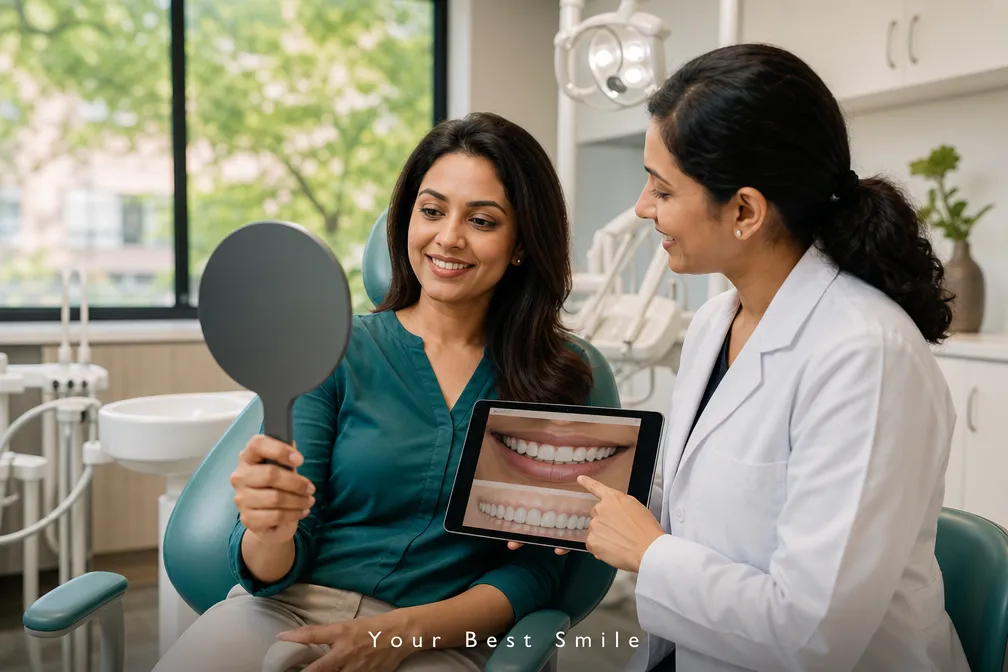
Schedule a veneer consultation at Madison Dental Art.
Table of Contents
Key Takeaways
- Porcelain typically last 10 to 20 years; composite veneers generally last 4 to 8 years with proper care.
- Composite are more affordable upfront and can often be placed in a single appointment.
- Porcelain offer superior aesthetics, stain resistance, and long-term durability.
- Composite are more easily repaired and involve less, sometimes zero, enamel removal.
- The best choice depends on your budget, timeline, cosmetic goals, and overall oral health.
4 Core Differences between Composite vs Porcelain Veneers
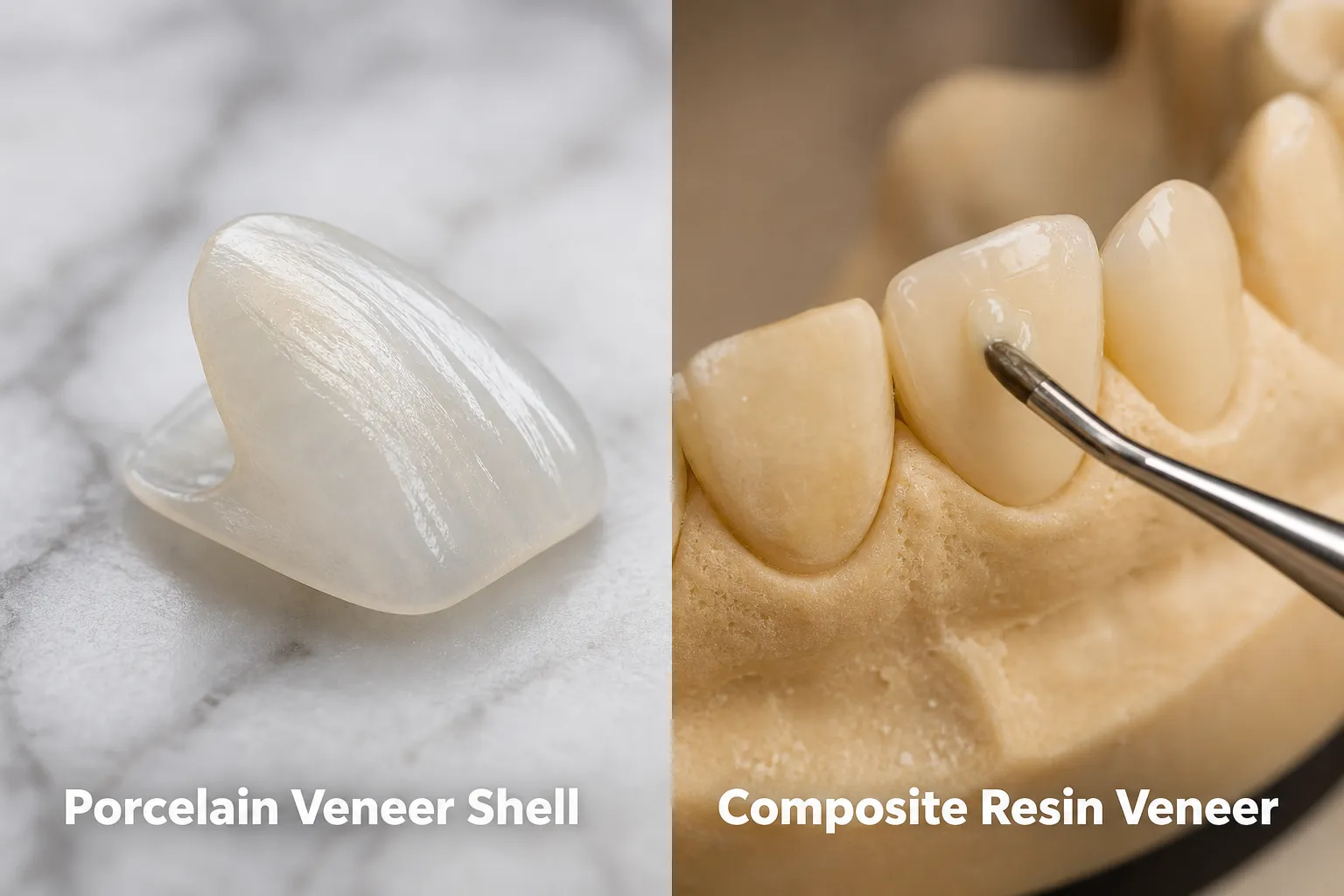
Before comparing the two side by side, it helps to know what each material actually is.
What Are Composite Veneers?
Composite veneers are made from the same tooth-colored resin used in modern dental fillings. A dentist applies the resin directly to the tooth surface in layers, sculpting and polishing it chairside. In most cases, the entire process takes place in a single visit. Because the material is built up by hand rather than fabricated in a lab, composite ones are sometimes called “direct veneers.”
What Are Porcelain Veneers?
Porcelain veneers, also called ceramic veneers, are custom-fabricated shells created in a dental laboratory. The dentist takes precise impressions or digital scans of your teeth, sends them to a lab, and bonds the finished shells to your teeth in a follow-up appointment. The process typically requires two to three visits. At Madison Dental Art, our porcelain veneer services in Forest Hills combine advanced imaging technology with Dr. Chao’s decades of cosmetic expertise.
1. Comparing Cost: What to Expect in 2026
Cost is often the first question patients ask, and it is a legitimate one.
- Composite veneers in the United States typically range from $250 to $1,500 per tooth, depending on the complexity of the case and the dentist’s experience.
- Porcelain veneers generally range from $900 to $2,500 per tooth in the U.S., with premium practices in New York City often at the higher end of that range.
The lower upfront cost of composite veneers is appealing, but the total cost over time tells a different story. Because composite veneers need to be replaced or repaired more frequently, the long-term investment can approach, or even exceed, the cost of porcelain. Most dental insurance plans do not cover elective cosmetic pieces, so it is worth reviewing your coverage at Madison Dental Art’s insurance page before committing to a treatment plan.
2. Durability and Lifespan: Which Veneer Lasts Longer?
This is where porcelain pulls ahead decisively.
Porcelain veneer survival data from long-term clinical studies consistently shows survival rates above 90% at 10 years, with many patients retaining their veneers for 15 to 20 years when they maintain good oral hygiene and avoid habits like nail-biting or chewing ice.
Composite veneers, by contrast, typically last 4 to 8 years. They are more susceptible to chipping, staining, and surface wear over time. A 2024 randomized clinical trial comparing the two materials found that while both produced satisfactory aesthetic results at one year, composite veneers showed measurably greater surface degradation at the three-year mark.
One important caveat: habits like teeth grinding (bruxism) can shorten the lifespan of either type. If you grind your teeth, your dentist may recommend a night guard alongside your veneers. You can learn more about how grinding affects your teeth over time and what protective options are available.
3. Aesthetics: How Do They Compare in Appearance?
For patients who prioritize a natural, lifelike result, porcelain has a clear advantage.
Porcelain mimics the light-reflecting properties of natural enamel. Its translucency allows light to pass through the surface in a way that closely resembles real teeth. Porcelain is also highly resistant to staining from coffee, tea, and red wine, a significant benefit for New Yorkers with busy lifestyles.
Composite resin has improved dramatically over the past decade. A skilled dentist can achieve excellent aesthetic results with composite, particularly for single-tooth corrections or minor reshaping. Nevertheless, composite is more porous than porcelain, meaning it can absorb stains over time. It also lacks the same depth of translucency.
It is worth noting that neither porcelain nor composite veneers respond to traditional whitening treatments. If you are considering whitening alongside veneers, timing matters, read more about teeth whitening and porcelain veneers to know the right sequence.
4. Reversibility: A Critical Factor Often Overlooked
This is one of the most important, and most underappreciated, differences between the two options.
Composite veneers are considered largely reversible. In many cases, little to no enamel is removed before placement. If you change your mind, the composite can be removed without significant damage to the underlying tooth.
Porcelain veneers require a small but permanent amount of enamel removal, typically 0.3 to 0.7 millimeters, to ensure a proper fit and natural profile. This process is irreversible. Once enamel is removed, the tooth will always need some form of covering. This is not a reason to avoid porcelain veneers, millions of patients are thrilled with their results for decades, but it is a commitment that deserves careful consideration.
Composite Veneers vs Porcelain Veneers: Which Is Right for You?
The honest answer is that there is no universal “better” option. The right choice depends on your individual circumstances.
Composite pieces may be the better fit if you:
- Have a limited budget and want to improve your smile now
- Need a single tooth corrected quickly
- Want a reversible option while you decide on a long-term plan
- Are younger and your smile may still be changing
Porcelain pieces may be the better fit if you:
- Want the most natural-looking, durable result possible
- Are correcting multiple teeth for a complete smile transformation
- Have deep or intrinsic staining that composite cannot fully mask
- Are committed to a long-term investment in your smile
It is also worth considering whether veneers are the right solution at all. In some cases, dental crowns offer better protection for heavily damaged teeth, our comparison of dental crowns, veneers, and caps can help clarify which option fits your clinical needs. For patients with alignment concerns, clear aligners may address the root issue before veneers are even considered.
The Consultation Process at Madison Dental Art
A veneer consultation at Madison Dental Art begins with a comprehensive evaluation of your oral health. Veneers are a cosmetic solution, they work best when the foundation is healthy. That means any active gum disease, decay, or bite issues should be addressed first.
Dr. Alexander Chao, who graduated in the top 3% of his class at NYU College of Dentistry, leads cosmetic dentistry at the practice. His approach combines precise clinical assessment with a genuine comprehension of what patients want their smiles to look like in real life, not just in a dental chart.
Our team uses digital imaging and, where appropriate, digital dental X-rays to get a complete picture of your tooth structure before recommending any cosmetic treatment. For a deeper dive into how the two options compare clinically, visit our detailed resource on composite vs porcelain veneers: key differences, pros, and cons.
FAQs
Can composite veneers be upgraded to porcelain veneers later?
Yes. Many patients start with composite veneers as a cost-effective, lower-commitment option and later transition to porcelain. Because composite veneers typically require minimal enamel preparation, switching to porcelain at a later stage is usually straightforward. Your dentist will evaluate the condition of your teeth at that point and recommend the best approach for the transition.
Do veneers, composite or porcelain, require special maintenance?
Both types benefit from the same good habits: brushing twice daily with a non-abrasive toothpaste, flossing regularly, and attending routine dental checkups. Composite veneers may need periodic polishing to maintain their surface luster. Porcelain veneers are more stain-resistant but can still chip if subjected to excessive force. Patients who grind their teeth should wear a custom night guard to protect either type.
Are dental veneers painful to get?
Most patients experience minimal discomfort during the veneer placement process. Composite veneers placed without enamel reduction typically require no anesthesia at all. Porcelain veneers involve a small amount of enamel removal, which is usually done under local anesthesia. Some patients report mild tooth sensitivity for a few days after placement, particularly with porcelain veneers, but this generally resolves quickly.
How do I know if I am a good candidate for veneers?
Good candidates for veneers, either type, have generally healthy teeth and gums, with no active decay or significant gum disease. Patients with severe bite misalignment or heavy grinding habits may need those issues addressed first. The only reliable way to know for certain is through a professional evaluation.
References
- American Dental Association. (2022). Dental veneers: Patient information and clinical guidance. ADA.org. https://www.ada.org
- National Institute of Dental and Craniofacial Research. (2023). Tooth restoration and cosmetic dental procedures. NIDCR, National Institutes of Health. https://www.nidcr.nih.gov
- Layton, D. M., & Walshaw, C. (2022). Porcelain laminate veneers: A systematic review of survival and complication rates over 10 years. Journal of Dentistry, 118, 103-112. https://doi.org/10.1016/j.jdent.2022.103112
- Magne, P., & Belser, U. (2021). Bonded porcelain restorations in the anterior dentition: A biomimetic approach (2nd ed.). Quintessence Publishing.
- Peumans, M., Van Meerbeek, B., Lambrechts, P., & Vanherle, G. (2021). Porcelain veneers: A review of the literature. Journal of Dentistry, 28(3), 163-177. https://doi.org/10.1016/S0300-5712(99)00066-4
- Gresnigt, M. M. M., Cune, M. S., Jansen, K., van der Made, S. A. J., & Özcan, M. (2022). Randomized clinical trial on indirect resin composite and ceramic laminate veneers: Up to 10-year findings. Journal of Dentistry, 116, 103-115. https://doi.org/10.1016/j.jdent.2021.103894
Madison Dental Art
Content written and reviewed by
Madison Dental Art Review Board
Madison Dental Art : Experienced dentists and specialists dedicated to providing accurate, trusted, and patient-focused oral health information.
Important information
The content of this article is for strictly educational and informational purposes. It does not replace in-person professional medical diagnosis, advice, or treatment.


