Nearly 5 million dental implants are placed in the United States every year — and the most common question patients ask before and after the procedure is the same one: is it normal to experience pain after dental implant surgery? The short answer is yes, some degree of discomfort is expected and is actually a sign that your body’s natural healing process is underway. Comprehennding what is normal, what is not, and how to manage recovery confidently can make all the difference in your experience.
Aftercare help dental implants in Forest Hill.
Key Takeaways
- Mild to moderate pain, swelling, and bruising in the first 3 to 5 days after dental implant surgery are completely normal.
- Pain that worsens after Day 3 or persists beyond 10 days may signal a complication and warrants a call to your dentist.
- Over-the-counter pain relievers, ice packs, and a soft-food diet are the core tools for managing normal post-surgical discomfort.
- Smoking, poor oral hygiene, and certain medical conditions increase the risk of complications like implant failure or infection.
- Most patients find that dental implant recovery is manageable and that long-term results are well worth the short-term discomfort.
Is It Normal to Experience Pain After Dental Implant Surgery — And for How Long?
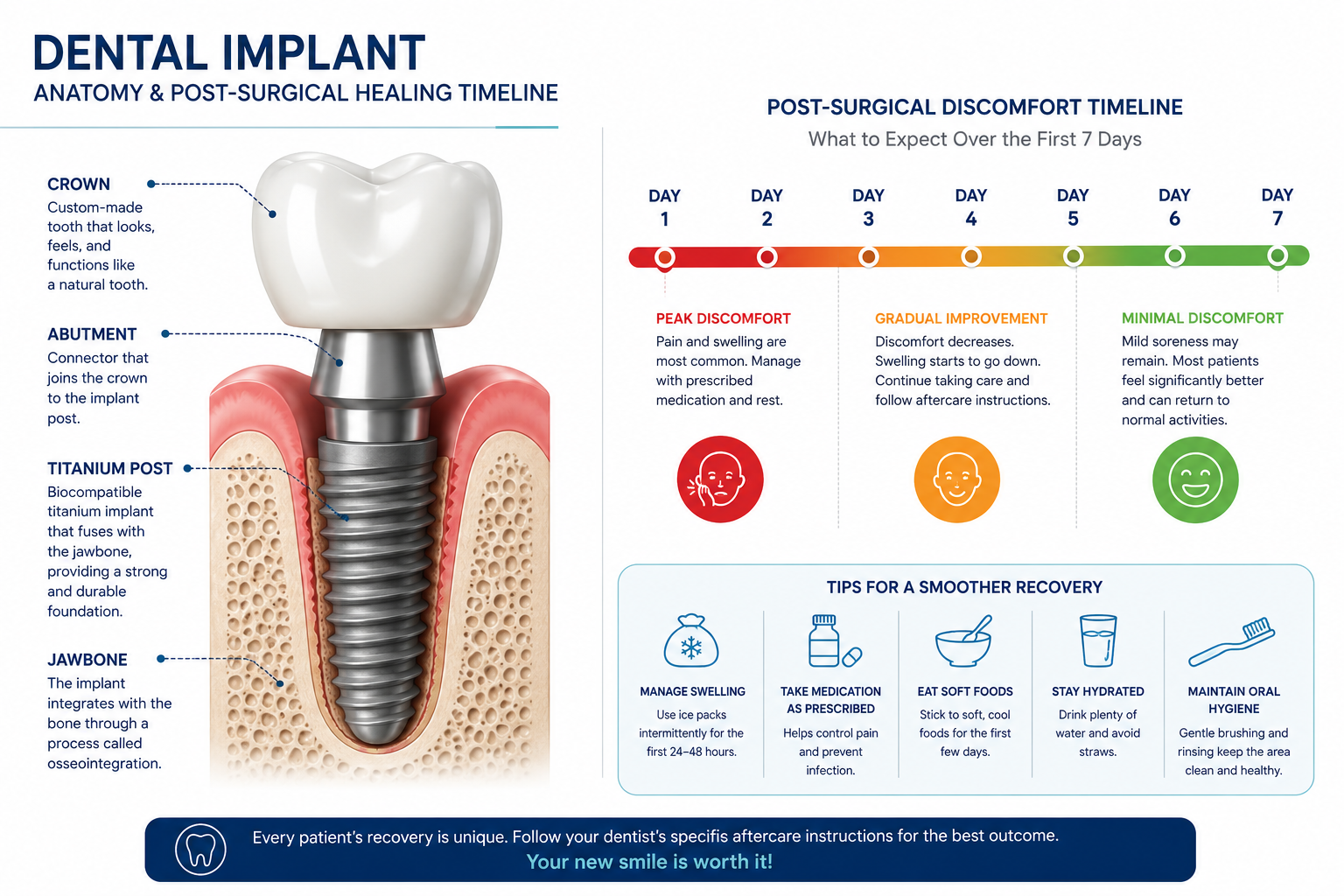
Yes, it is entirely normal to experience pain after dental implant surgery, particularly in the first 72 hours. Here is what a typical recovery timeline looks like:
| Recovery Phase | What to Expect |
|---|---|
| Hours 1-4 | Numbness from local anesthesia wears off; mild to moderate soreness begins |
| Days 1-3 | Peak discomfort, swelling, and possible bruising around the jaw and cheek |
| Days 3-5 | Swelling begins to subside; pain becomes more manageable |
| Days 5-10 | Most patients feel significantly better; soft tissue is healing |
| Week 2 onward | Discomfort largely resolved; osseointegration (bone fusion) continues for months |
The key benchmark: Pain should follow a downward trend after Day 3. If your discomfort is getting worse rather than better after that point, that is a signal worth paying attention to.
For a deeper look at the recovery experience, our guide on how painful is dental implant recovery and healing tips walks through each phase in detail.
How Does Implant Pain Compare to Tooth Extraction?
Many patients are surprised to learn that dental implant surgery is often described as comparable to — or even more comfortable than — a standard tooth extraction. This is partly because implant surgery is a controlled, planned procedure performed under local anesthesia, and partly because modern surgical techniques have become significantly less invasive. If you have had a tooth pulled before and managed the recovery, you are likely well-prepared for what implant surgery involves.
Normal vs. Abnormal Pain: Knowing the Difference
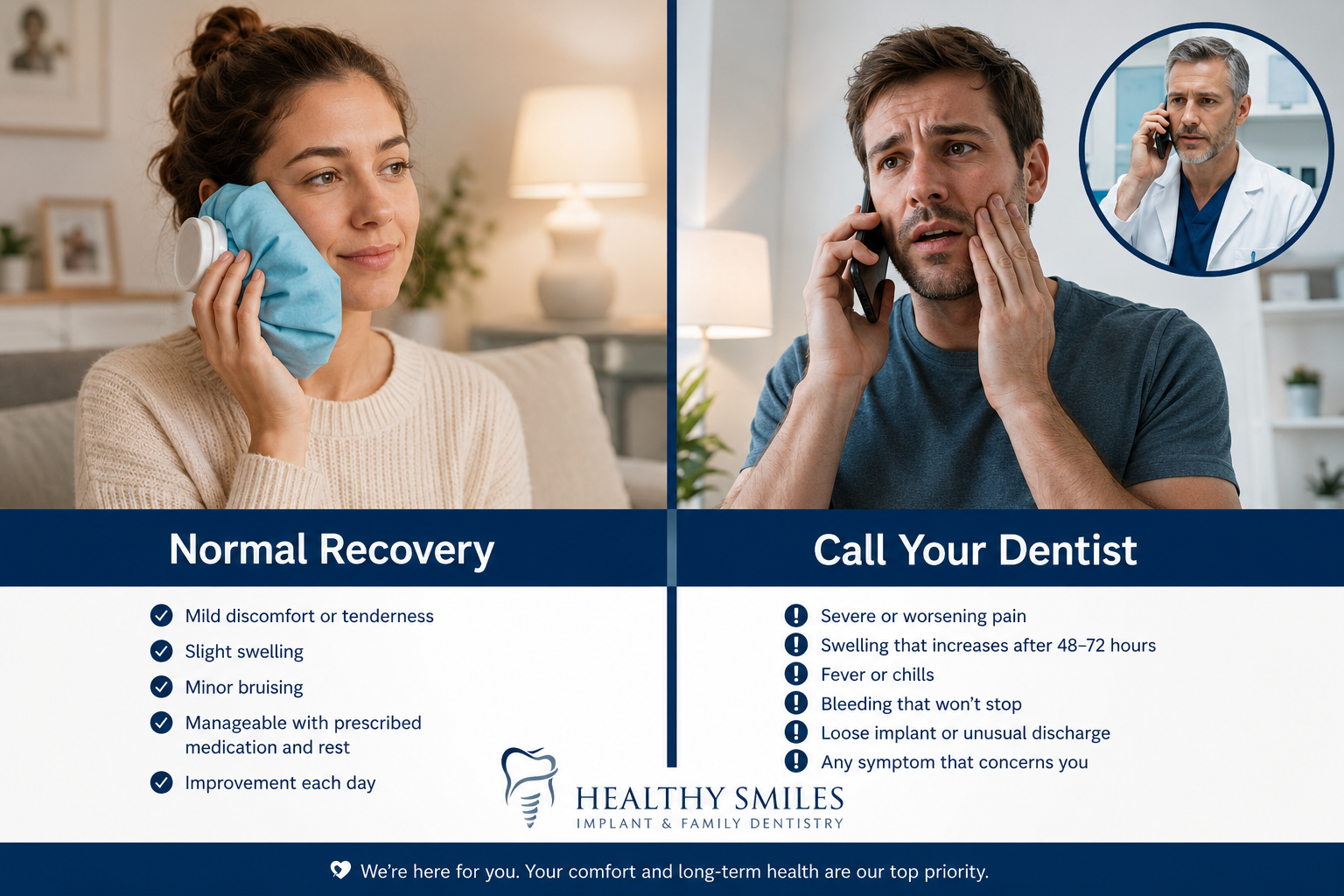
This is where many patients feel uncertain, and that uncertainty is completely valid. Not all post-surgical discomfort is the same. Here is a practical breakdown:
Signs That Pain Is Normal
- Soreness centered around the implant site
- Mild to moderate swelling of the gum and cheek
- Light bruising on the jaw or neck area
- Minor bleeding or oozing in the first 24 hours
- Slight difficulty opening your mouth fully in the first few days
- Sensitivity to hot and cold near the surgical site
Warning Signs That Require Prompt Attention
- Pain that intensifies after Day 3 instead of improving
- Severe, throbbing pain that does not respond to over-the-counter medication
- Fever above 101°F (38.3°C)
- Persistent numbness beyond 24 hours
- Significant swelling that spreads or worsens after Day 3
- Pus or discharge from the implant site
- A loose or shifting implant post
One condition worth knowing about is peri-implantitis — an infection of the tissue surrounding the implant that can develop if bacteria accumulate around the post. It is one of the more common reasons for implant-related pain that appears weeks or months after surgery. If you ever find yourself asking why your tooth implant hurts years later, peri-implantitis is a likely culprit and should be evaluated promptly.
How to Manage Pain After Dental Implant Surgery
Managing discomfort effectively is not just about comfort — it also supports faster healing. Here are the most evidence-supported strategies:
Medication
- Non-prescription NSAIDs such as ibuprofen (Advil, Motrin) are typically the first line of relief because they address both pain and inflammation simultaneously.
- Acetaminophen (Tylenol) can be alternated with ibuprofen for stronger combined relief when recommended by your provider.
- Your surgeon may prescribe a short course of antibiotics to prevent infection. Take the full course even if you feel better.
Ice and Heat
- Apply an ice pack wrapped in a cloth to the outside of your cheek for 20 minutes on, 20 minutes off during the first 24-48 hours to reduce swelling.
- After 48 hours, switching to gentle warmth can help ease residual muscle stiffness.
Diet and Nutrition
- Stick to a soft-food diet for at least the first week. Avoid anything hard, crunchy, or chewy that could disturb the surgical site.
- Our list of 50 soft foods to eat after dental implant surgery for faster healing is a practical resource to keep on hand.
Oral Hygiene
- Gentle rinsing with warm salt water (after the first 24 hours) keeps the site clean without irritating healing tissue.
- Avoid vigorous rinsing, spitting, or using a straw for the first 48 hours, as these actions can disrupt the clot that protects the surgical site.
Rest and Activity
- Avoid strenuous physical activity for the first 48-72 hours. Elevated heart rate increases blood pressure and can worsen swelling and bleeding.
For a comprehensive overview of post-surgical care, our oral surgery aftercare guide on reducing pain and swelling covers everything you need to know.
Factors That Affect How Much Pain You Experience
Not everyone’s recovery looks the same. Several factors influence the intensity and duration of post-surgical discomfort:
- Number of implants placed: A single implant involves less tissue disruption than multiple implants placed in one session.
- Bone grafting: If a bone graft was needed before or during implant placement, expect a longer and more involved recovery.
- Overall health: Conditions like diabetes, autoimmune disorders, or osteoporosis can slow healing and increase complication risk.
- Smoking: Tobacco use significantly impairs blood flow to healing tissue and is one of the strongest predictors of implant failure.
- Surgeon experience and technique: Minimally invasive technique by a skilled specialist reduces trauma and speeds recovery.
- Patient compliance: Following post-operative instructions closely is one of the most controllable factors in your recovery.
Is It Normal to Experience Pain After Dental Implant Surgery If You Had a Bone Graft?
Yes — and it is important to set realistic expectations here. When a bone graft is required to build up insufficient jawbone before or during implant placement, the recovery is more involved. You are healing from two surgical sites rather than one, and the process of bone regeneration takes longer. Swelling and discomfort may be more pronounced and may last a few days longer than a standard implant procedure. This is still within the range of normal — it simply requires more patience and diligence with aftercare.
When to Call Your Dentist
If you are unsure whether what you are experiencing is normal, it is always better to reach out. No dental professional will fault you for calling with a concern. Specific situations that warrant a same-day call include:
- Pain that is worsening on Day 4 or later
- Any visible sign of infection (pus, spreading redness, fever)
- A feeling that the implant post has shifted or feels loose
- Uncontrolled bleeding beyond the first few hours
The team at Madison Dental Art is available Monday through Friday from 9:00 AM to 6:00 PM and Saturday from 8:00 AM to 3:00 PM. You can reach us at (718) 268-8228 or through our contact page.
FAQs
Is it normal to experience pain after dental implant surgery for more than a week?
Mild residual soreness can persist for up to 10 to 14 days, especially if bone grafting was involved or multiple implants were placed. Nevertheless, pain should be steadily decreasing throughout that period. If discomfort is holding steady or increasing after the first week, schedule an evaluation. It may indicate an infection or early implant complication that is far easier to address when caught promptly.
Can I take ibuprofen every day during my dental implant recovery?
Ibuprofen is generally effective and safe for short-term use during implant recovery when taken as directed. Most providers recommend it for the first 3 to 5 days post-surgery. Extended daily use beyond that window without guidance from your provider is not recommended, as prolonged NSAID use can affect kidney function and gastrointestinal health. Always follow the dosage instructions provided by your surgical team.
What does infected dental implant pain feel like compared to normal soreness?
Normal post-surgical soreness is a dull, predictable ache that gradually improves. Infected implant pain tends to be throbbing, more intense, and may be accompanied by warmth, swelling that worsens after Day 3, a bad taste in the mouth, or visible pus near the implant site. A fever is another distinguishing sign. If any of these are present, contact your dentist immediately rather than waiting for a scheduled follow-up.
How long does the full dental implant process take from surgery to final crown?
The surgical placement itself takes roughly one to two hours depending on complexity, but the full process — from implant placement to the attachment of the final crown — typically spans three to six months. This timeline allows for osseointegration, the process by which the titanium post fuses with the jawbone. Our detailed overview of the dental implants procedure timeline explains each stage so you know exactly what to expect at every step.
References
- American Academy of Periodontology. (2022). Dental implants. https://www.perio.org/consumer/dental-implants
- National Institute of Dental and Craniofacial Research. (2023). Dental implants. U.S. Department of Health and Human Services. https://www.nidcr.nih.gov/health-info/dental-implants
- Moraschini, V., Poubel, L. A., Ferreira, V. F., & Barboza, E. S. (2022). Evaluation of survival and success rates of dental implants reported in longitudinal studies with a follow-up period of at least 10 years: A systematic review. International Journal of Oral and Maxillofacial Surgery, 51(3), 310–318. https://doi.org/10.1016/j.ijom.2021.07.015
- Atieh, M. A., Alsabeeha, N. H., Faggion, C. M., & Duncan, W. J. (2023). The frequency of peri-implant diseases: A systematic review and meta-analysis. Journal of Periodontology, 94(1), 1–15. https://doi.org/10.1002/JPER.22-0248
- U.S. Food and Drug Administration. (2021). Dental implants: What you should know. https://www.fda.gov/medical-devices/dental-devices/dental-implants-what-you-should-know