What if you could replace missing teeth with a solution that looks, feels, and functions almost like the real thing? Many people searching what are permanent dentures are surprised to learn how different they are from traditional removable options. Could this be the long-term answer to restoring your smile—and your confidence? Let’s take a closer look.
Start Your Journey with Dentures in Queens.
TL;DR:
Permanent dentures are designed to restore missing teeth with improved function, comfort, and aesthetics compared to traditional removable options. Their performance depends on the materials used, a precise fitting process, and proper post-placement adjustments. Daily cleaning and regular evaluations are essential, as dentures naturally wear over time and may need replacement—often within 5–10 years—due to fit changes or material fatigue.
Materials Used in Permanent Dentures
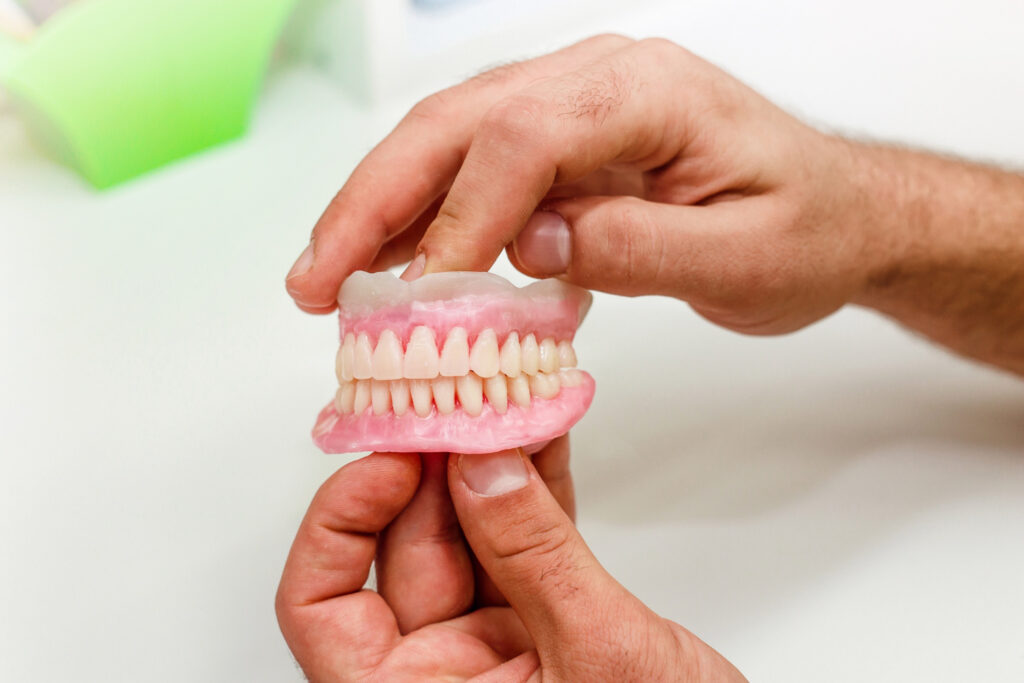
Permanent dentures are designed to restore missing teeth and surrounding structures while balancing function, comfort, durability, and aesthetics. The materials used play an essential role in how the denture feels in the mouth, how long it lasts, and how well it performs during everyday activities like chewing and speaking.
Denture Bases
- Acrylic Resin (PMMA)
This is the most commonly used material. It is affordable, easy to shape, matches gum color well, and has good mechanical strength. It supports the artificial teeth and rests against the oral tissues. - Flexible Resins (Nylon-Based Thermoplastics)
These materials can bend slightly, which improves comfort and adaptability—especially in partial dentures. - Metal Alloys (Cobalt-Chromium)
Often used as a framework in partial dentures, metal alloys add strength and durability while allowing thinner support structures.
Artificial Teeth
- Acrylic Teeth
Lightweight and easy to adjust. They bond well to acrylic bases but wear down faster than harder materials. - Porcelain or Ceramic Teeth
More resistant to wear and very natural-looking. Nevertheless, they are heavier and may cause more wear on opposing oral surfaces. - Composite Resin Teeth
Provide a balance between acrylic and ceramic in terms of durability and appearance.
Material Properties and Wear
Studies under simulated chewing conditions show that ceramic teeth have greater wear resistance than acrylic and composite resins, which may help extend their service life and maintain surface smoothness.
Fitting Process for a Comfortable Bite
The fitting process is a critical series of steps designed to ensure a denture is comfortable, stable, and functional. When done properly, it helps prevent sore spots, chewing problems, and long-term tissue irritation, supporting a healthier and more natural bite.
It begins with a comprehensive oral exam and the taking of primary impressions of the gums and jaw structure using dental impression materials. These impressions capture precise details of both the soft and hard tissues, creating the foundation for an accurate fit.
In many cases, a custom tray is fabricated to obtain a second, more detailed impression. This step records the fine anatomy of the denture-bearing areas, helping the final denture conform more closely to the shape of the mouth.
Next, an accurate bite registration is recorded to determine how the upper and lower jaws come together. This ensures proper jaw function during chewing and speaking, and may also include para-functional assessments and occlusal planning to improve overall stability.
Before the final denture is completed, a wax or temporary model is typically used for a try-in. This allows evaluation of the fit, aesthetics, and bite, and provides an opportunity to make adjustments before the final denture is fabricated and delivered.
Adjustments Made After Initial Placement
Even well-made dentures may require modifications after they are first placed, especially during the initial weeks of adaptation. These adjustments help improve comfort, stability, and function.
- Follow-Up Visits: Routine appointments allow evaluation of fit, comfort, and function. If small pressure points or sore spots appear, they can be relieved with occlusal adjustments and minor grinding or reshaping.
- Relining or Rebasing: If dentures feel loose due to changes in gum or bone shape, such as after extractions or weight loss, a reline (adding material to the tissue-facing surface) or a rebase (replacing the entire base material) may be performed to improve adaptation.
- Bite and Functional Adjustments: Modifications may also focus on optimizing bite contact and ensuring the denture aligns properly with natural or opposing denture teeth, helping support more efficient chewing and speech.
Daily Care and Cleaning of Dentures
Proper daily care is essential to extend the lifespan of dentures and maintain overall oral hygiene. Dentures are exposed to food particles, bacteria, and daily wear, so consistent cleaning helps preserve their structure, appearance, and fit. A well-maintained denture not only supports comfort and function but also helps protect the health of the surrounding oral tissues. Establishing a simple and consistent routine can make a significant difference over time.
- Daily Routine
Dentures should be rinsed after eating to remove food debris and loose particles. This step helps prevent buildup and keeps the appliance cleaner throughout the day.
They should be brushed daily with a soft-bristled brush and a non-abrasive denture cleanser. Regular toothpaste should be avoided because it can be too abrasive for denture acrylic and may scratch the surface.
Dentures should also be soaked overnight in water or a denture cleaning solution. Keeping them moist helps prevent warping and may reduce bacterial load.
- Oral Hygiene
Even when wearing dentures, it is important to clean the gums, tongue, and palate. This helps remove plaque and stimulate circulation in the oral tissues.
- Avoiding Damage
Dentures should not be exposed to hot water or cleaned with abrasive household products such as bleach or bleach-based cleaners, as these substances can damage the materials or alter the fit.
Signs of Wear and When to Replace
Dentures are durable, but they are not permanent. Over time, their fit and function may change due to normal wear or anatomical changes in the mouth. As materials experience fatigue and oral tissues shift, dentures may no longer provide the same level of comfort, stability, or support.
Common signs that dentures may need replacement include persistent discomfort or looseness despite adjustments, as well as visible wear, cracks, chips, or damage to the base or artificial teeth. Ongoing difficulty chewing or speaking that does not improve with minor modifications can also indicate that the denture is no longer functioning properly.
Changes in facial support or bite alignment, often related to bone resorption or gum shrinkage, may further affect fit and performance. Professional guidelines recommend regular evaluation to determine when replacement is necessary, and many dentures may need to be replaced approximately every 5–10 years, depending on wear, material fatigue, and oral changes.
Key Takeaways.
- Permanent dentures restore function, comfort, and aesthetics.
They are designed to replace missing teeth and surrounding structures while closely mimicking natural appearance and performance. Their effectiveness depends on proper design, material selection, and long-term maintenance. - Material choice directly affects durability and performance.
Denture bases may be made from acrylic resin, flexible resins, or metal alloys, each offering different benefits in strength and comfort. Artificial teeth can be acrylic, ceramic, or composite, with ceramics showing greater wear resistance in studies. - A precise fitting process ensures comfort and stability.
The process includes oral exams, detailed impressions, bite registration, and a try-in stage before final fabrication. These steps help prevent sore spots, chewing issues, and long-term tissue irritation. - Adjustments after placement are common and important.
Follow-up visits allow for corrections to pressure points, bite alignment, and looseness. Relining or rebasing may be needed if oral structures change over time. - Ongoing care and monitoring extend denture lifespan.
Daily cleaning, proper soaking, and good oral hygiene protect both the denture and oral tissues. Dentures should be evaluated regularly, as signs of wear or functional changes may indicate replacement is needed—often within 5–10 years.
FAQs:
What is the downside to permanent dentures?
Permanent dentures are durable but not permanent. Over time, normal wear and anatomical changes in the mouth can affect their fit and function, requiring adjustments, relining, or eventual replacement.
How long do permanent dentures last?
Many dentures may need replacement approximately every 5–10 years, depending on wear, material fatigue, and changes in the gums or bone structure.
What is the best material for permanent dentures?
There is no single “best” material. Acrylic, metal alloys, ceramic, and composite resins each offer different benefits in strength, comfort, wear resistance, and aesthetics.
Can you eat normally with permanent dentures?
When properly fitted and adjusted, permanent dentures are designed to support normal chewing function.
Sources.
Bhandari, A., Saraf, S., Chakraborty, N., Srivastava, A., Roy Choudhury, I., & Rajan, K. (2024). Investigation of the wear resistance of different artificial teeth materials in removable dentures. Bioinformation, 20(9), 1159–1163. https://doi.org/10.6026/9732063002001159
Mylonas, P., Milward, P., & McAndrew, R. (2022). Denture cleanliness and hygiene: an overview. British dental journal, 233(1), 20–26. https://doi.org/10.1038/s41415-022-4397-1
Alqutaibi, A. Y., Baik, A., Almuzaini, S. A., Farghal, A. E., Alnazzawi, A. A., Borzangy, S., Aboalrejal, A. N., AbdElaziz, M. H., Mahmoud, I. I., & Zafar, M. S. (2023). Polymeric Denture Base Materials: A Review. Polymers, 15(15), 3258. https://doi.org/10.3390/polym15153258
You May Also Like:
What Is a Dental Crown? Everything You Need to Know